Alex Kershaw uses social media to relive D-Day in real time
Alex Kershaw posted D-Day in real time from the National World War II Memorial, turning June 6, 1944 into a live feed for readers far removed from the invasion.
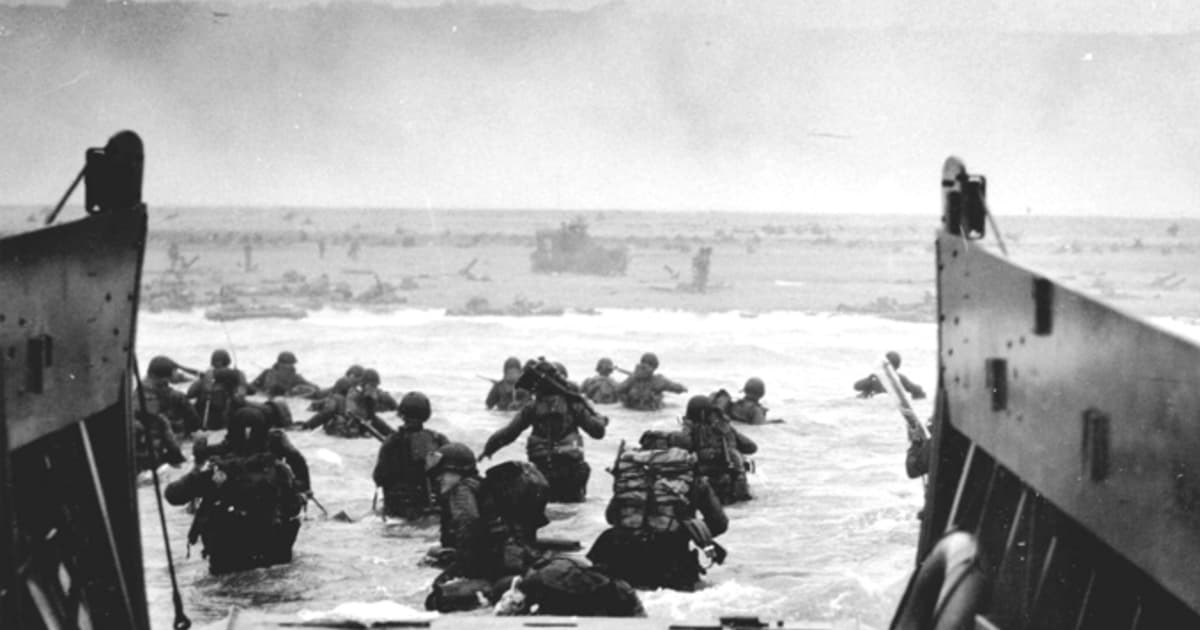
Alex Kershaw used social media to do something few memorials can: make D-Day unfold minute by minute for an audience that no longer has living witnesses in its immediate orbit. From the National World War II Memorial in Washington, D.C., the British-born historian and bestselling author marked the 82nd anniversary of the invasion by posting events timed to June 6, 1944, when Allied forces launched Operation Overlord against Nazi-occupied France.
The approach gave a familiar commemorative site a new role. Instead of a single speech or wreath-laying, Kershaw’s real-time posts mirrored the hour-by-hour pace of the invasion, linking a 2026 observance to the opening moments of the campaign that began 82 years earlier. His books, including The First Wave and The Bedford Boys, have long returned to Normandy, but the social media format pushed that history into the present tense, where younger readers encounter it on the same platforms that shape current news and culture.
Kershaw has argued before that the date should never be treated casually. At a public ceremony at the same memorial in 2025, he told the crowd: “Today and every sixth of June, until the end of time, we should give thanks.” That event included four World War II veterans, a stark reminder of how quickly direct memory is disappearing. Organizers said fewer than 1% of the people who fought in World War II were still alive, a figure that helps explain why digital storytelling now carries so much weight in preserving the meaning of the day.

The scale of the invasion still gives Kershaw’s posts their force. More than 160,000 Allied troops landed in Normandy on June 6, 1944, more than 2 million Allied personnel were involved in Operation Overlord overall, and more than 225,000 Allied troops were killed, wounded or went missing during the invasion and Normandy campaign. Those numbers are large enough to be staggering in a history book, but in a timed social feed they become a sequence of concrete, immediate events.
That is the power and the risk of Kershaw’s experiment. Traditional memorials depend on silence, ceremony and distance; his method compresses history into the rhythms of the internet, where attention is fragmented and emotional connection is hard to hold. On D-Day’s 82nd anniversary, he showed that a well-timed post can do more than inform. It can restore urgency to a story that textbooks have already made familiar, and keep the scale of Normandy from fading into abstraction.
This article was produced by Prism’s automated news system from verified source data, official records, and press releases, then run through automated quality and moderation checks before publishing. The system is built and supervised by the people who set the standards it runs under. Read our full AI policy.
Did this article answer your question?

