Alex Zanardi, Formula One racer turned Paralympic champion and inspiration
After losing both legs, Zanardi rebuilt himself into a Paralympic star whose medals, image, and defiance reshaped how disability sport was seen.
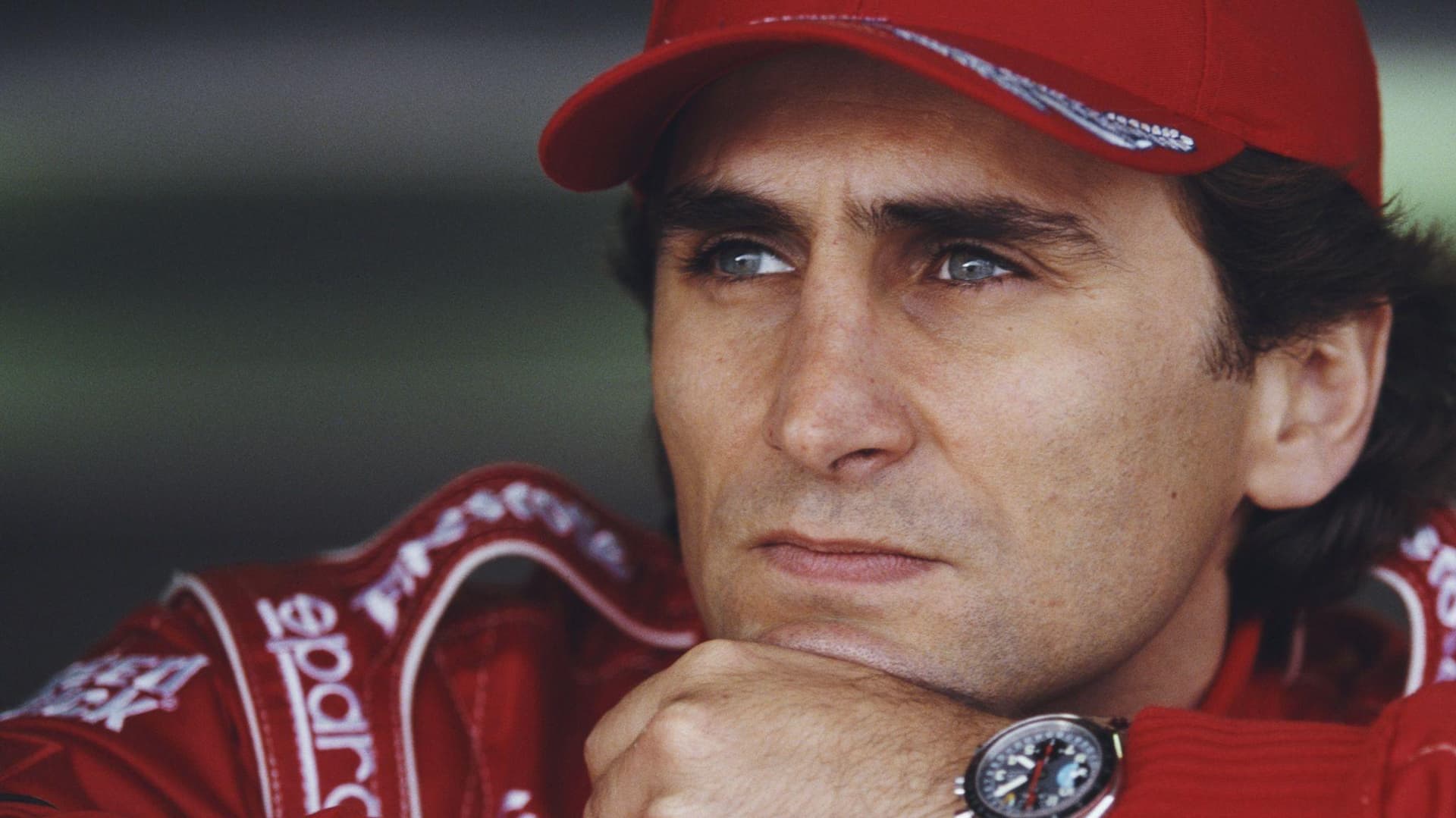
A racer who became larger than racing
Alex Zanardi’s story did not end when Formula One moved on from him. It changed shape, first through catastrophe and then through an extraordinary athletic reinvention that made him one of the most recognizable figures in Paralympic sport. Born on 23 October 1966, the Italian started 41 Formula One races for Jordan, Minardi, Lotus and Williams, but his wider legacy came later, after a life that tested the limits of endurance, adaptation, and public imagination.
His appeal reached far beyond motorsport because he was never presented as a symbol of pity. He became a symbol of possibility. The resonance of his career lay in the way he carried elite sporting identity into a second life, one that demanded new equipment, new discipline, and a redefinition of what a champion could look like in public memory.
From Formula One to life-changing injury
Zanardi’s first career unfolded across the fast, unforgiving tiers of international racing. He competed in Formula One from 1991 to 1999, then raced in other top-level categories, building the kind of profile that made his later reinvention so visible. That visibility mattered: when his life changed in 2001, the world already knew his face, his talent, and his determination.
The turning point came at Lausitzring in Germany, during a CART race, when he was hit by another driver and lost both legs. The injury ended one sporting life, but it did not erase his competitive identity. The International Paralympic Committee later noted that his amputation followed a T-bone collision at EuroSpeedway in Lausitz, underscoring the violence of the crash and the scale of what he had to overcome.
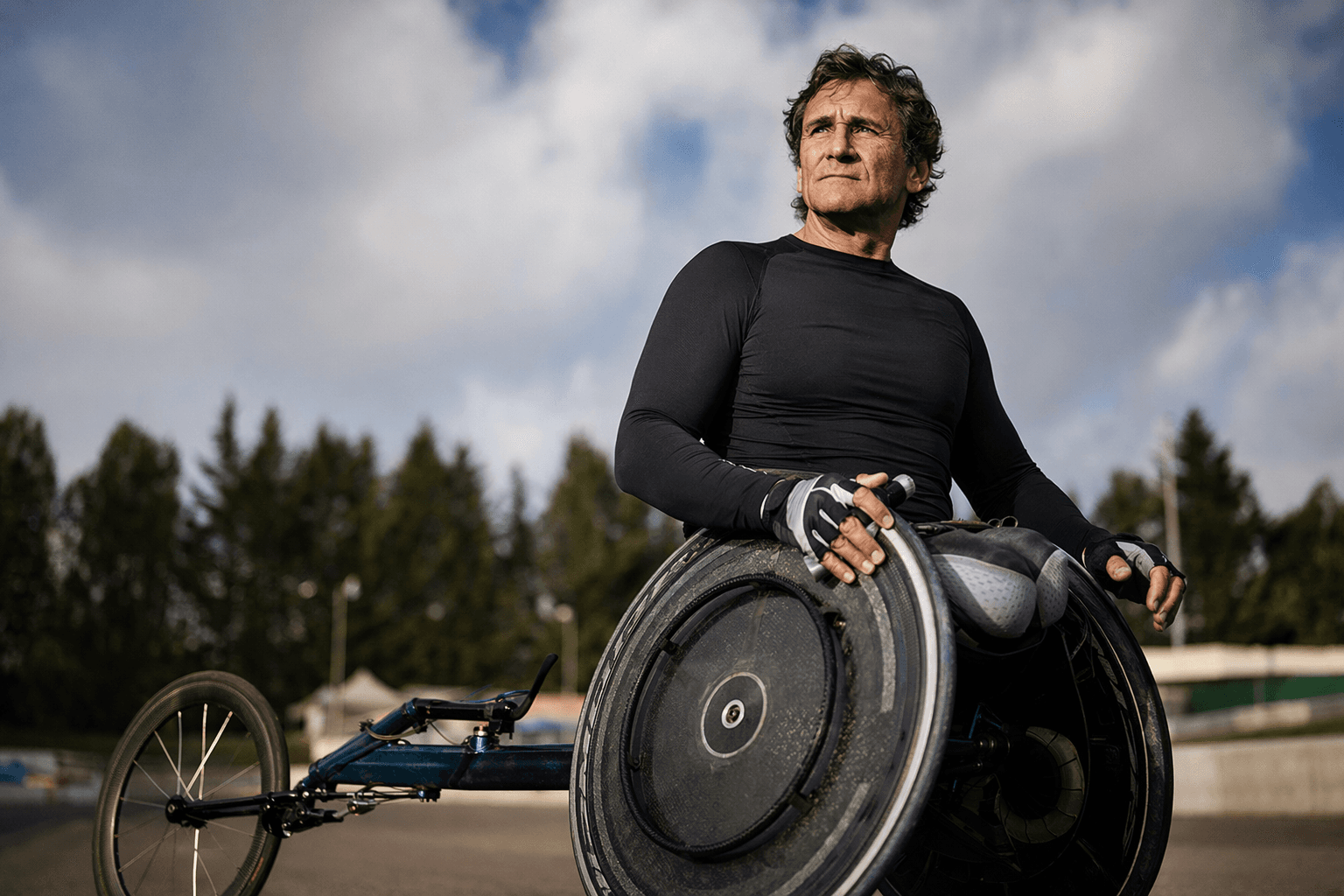
A second career built on handcycling
Zanardi later said he took up handcycling simply because he wanted to ride a bicycle. That detail captures the humility behind his reinvention: the transition was not framed as a grand narrative at first, but as a practical desire to keep moving. From that starting point, he became one of the best-known faces on the Para cycling scene and one of its most accomplished athletes.
His breakthrough came on 5 September 2012 at Brands Hatch, 21 years after he last raced there in Formula 3000. In the men’s handcycle time trial at the London Paralympics, he beat Germany’s Norbert Mosandl by more than 27 seconds to win his first Paralympic gold. He went on to claim two gold medals and one silver at London 2012, becoming the most successful Italian athlete at those Games.
The International Paralympic Committee described the finish photo from London 2012 as one of the most iconic images of the Games. That image mattered because it showed more than victory. It showed a former Formula One driver, once defined by speed in a petrol-powered world, now crossing a Paralympic finish line as a model of elite performance after amputation.
London and Rio turned him into a global reference point
Zanardi’s impact did not stop with one breakout Games. By the time of Rio 2016 in Rio de Janeiro, Brazil, he had become a central figure in Para cycling, and his results confirmed that he was not simply a sentimental favorite. He won gold in the men’s time trial H5 and the mixed team relay H2-5, and silver in the road race H5.
Those results helped turn him into a durable reference point in disability sport. He was no longer only a story about recovery after trauma. He was a world-class athlete whose performances forced attention on the depth of talent in Para sport, the sophistication of classification-based competition, and the reality that elite disability sport is not an inspirational sidelight but a high-performance arena in its own right.
The broader cultural effect was significant. Zanardi helped shift public memory away from a narrow idea of disability as absence and toward a more complex understanding of excellence after injury. His profile made Para cycling more visible, but it also challenged the way mainstream sport talks about bodies, recovery, and who gets to embody heroism.
A second crash, a long medical battle, and an anxious public
That global recognition made the next crisis even more harrowing. On 19 June 2020, Zanardi suffered another severe crash while handcycling near Siena, Italy, colliding with a truck during a handbike event. He sustained serious head injuries, was placed in an induced coma, and underwent multiple neurological surgeries.

He was treated in intensive care in Siena and later in Milan before moving to rehabilitation. In the days that followed, medical bulletins described his condition as grave and unstable, and concern spread across the sporting world. His wife, Daniela Zanardi, later said in an update that recovery was a long process and that he had eventually returned home.
That episode revealed the fragility beneath the public image of resilience. It also exposed how quickly a celebrated athlete can become a figure of national worry, with family, medical teams, and sporting institutions all pulled into the orbit of one sudden trauma. Zanardi’s story was not only about triumph over injury; it also reflected the human cost of extraordinary risk and the precariousness of life after catastrophe.
Why his legacy endured
When the Italian Paralympic Committee announced on 2 May 2026 that Zanardi had died at the age of 59, officials across Olympic and Paralympic sport described him as an enduring symbol of resilience and one of Italy’s most influential Paralympians. That language captured what made him matter: he helped change the cultural status of Paralympic success, not by softening the realities of disability, but by placing them inside the language of elite sport, national pride, and public memory.
His legacy sits at the intersection of performance and representation. He showed that disability sport deserves the same seriousness granted to any other elite competition. He also offered a public model of reinvention that resonated well beyond racing, because it was never just about overcoming injury. It was about how a society remembers athletes who are transformed by catastrophe, and whether it is willing to recognize their second act as greatness in its own right.
This article was produced by Prism’s automated news system from verified source data, official records, and press releases, then run through automated quality and moderation checks before publishing. The system is built and supervised by the people who set the standards it runs under. Read our full AI policy.
Did this article answer your question?
.jpg&w=1920&q=75)