Algeria's Liamine Zeroual, President Who Guided Nation Through Civil War, Dies at 84
Liamine Zeroual guided Algeria through a civil war that killed 100,000 people, then chose to leave office early. No Algerian leader before him had done the same.
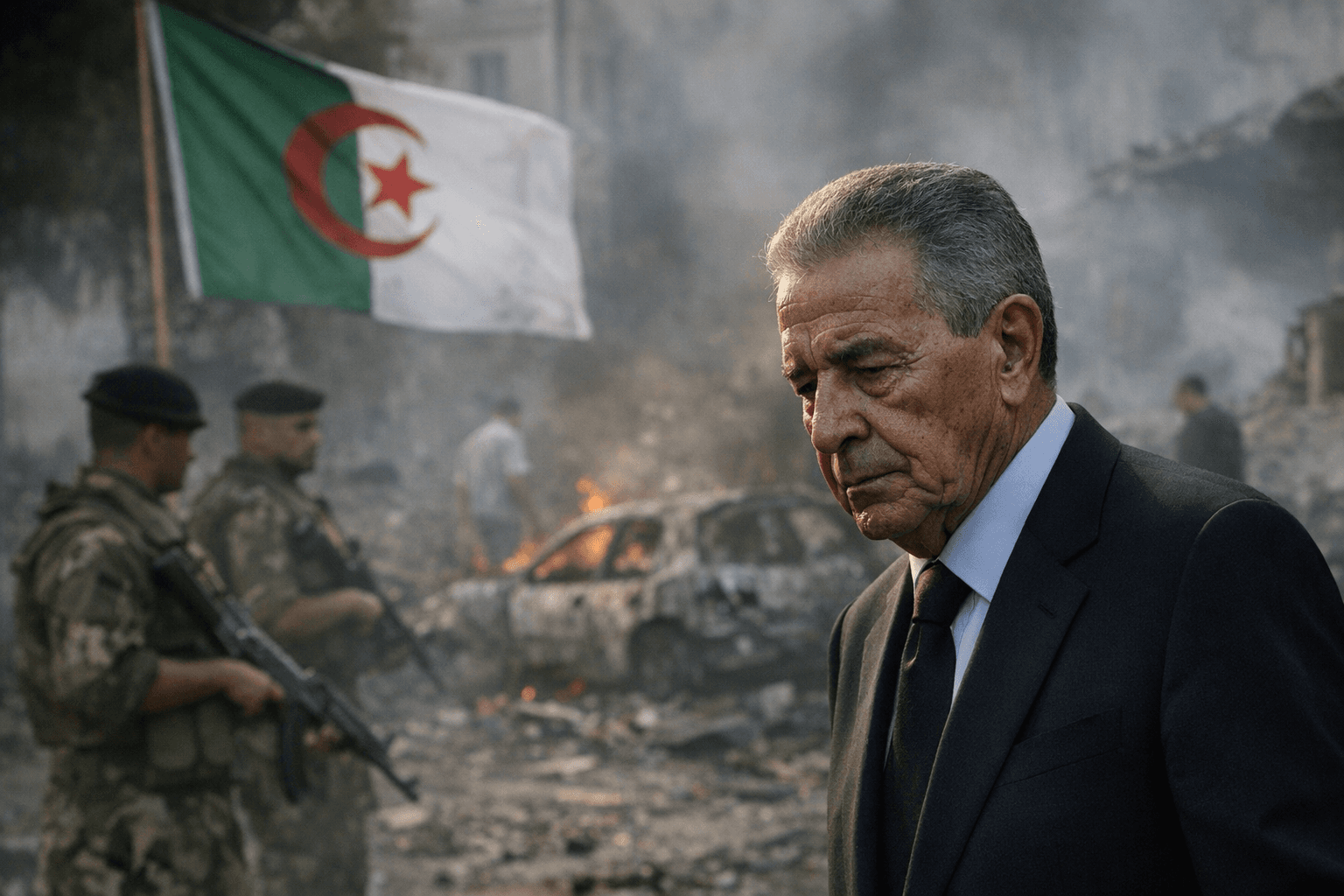
Liamine Zeroual arrived at the Algerian presidency carrying someone else's catastrophe. He left it, five years later, of his own accord. In Algeria's modern history, the second part of that sentence has no precedent.
Zeroual died on March 28, 2026, at the military hospital in Algiers, aged 84. Algeria announced three days of national mourning, with flags lowered at half-mast across the country. Current President Abdelmadjid Tebboune stood beside Zeroual's coffin at the Mohamed Seghir Nekkache Military Hospital where he died.
The catastrophe Zeroual inherited had its origins in a single act. In January 1992, as the Islamist Islamic Salvation Front (FIS) stood on the verge of a decisive parliamentary victory, the Algerian military cancelled the elections. President Chadli Bendjedid was forced from office. The FIS was banned and its leaders imprisoned. What followed was a decade-long insurgency, known as the Black Decade, that claimed more than 100,000 lives. By 1994, violence had reached such a level that it appeared the government might not be able to withstand it.
Zeroual was not a politician. Born on July 3, 1941, in Batna in eastern Algeria, he joined the National Liberation Army at 16 in 1957 to fight French colonial rule, then spent the post-independence years training in Cairo, Moscow, and Paris before rising through the officer ranks to command the Cherchell Military Academy in 1981 and achieve the rank of general by 1988. In January 1994, the military-backed High Council of State appointed him president. He had not sought the post.
His first approach to ending the war was negotiation. He engaged directly with imprisoned FIS leaders, seeking a peace settlement. When those talks collapsed in October 1994, he changed course entirely and called elections. On November 16, 1995, Zeroual won what Britannica described as Algeria's "first multicandidate presidential election" with 61 percent of the vote. The Armed Islamic Group (GIA) had threatened to kill anyone who participated, deploying the slogan "one vote, one bullet." Official turnout reached 76 percent regardless. A new constitution followed by referendum in November 1996, and legislative elections were promised for 1997 as part of a broader framework for ending the crisis.
In September 1998, Zeroual announced he would cut short his five-year term and call early elections, citing health. Most observers believed army factions had grown restless with his approach. He left office on April 27, 1999, succeeded by Abdelaziz Bouteflika, who ruled Algeria for nearly two decades before the mass Hirak protests forced him out in 2019. When asked at that moment to lead a transitional government, Zeroual declined.
The contrast between the two presidencies defines how he is remembered. The Algerian presidency mourned him as a "mujahid," a freedom fighter, recognizing his independence-era service alongside his stewardship of the state. What he represented, a leader who surrendered authority rather than being overthrown, dying in office, or holding on until forced out, remains singular in Algerian political life.
The security doctrine forged during the Black Decade endures. Authorities have tightened criminal legislation and continued to use repressive laws against dissent, including anti-terrorism provisions, while political affairs remain dominated by a closed elite based in the military and the ruling National Liberation Front. Tebboune was re-elected for a second term with 84.3 percent of the vote in September 2024. At the same time, Algeria now commands European attention through two overlapping channels: in 2025 it supplied the EU with between 39 and 40 billion cubic metres of gas, accounting for roughly 13 to 14 percent of total imports, and the Western Mediterranean migration route saw an increase in detections in 2025, linked mainly to higher departures from Algeria. The country Zeroual briefly steadied now sits at the center of Europe's energy and migration calculations, still governed by the same security establishment that appointed him three decades ago.
This article was produced by Prism’s automated news system from verified source data, official records, and press releases, then run through automated quality and moderation checks before publishing. The system is built and supervised by the people who set the standards it runs under. Read our full AI policy.
Did this article answer your question?


