Amazon Reaches USPS Deal Preserving Over 1 Billion Annual Package Deliveries
Amazon's new USPS deal locks in over 1 billion annual deliveries, averting a $6 billion revenue hit that could have forced painful service changes across rural America.
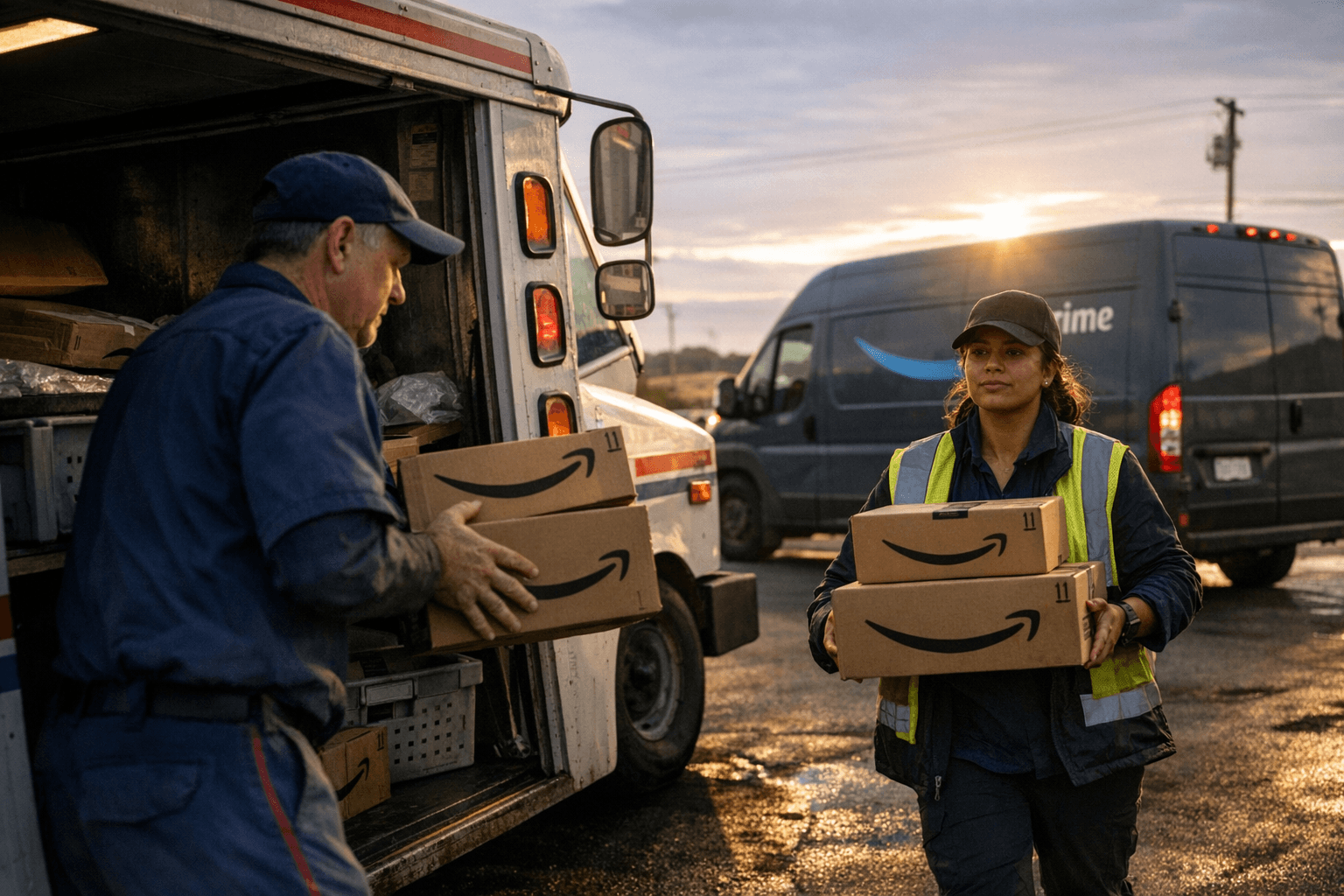
The roughly $6 billion question hanging over the U.S. Postal Service got a partial answer Monday when Amazon confirmed it had reached a new delivery agreement with USPS, one that preserves about 80 percent of the package volume the retailer currently routes through the agency, or more than 1 billion parcels a year.
The deal arrived as a last-minute reprieve for an agency already running chronic operating shortfalls. Amazon is USPS's single largest commercial customer, and its annual payments, estimated at roughly $6 billion against the postal service's $80 billion operating budget, represent a revenue concentration unlike anything else in the agency's commercial portfolio.
The stakes of losing that business were severe. Earlier in the negotiations, Amazon had raised the prospect of redirecting as much as two-thirds or more of its USPS volume to its own expanding logistics network, a shift that financial and logistics analysts said would have constituted an existential shock to the agency's finances. The finalized arrangement leaves four-fifths of that volume intact. Amazon said in a statement that it was "pleased to have reached a new agreement with USPS" and framed the deal as a continuation of a longstanding partnership. USPS had not issued a detailed public comment at the time of the announcement.
The dependency runs in both directions. While USPS needs Amazon's revenue, Amazon relies on USPS for something no private carrier has matched: last-mile access to every address in the country, including rural communities where the per-stop economics make delivery unprofitable for UPS or FedEx at scale. That geographic necessity gave USPS negotiating leverage even from a position of financial weakness, and it ultimately shaped a deal that keeps Amazon anchored to the postal network for a significant share of its domestic fulfillment.
Amazon has been investing aggressively in its own delivery infrastructure through its Delivery Service Partners program, alongside sortation facilities and last-mile buildout, and had signaled it could accelerate that expansion if talks broke down. Sources familiar with the negotiations said the company will now slow that rollout compared to the alternative plans it had been preparing.
But the agreement does not resolve the structural problems that have weighed on USPS for years: compounding liabilities tied to pension and retiree health benefits, eroding first-class mail revenue, and a borrowing ceiling that constrains modernization without congressional action. Analysts noted that preserving Amazon's volume buys the agency time to press for legislative reform, but the underlying fiscal architecture remains unchanged.
The contract terms, including pricing, agreement length, how rural delivery costs will be allocated, and whether Amazon retains flexibility to shift certain geographies to alternative carriers, were not publicly disclosed. Those specifics will ultimately determine whether the deal genuinely stabilizes USPS's revenue outlook or simply defers a reckoning with what has become the defining tension of the modern postal system: a public institution whose financial survival increasingly depends on the commercial calculus of a single private client.
This article was produced by Prism’s automated news system from verified source data, official records, and press releases, then run through automated quality and moderation checks before publishing. The system is built and supervised by the people who set the standards it runs under. Read our full AI policy.
Did this article answer your question?

