Amazon warehouses in Germany struck by workers, disruptions timed for Black Friday
Thousands of German logistics workers are staging coordinated strikes at Amazon fulfilment centres on Black Friday, aiming to force talks on pay and working conditions. The action raises fresh questions about supply chain resilience during the peak shopping period, and could intensify pressure on retailers and policymakers as European labour activism spreads.
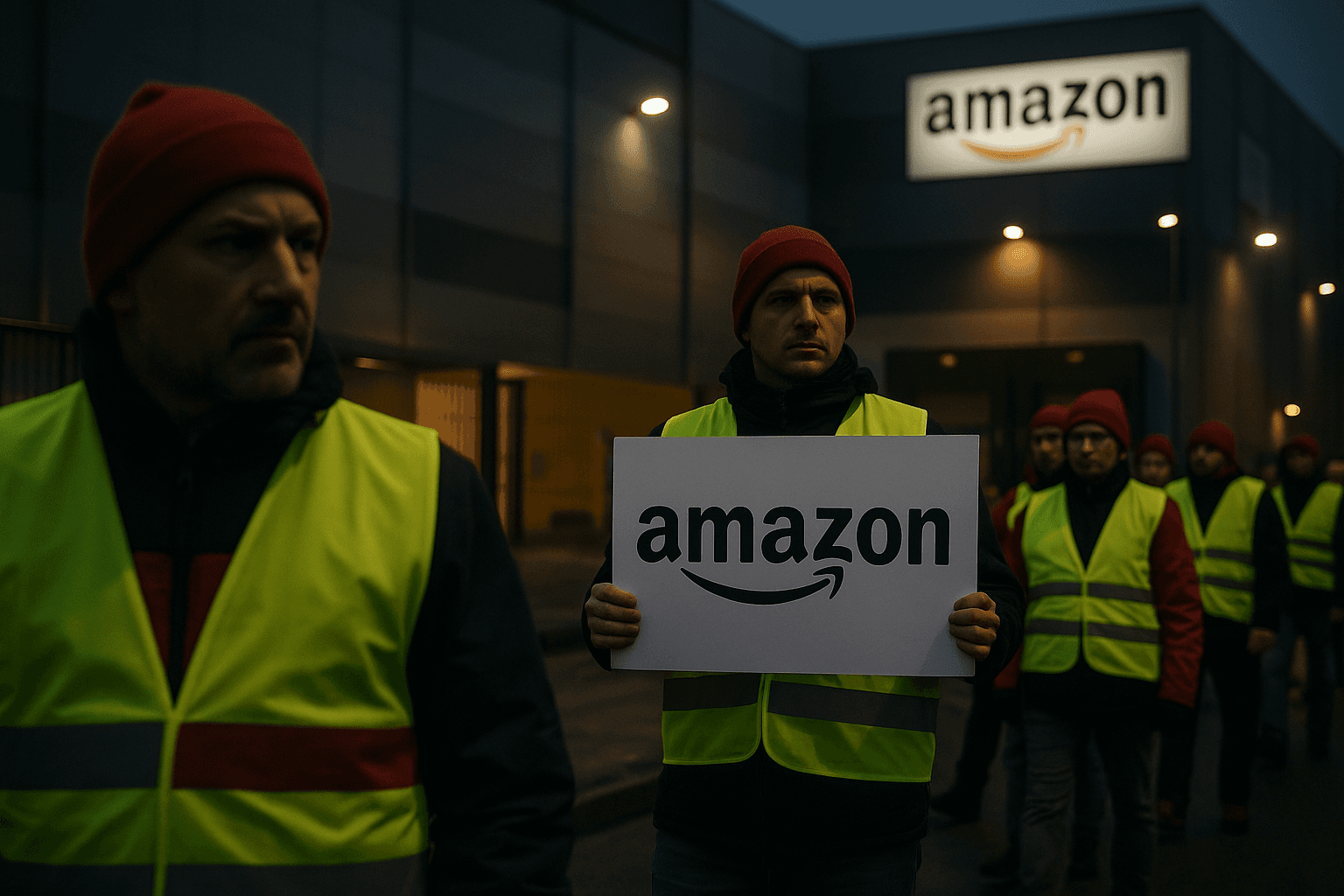
On Black Friday, November 28, 2025, roughly 3,000 logistics workers walked off the job at multiple Amazon fulfilment centres across Germany in a coordinated action organized by the services union Verdi. Sites affected include Bad Hersfeld, Dortmund, Frankenthal, Graben, Koblenz, Moenchengladbach, Rheinberg, Werne and Winsen. The strike is intended to push Amazon to enter collective bargaining talks and to raise pay and working conditions in the country’s large e commerce logistics network.
Amazon responded by saying the strike would not affect customer orders because it employs tens of thousands of permanent staff in Germany and had hired seasonal workers for the peak period. That mitigation strategy underscores the company’s ability to scale labour resources rapidly during seasonal peaks, but it also highlights the trade off companies face between short term operational continuity and longer term labour relations.
The timing of the action on Black Friday is strategically significant. Retailers and platforms handle a disproportionate share of annual online sales during the late November to December window, and logistics throughput is closely watched by investors and policymakers for signs of stress. While Verdi’s estimate of 3,000 participants represents a small fraction of Amazon’s overall German workforce, concentrated disruptions at key sites can create local bottlenecks and raise the cost of contingency measures such as overtime, rerouting and emergency hires.
The walkout is part of a broader uptick in retail and logistics labour activism across Europe on the same shopping day. Reuters reporting highlighted parallel labour actions including protests outside Zara stores in Spain. That coordination reflects a transnational pattern where unions leverage peak retail moments to amplify bargaining power, and where multinationals face simultaneous pressure across markets.
From an economic standpoint the immediate effect on consumer prices is likely muted given Amazon’s staffing buffers. However persistent wage pressure and wider adoption of collective agreements in logistics could raise operating costs for online retailers and third party couriers. Firms may respond by increasing prices, reducing seasonal hiring, accelerating automation investments or relocating capacity within cheaper jurisdictions. Over time those adjustments carry implications for productivity, capital expenditure in robotics and labour share of sectoral income.
Policy consequences are also in play. A negotiated collective bargaining agreement between Amazon and German unions would carry symbolic weight in Europe where collective bargaining coverage and labour standards vary by country. Successful union gains in one market can create precedence that encourages similar demands elsewhere, prompting regulators and companies to reassess frameworks for workplace protections in digital commerce.
Negotiations between Amazon and Verdi are likely to remain a focal point in the coming weeks as both sides weigh the costs and optics of escalation during the decisive holiday sales period. Market participants and policymakers will be monitoring delivery performance metrics and any further industrial action for signs of wider disruption to the holiday shopping season.
This article was produced by Prism’s automated news system from verified source data, official records, and press releases, then run through automated quality and moderation checks before publishing. The system is built and supervised by the people who set the standards it runs under. Read our full AI policy.
Did this article answer your question?

