Amazon widens its lead as Europe still lacks a rival
Amazon’s lead is now built on scale, logistics, and habit, while Europe’s €887 billion market remains too fragmented to produce a true challenger.
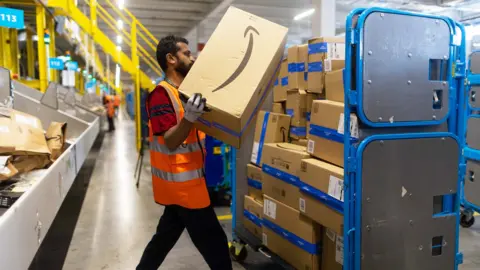
Amazon’s scale is becoming harder, not easier, to challenge
Amazon’s dominance is no longer just a story about size. It is a story about structure: a logistics machine that is expensive to copy, a Prime subscription that locks in repeat spending, a marketplace that feeds on its own data, and investors who have long accepted thin retail margins because the broader business is built to monetize more than product sales. That combination has pushed Amazon further ahead on both sides of the Atlantic, while Europe still lacks a single rival with comparable reach.
The numbers underline the gap. In the United States, Amazon was estimated to hold 40.5% of the online retail market in 2025, a share that puts it far ahead of every other e-commerce player. Amazon and Shopify together now account for about half of U.S. e-commerce, which shows that even the company’s nearest rivals are still operating in a market shaped by Amazon’s gravity rather than competing on equal terms. Amazon also reported fourth-quarter 2025 net sales of $213.4 billion, a reminder that its scale is not confined to web traffic or marketplace listings; it is a sprawling commercial system with enormous cash flow and operating leverage.
Why Europe has not produced a true Amazon rival
Europe’s problem is not the absence of demand. It is the absence of unified scale. The European B2C e-commerce market reached about €887 billion in 2024, up from €864 billion, so the region is large enough to support major digital retail businesses. Yet that market remains fragmented across countries, languages, delivery networks, tax regimes, and consumer habits, which means growth is spread among national champions instead of concentrating behind a single continent-wide platform.
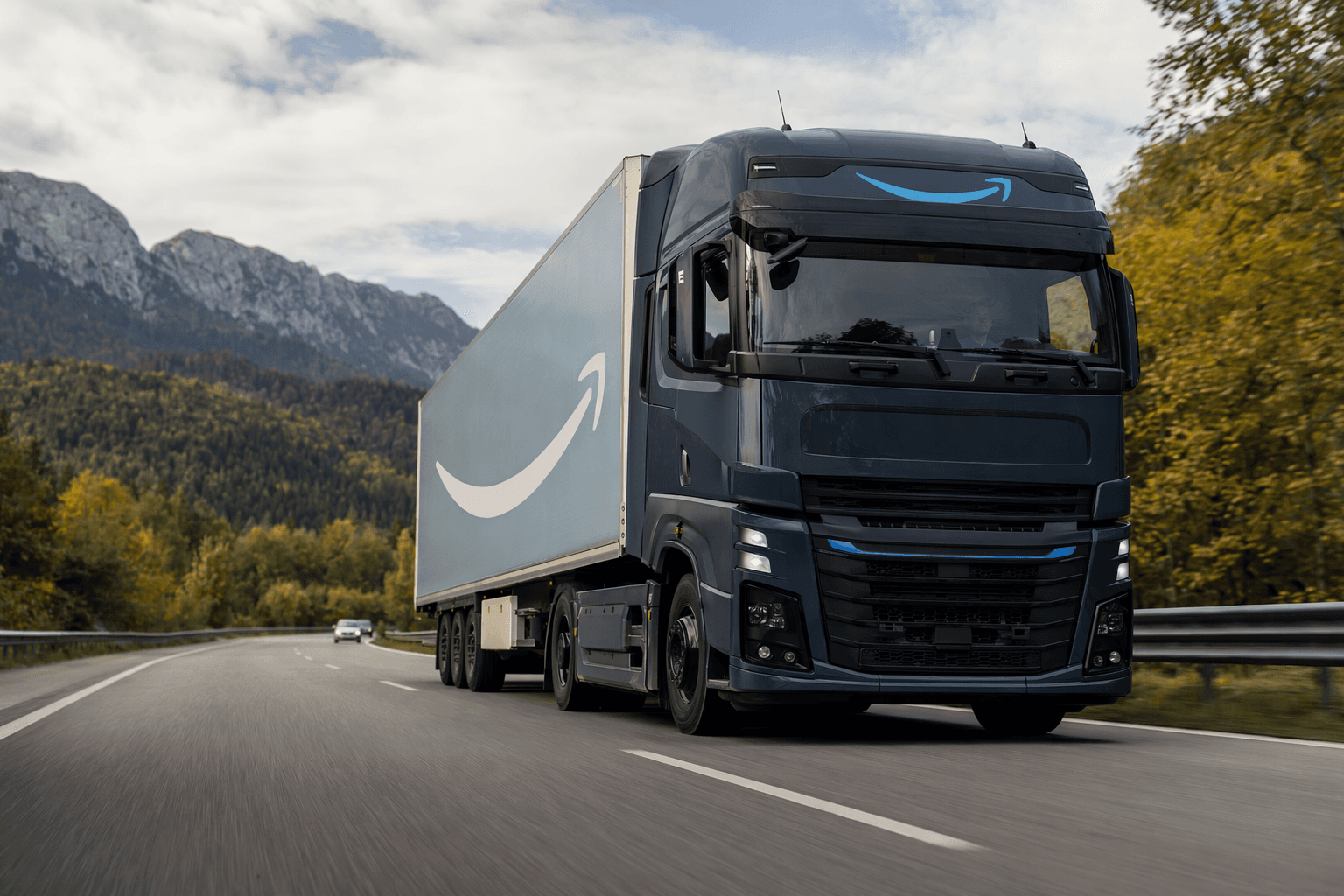
Amazon has used that fragmentation to its advantage. In Europe, it is described as the leading marketplace, with gross merchandise volume dwarfing established platforms such as eBay and Zalando. That matters because marketplace leadership compounds over time: more sellers attract more buyers, more buyers attract more sellers, and the resulting data advantage improves pricing, assortment, and logistics planning. A rival trying to match that loop has to spend heavily before it can even begin to compete on convenience.
The barrier is not just commercial. It is also financial. Building the warehouse network, delivery capacity, software infrastructure, customer service systems, and fulfillment intelligence required to challenge Amazon across multiple European countries demands billions in upfront capital. The rewards are uncertain, margins are thin, and the market is already fragmented enough that no challenger has yet convinced investors it can absorb years of losses and still emerge with continental scale.
The structural advantages that protect Amazon
Amazon’s early move into online retail gave it a crucial head start, but timing alone does not explain its position now. What keeps it ahead is the way its businesses reinforce one another. Prime deepens customer loyalty and raises switching costs. Marketplace volume generates data that improves product discovery, seller management, and inventory placement. Advertising adds a high-margin layer on top of retail traffic. Cloud computing broadens the company’s profit base, making it easier to tolerate low-margin retail operations while still delivering strong overall returns.
That mix is especially hard for rivals to copy because each part strengthens the next. A retailer can imitate one layer, such as fast delivery or a membership program, but copying the whole stack is far more difficult. A European competitor would need not just a website and warehouses, but also enough scale to persuade consumers that its assortment, speed, prices, and delivery promise are dependable in every market where it operates. Amazon already has that trust loop, and its scale keeps lowering the cost of using it.
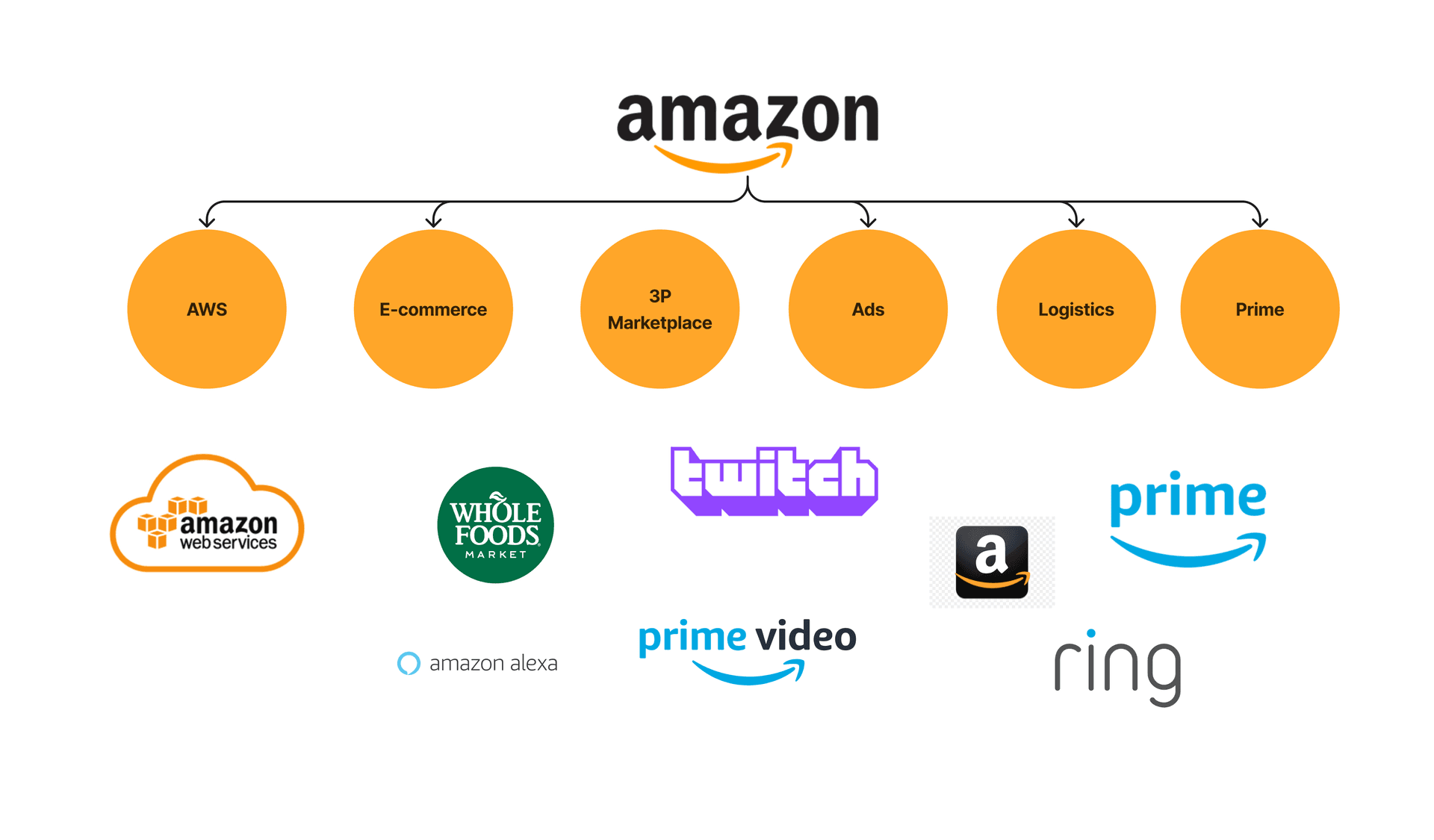
Consumer habit is another hidden moat. Once households sign up for Prime, they tend to start with Amazon by default, especially when a purchase is urgent or routine. Sellers also follow the traffic, which means Amazon’s marketplace becomes even more central. Over time, that habit can matter as much as price, because convenience and predictability become the reasons shoppers stay.
Labor pressure has not changed the power balance
Amazon’s reach has also made it a lasting target for labor and antitrust scrutiny. Workers staged strikes and protests across Europe during Black Friday 2023, showing that the company’s pressure points are not limited to competition policy. In July 2024, a union recognition ballot at Amazon’s warehouse in Coventry, England, was lost by just 29 votes, a narrow result that still highlighted how difficult it is for labor organizers to break through Amazon’s operational discipline and site-by-site control.
Those disputes matter because they expose a second layer of Amazon’s dominance: regulatory tolerance has so far been uneven, and labor resistance has been real but fragmented. Protests in one country or one warehouse do not dismantle a platform built across multiple jurisdictions. Instead, they tend to underscore how difficult it is to impose a unified response on a company that itself operates at continental and transatlantic scale.

For policymakers, the implication is clear. If Europe wants a serious challenger, the issue is not only supporting entrepreneurs. It is whether the region can lower the structural costs of scale, from cross-border logistics to regulatory complexity, without abandoning competition goals. Until then, Amazon’s advantage will remain self-reinforcing.
What Amazon’s lead means for the next phase of e-commerce
The long-term picture is less about one retailer’s success than about the rules of digital commerce. Amazon has shown that in retail, dominance comes from infrastructure as much as from assortment. Whoever controls the logistics network, the consumer relationship, and the seller ecosystem can shape the market even when margins stay thin. That is why Amazon can keep widening its lead while Europe, despite a massive and growing market, still produces strong local players rather than a single pan-European counterweight.
The result is a market that looks competitive on the surface and concentrated underneath. Amazon is not merely big. It is embedded in the mechanics of how online retail works, and that makes the company unusually hard to dislodge. Europe’s next rival will need more than a good brand or a low-price strategy. It will need scale, patience, capital, and a way to overcome the very advantages Amazon has spent two decades turning into barriers.
This article was produced by Prism’s automated news system from verified source data, official records, and press releases, then run through automated quality and moderation checks before publishing. The system is built and supervised by the people who set the standards it runs under. Read our full AI policy.
Did this article answer your question?
%3Amax_bytes(150000)%3Astrip_icc()%2FCertificate-of-deposit-2301f2164ceb4e91b100cb92aa6f868a.jpg&w=1920&q=75)