American Airlines Rejects United Merger Talks, Citing Competition Concerns
American said it is not interested in a United tie-up, warning that a merger would hurt consumers and invite heavy antitrust scrutiny.
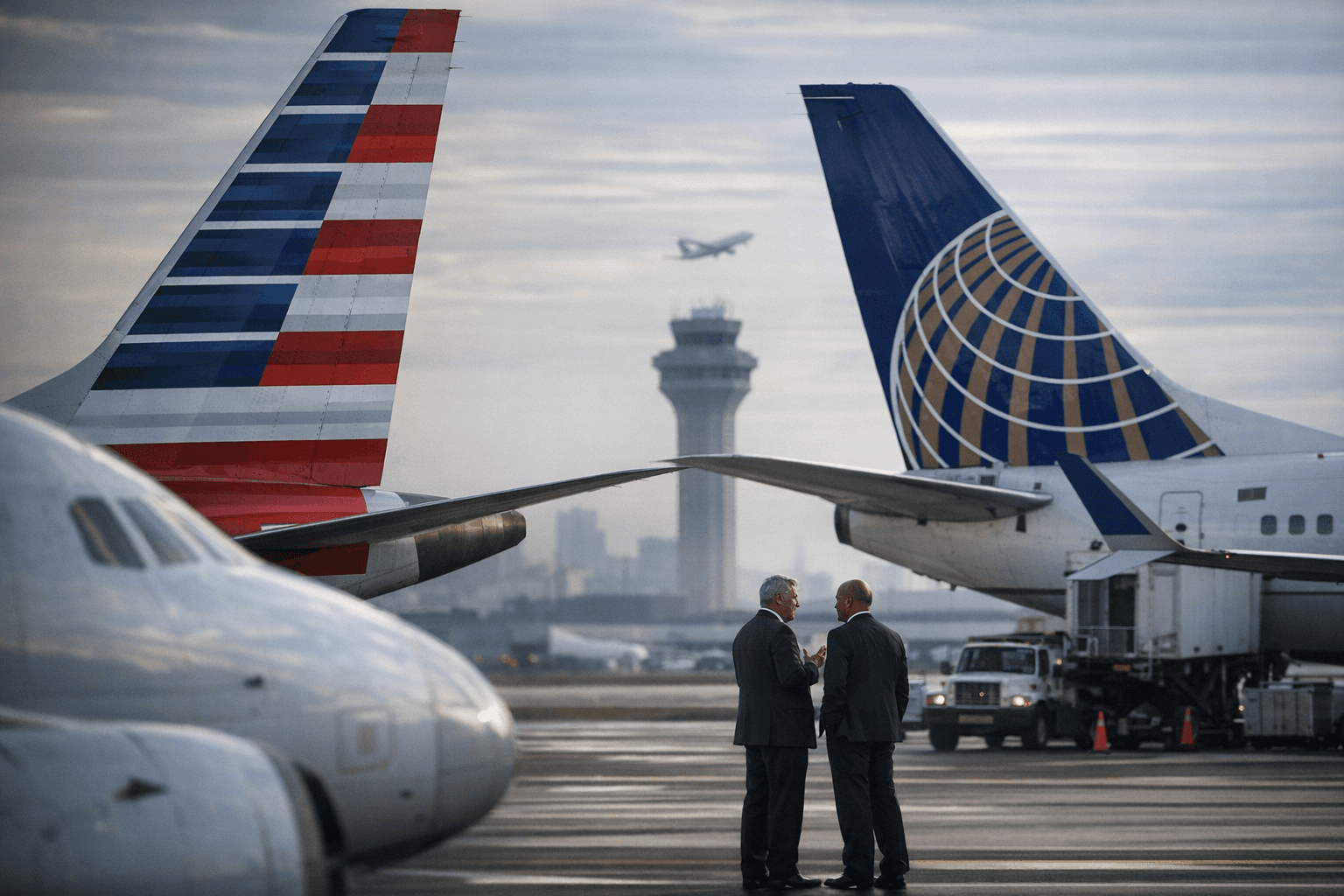
American Airlines rejected the idea of merger talks with United Airlines, saying the two carriers were not engaged in any discussions and that a combination would be bad for competition and consumers. The Fort Worth, Texas-based airline said a tie-up would also clash with its understanding of the Trump administration’s philosophy toward the industry and core antitrust principles.
The statement, issued Friday, April 17, 2026, followed reports that United Airlines chief executive Scott Kirby had floated the possibility of a United-American merger in a late-February meeting with President Donald Trump. The reported pitch put one of the most consequential consolidation questions in U.S. aviation back in the spotlight, even as neither carrier had announced any formal transaction process.
The reaction underscored why airline consolidation remains politically radioactive. A United-American combination would join two of the country’s largest network airlines in a market that is already highly concentrated, a point repeatedly cited by industry officials, consumer advocates, labor unions and antitrust experts. The central concern is straightforward: fewer rivals usually mean less pricing pressure, and critics warned that a merger could lead to higher fares, reduced competition and fewer choices on overlapping routes.
That scrutiny would likely extend beyond ticket prices to network strategy, hub dominance and the loss of competitive overlap in major markets. Regulators would be expected to examine whether a combined carrier could narrow service options, shift capacity away from contested routes and strengthen pricing power in cities where United and American already compete for business travelers. That is why the deal has been widely described as a long shot.
American said it would instead focus on executing its strategic objectives and positioning the airline to win for the long term, while continuing to work collaboratively with the administration as it takes steps to strengthen the broader airline industry. The White House had not immediately commented publicly on the reported pitch, and United declined to comment on the antitrust implications of a possible merger.
For now, American’s rejection makes clear that even informal talk of a United-American tie-up runs into the same obstacle that has blocked most major airline consolidation in the United States: the industry’s size, the cost to consumers and the certainty of fierce regulatory resistance.
This article was produced by Prism’s automated news system from verified source data, official records, and press releases, then run through automated quality and moderation checks before publishing. The system is built and supervised by the people who set the standards it runs under. Read our full AI policy.
Did this article answer your question?

