Americans grill with confidence, but food-safety basics still matter
July 4 turns grilling into a national performance, but the grill gap shows confidence still outruns safe temperatures.
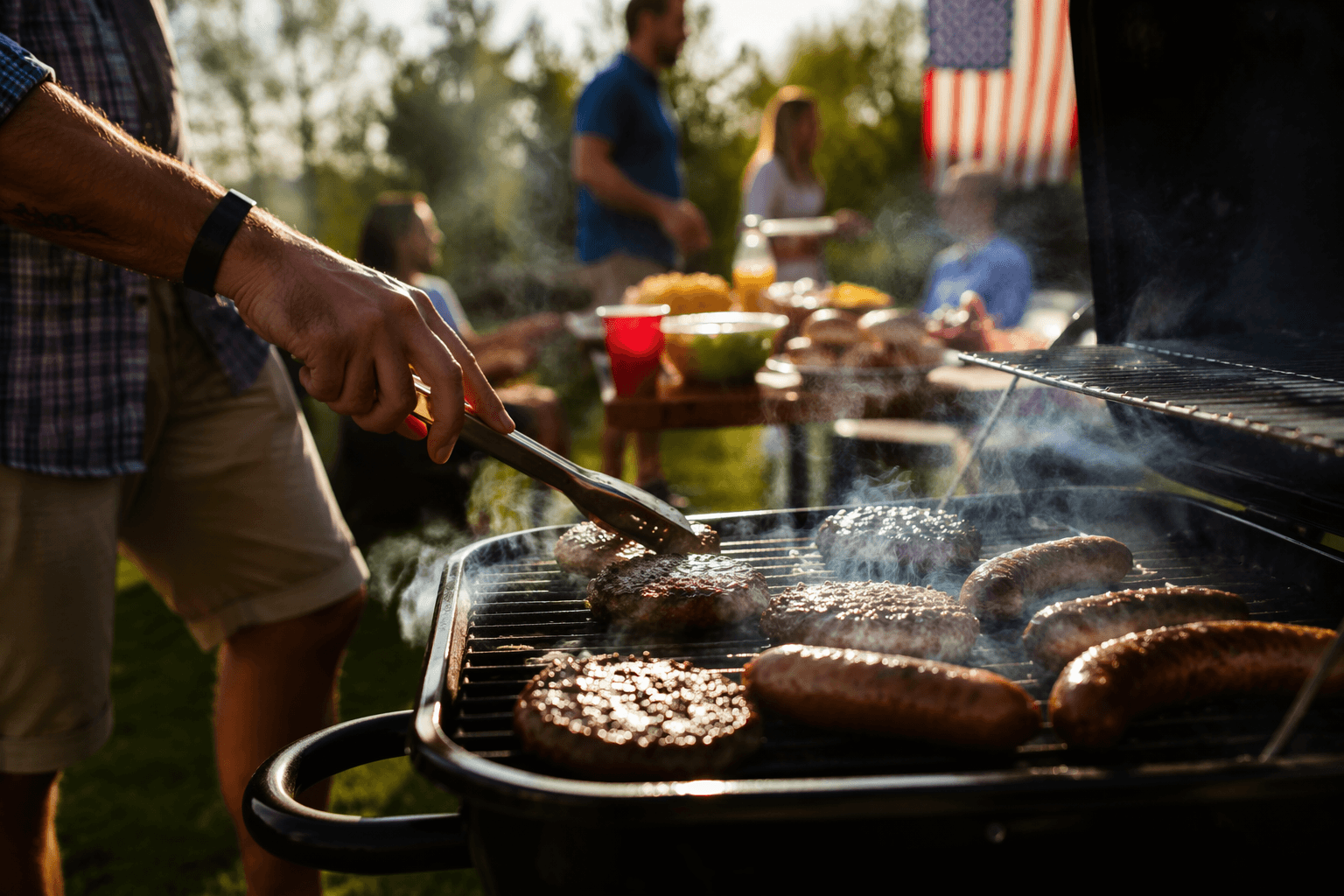
Americans treat the grill like a stage, a scoreboard, and a social test all at once. On the country’s biggest barbecue holiday, the Fourth of July, the performance is everywhere: the smell of smoke, the inherited opinions, and the friend who insists he knows exactly when the steaks are done.
The holiday that makes grilling feel like a national ritual
The Fourth of July remains the most popular U.S. holiday for grilling, and the numbers around it are hard to ignore. The National Retail Federation says 87% of consumers plan to celebrate Independence Day in 2026 and expect to spend an average of $94.41 on food items, a strong signal that backyard cooking still anchors the holiday’s social calendar.
That pattern shows up in earlier survey work too. YouGov found that 48% of adults who planned to celebrate July 4 in 2025 expected to host or attend a barbecue. Among owners of mid-to-high-end grills, the Hearth, Patio & Barbecue Association found that 70% grilled on Independence Day, with Memorial Day close behind at 58%. Holiday barbecue is not a niche habit anymore; it is one of the country’s most reliable summer customs.
Confidence is part of the recipe, even when it is misplaced
Barbecue culture rewards certainty. People do not just cook over flame, they narrate the process, compare notes, and offer guidance whether or not anyone asked for it. That confidence gets a lot louder in peak grilling season, when the backyard becomes a place for identity, regional pride, and friendly one-upmanship.
A 2026 Prairie Fresh survey captured the gap between swagger and skill. Based on responses from more than 1,500 U.S. adults who grill or barbecue, Americans’ confidence in their barbecue skills exceeded their actual competence by 32%. The same survey found that three in four self-described confident pork cooks still missed the recommended safe temperature for pork tenderloin. In other words, plenty of people are sure they know what they are doing long before the thermometer agrees.
That mismatch matters because grilling is often treated like instinct, not measurement. The social ritual may be casual, but the food on the grate still has to clear a very specific safety bar.
The temperatures that keep the grill from becoming a gamble
The U.S. Department of Agriculture’s Food Safety and Inspection Service and the Centers for Disease Control and Prevention both put the same basic tool at the center of safe grilling: a food thermometer. USDA guidance says beef, pork, veal, and lamb steaks, roasts, and chops should reach 145°F and then rest for 3 minutes. The CDC says poultry should reach 165°F.
Those numbers are the practical answer to a problem barbecue culture often tries to solve by touch, timing, or folklore. A thermometer cuts through the guesswork, especially when thicker cuts cook unevenly or when heat is coming from a grill that runs hotter on one side than the other. USDA and CDC guidance also stresses avoiding cross-contamination, which means keeping raw meat, cutting surfaces, and ready-to-eat food separate before anything hits the table.
The pork finding from Prairie Fresh is a reminder that confidence can be misleading in the one category where the margin for error is smallest. Tenderloin, in particular, is the kind of cut that can tempt people into relying on appearance alone. The safe habit is simpler: measure first, celebrate after.
Why barbecue carries so much cultural weight
The word itself points to how far this tradition travels. “Barbecue” is generally traced to Spanish “barbacoa,” which came from Taíno and other Arawakan roots describing a wooden framework used for cooking or drying meat. The practice developed across Indigenous Caribbean and colonial contexts before it became a distinctly American summer ritual. That history helps explain why barbecue carries so much more than flavor: it is a technology, a tradition, and a marker of belonging.
National Barbecue Month adds another layer to the calendar. National Day Calendar says the observance was founded in 1963 by the Barbecue Council to encourage outdoor cooking, though later historical writing notes that the month’s origin story is a little murky. May may claim the title on paper, but July owns the social energy. By the time Independence Day arrives, barbecue is no longer just a meal. It is a public proof of readiness, competence, and taste.
What matters most when the grill is hot
The best grilling advice is rarely the loudest. It is the advice that keeps the gathering moving and the food safe without turning the backyard into a lecture hall. That means a few habits are worth keeping close every time the coals are lit:
- Use a food thermometer instead of guessing by color or texture.
- Keep raw meat and finished food separate to avoid cross-contamination.
- Cook beef, pork, veal, and lamb steaks, roasts, and chops to 145°F, then rest them for 3 minutes.
- Cook poultry to 165°F.
- Treat confidence as a starting point, not a substitute for measurement.
That checklist may sound plain, but plain is the point. Backyard barbecue endures because it gives people a low-stakes arena for competition, storytelling, and expertise, all while centering a meal that feels distinctly American. The social part may be improvisational, but the food safety part is not.
This article was produced by Prism’s automated news system from verified source data, official records, and press releases, then run through automated quality and moderation checks before publishing. The system is built and supervised by the people who set the standards it runs under. Read our full AI policy.
Did this article answer your question?