Americans split over flying the flag as July Fourth nears
A July Fourth poll found 64% of Republicans planned to fly the flag or bunting, versus 27% of Democrats, as Americans split over what the Stars and Stripes means.
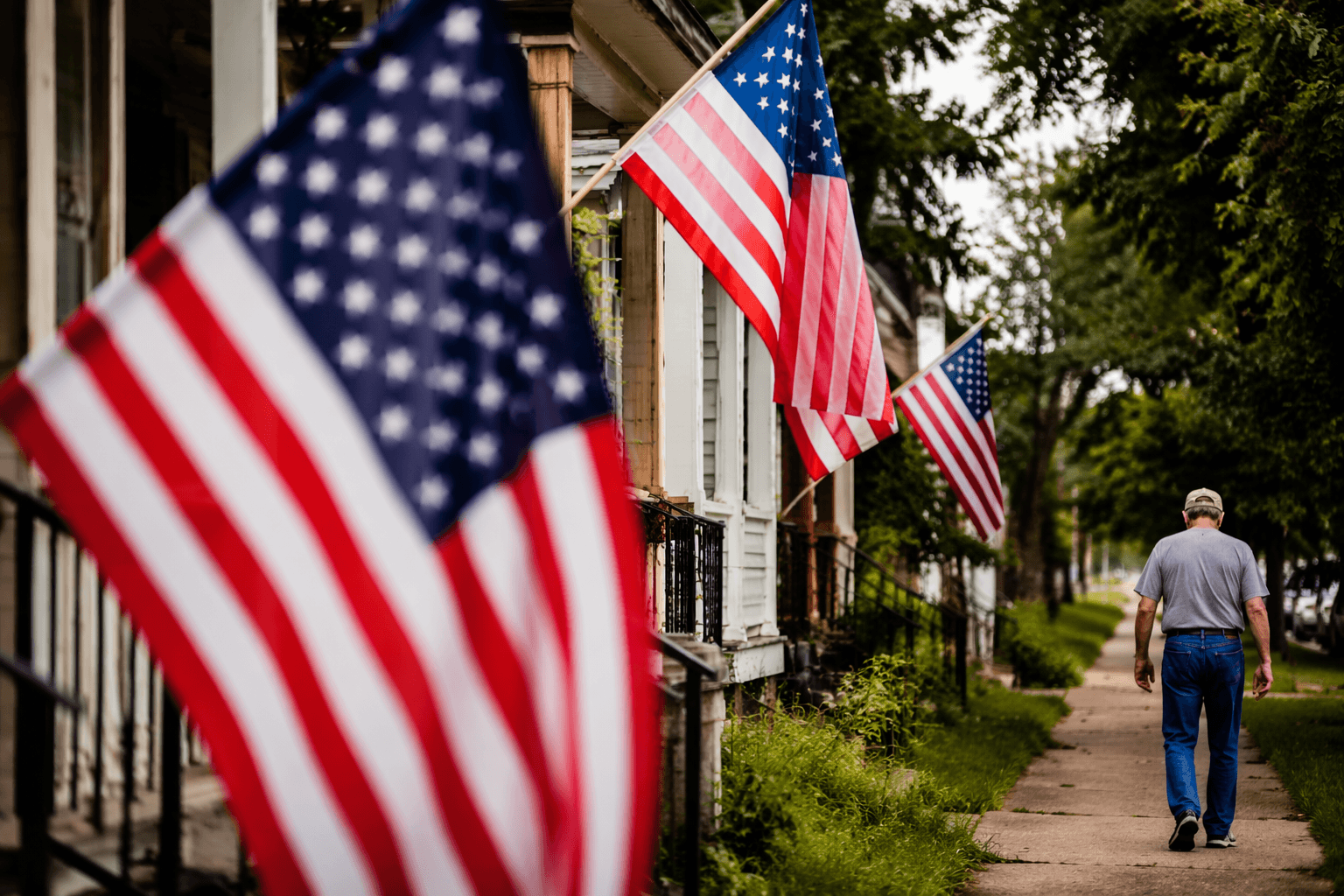
With July Fourth days away, a Reuters/Ipsos poll found 64% of Republicans planned to fly the American flag or bunting, compared with 27% of Democrats. The gap lands as the United States nears its 250th birthday on July 4, 2026, and as NBC News says reactions to displaying the Stars and Stripes have become sharper in a polarized moment.
NBC News has said the flag is increasingly wrapped up with politics, including President Trump, and that some readers describe flying it less as a simple act of patriotism than as something shaped by peer pressure. In that telling, not putting up a flag can invite questions about where someone stands, while putting one up can feel like a declaration in a culture war.
NBC also highlighted two sharply different instincts. Dave Cavannah said Americans should be proud to fly the flag, while a woman in Newtown, Pennsylvania, said not displaying one can lead others to assume she is against the country. Those reactions, taken together, show how a familiar holiday symbol has become a test of belonging for some households and neighborhoods.
The same national tension is visible in space policy, where experts say interest in the space race is not new but the rise of public-private partnerships is. NASA’s Commercial Lunar Payload Services program lets the agency buy lunar delivery services from commercial vendors, and NASA says the initiative supports science and technology payload deliveries to the Moon as part of Artemis.
NASA says Artemis is meant to send astronauts back to the Moon and prepare for Mars, with industry partners, international partners and commercial providers all folded into the campaign. NASA and the U.S. Department of State, along with seven other initial signatory nations, established the Artemis Accords in 2020 as a common framework for civil exploration and use of outer space.
That leaves the country heading toward its semiquincentennial with two overlapping shifts: national symbols that feel more contested than unifying, and national ambition that is increasingly shared with private capital. The flag and the Moon are still public icons, but both now sit in systems shaped by politics, contracts and competing ideas of who gets to define American identity.
This article was produced by Prism’s automated news system from verified source data, official records, and press releases, then run through automated quality and moderation checks before publishing. The system is built and supervised by the people who set the standards it runs under. Read our full AI policy.
Did this article answer your question?