America's first honey sommelier teaches how to taste real honey
A bee tour in 1999 turned Marina Marchese into America’s first honey sommelier, and now she is teaching shoppers to taste honey by place, plant and purity.
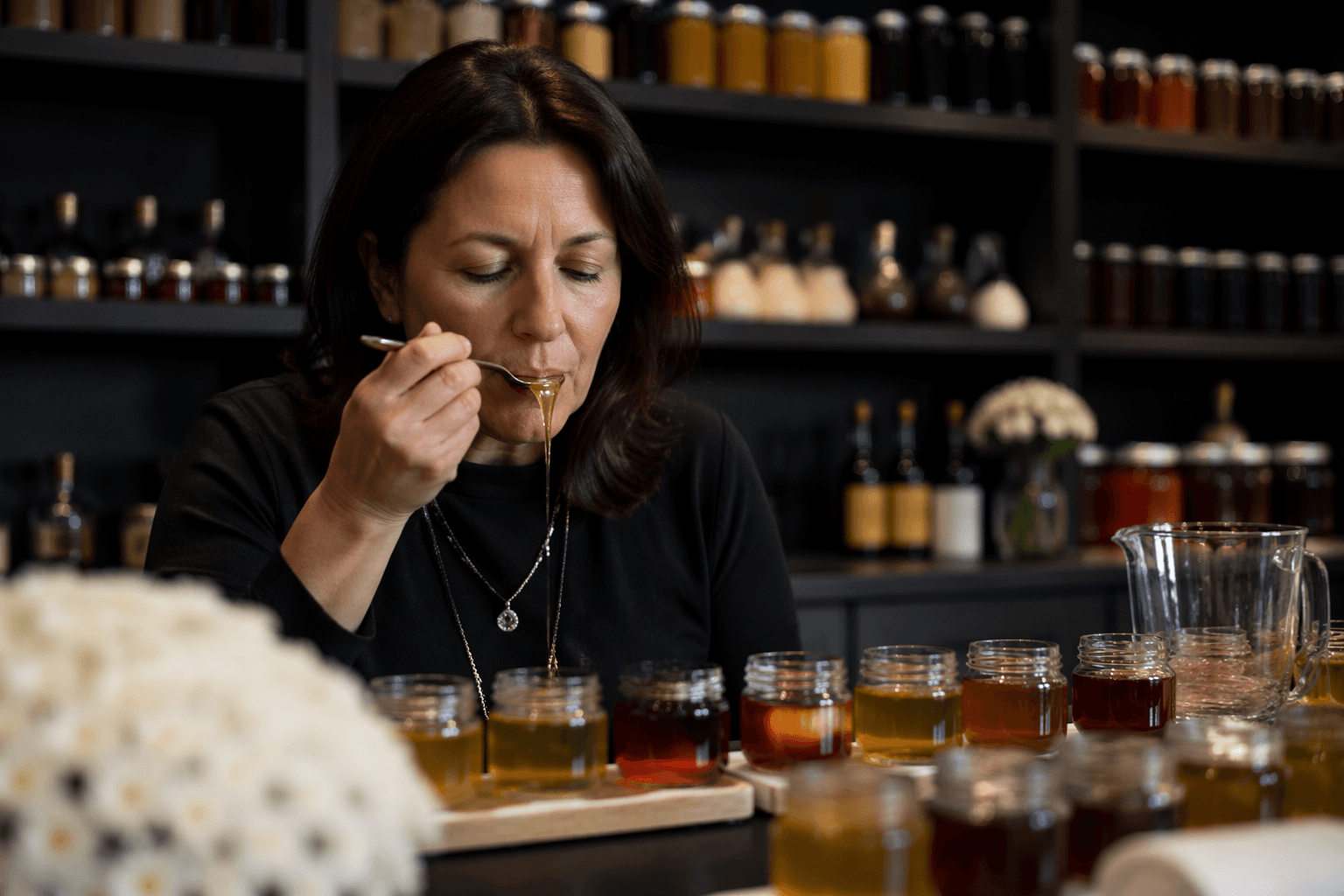
Marina Marchese has built a career on a simple idea with complicated stakes: honey is not one flavor. To her, a jar can reveal the flowers a bee visited, the climate that shaped the nectar, and the beekeeper’s hand in how it was harvested. That lesson has made her America’s first honey sommelier and a guide for consumers trying to tell authentic, varietal honey from bland, adulterated imitations.
Her story also captures a larger shift in American food culture. As shoppers learn to talk about honey the way they talk about wine or coffee, they are being invited into a premium-food market where origin, processing, and labeling carry real value. Marchese’s work sits at the intersection of taste education, consumer protection, and the growing demand for foods that can be traced back to a place and a practice.
From a neighbor’s hives to a sensory career
Marchese says her fascination began in 1999, when she fell in love with bees during a tour of a neighbor’s hives. She quit her job, acquired bees, built her own hives, harvested honey, earned a certificate in apitherapy, and studied wine tasting so she could transfer those sensory skills to honey. That path eventually led her to open her own honey business, Red Bee Honey, and to become a public face for a category many Americans had never thought to examine closely.
Her education was not casual or improvised. Marchese received formal honey-sensory training in Italy, returned to Bologna two more times to complete that training, and became the first U.S. citizen accepted into the Italian National Register of Experts in the Sensory Analysis of Honey. By July 15, 2024, she was described as the first American recognized as an official instructor with that register, a marker that underscores how rare and specialized this field remains.
What a honey sommelier actually teaches
Marchese’s role is not about memorizing jargon for its own sake. It is about training the palate to detect subtle differences in aroma, flavor, and texture that reflect where a honey came from and how it was made. In her work, honey becomes a sensory map: nectar source, pollen-bearing plants, climate, and beekeeper practices all leave their mark.
That approach mirrors the way people are taught to evaluate wine and coffee, two markets that have long rewarded origin stories and taste literacy. Marchese has extended that model to honey through the American Honey Tasting Society, which she founded in the early 2010s to teach the Italian method of sensory analysis in the United States and to protect the quality and character of honey. The society says its English-language classes are officially validated by the Italian register, which gives the instruction a level of institutional legitimacy uncommon in the American honey market.
The lessons are broader than tasting notes. Marchese’s education programs have included honeys from around the world, helping students understand why one honey can be floral and delicate while another is darker, more herbal, or more robust. Her books, including Honeybee: Lessons from an Accidental Beekeeper, The Honey Connoisseur, Honey for Dummies, and The World Atlas of Honey, have carried that same message into a wider audience.
Why terroir matters in a jar
The idea at the center of Marchese’s teaching is terroir-like difference, a concept more commonly associated with wine. In honey, it means the flavor is shaped by the plants in bloom, the weather, and the local environment, not just by the word “honey” on a label. That is why Marchese pushes consumers to look beyond sweetness and ask what kind of honey they are actually buying.
This matters because the premium-food economy depends on distinction. When a jar is presented as raw, local, monofloral, or artisanal, the buyer is paying for specificity, not just calories. Marchese’s work helps explain why that specificity has value, and why the people most likely to benefit are those who can access education, better labeling, and trusted sellers in a crowded marketplace.
It also matters because authenticity has become part of the purchase. Honey experts and Marchese’s own materials frame her mission as helping consumers understand varietal honey and spot adulterated products in a market where floral origin matters. In practical terms, that means teaching people to be skeptical of vague claims and to notice when a jar’s story is too generic for a product that should reflect a landscape.
The consumer lesson behind the buzz
Marchese’s rise says something larger about the way Americans are learning to shop. Taste is no longer just about preference; it is becoming a form of literacy. Honey, once treated as a basic pantry staple, is increasingly being marketed and judged like a craft beverage or specialty coffee, with origins, notes, and methods of production folded into the selling point.
That shift has public-health and equity implications, too. When a food category becomes more premium, shoppers need clearer standards and better information to avoid confusion and deception. Labels that are too loose can leave consumers, especially those paying more for “natural” or “artisanal” products, vulnerable to products that do not match their marketing. Marchese’s teaching pushes back against that opacity by giving buyers tools to evaluate what is in the jar before they pay a premium for it.
Her career shows how expertise can serve the public interest. By linking sensory education, beekeeping, and consumer awareness, Marchese has turned honey tasting into something larger than a niche hobby. It is a lesson in how food culture changes when people begin to expect traceability, honesty, and flavor with a sense of place, and why the difference between real honey and the rest of the shelf is worth learning.
This article was produced by Prism’s automated news system from verified source data, official records, and press releases, then run through automated quality and moderation checks before publishing. The system is built and supervised by the people who set the standards it runs under. Read our full AI policy.
Know something we missed? Have a correction or additional information?
Submit a Tip
%3Amax_bytes(150000)%3Astrip_icc()%3Afocal(749x0%3A751x2)%2FDaniel-Crago-bear-attack-060726-c453f6bc5b47401baa2718f1fba745b5.jpg&w=1920&q=75)