Andy Burnham could become Britain’s prime minister within weeks
Burnham’s climb is fast, but Labour’s own agenda may travel with him. He could reach Downing Street in July while inheriting Starmer’s policy constraints.
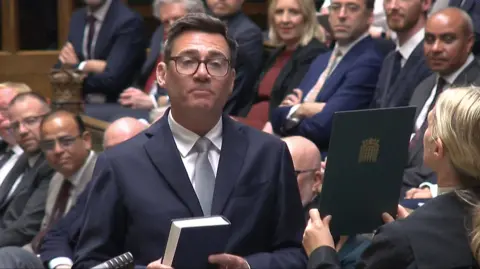
Andy Burnham was sworn in as an MP on June 22 after winning the Makerfield by-election on June 18 by more than 9,000 votes over Reform UK’s Robert Kenyon, and Keir Starmer resigned the same day while promising to stay on briefly for an orderly handover. That sequence has turned Burnham, the outgoing mayor of Greater Manchester, into the leading candidate to take Labour’s top job and possibly the premiership within weeks.
The numbers now define the race. Under Labour’s rules, any challenger needs 81 MP nominations to force a contest, and Burnham is the only declared contender so far. If no rival reaches that threshold, he could be installed on July 17 or July 18 without a full leadership fight. Wes Streeting, a former cabinet minister, has already backed him rather than challenge him, a sign that the contest may be over before it begins.

The harder question is what Burnham would actually change. Labour’s 2024 manifesto, written when the party ended 14 years of Conservative rule, and its current Plan for Change still revolve around economic stability, secure borders, national security, growth, clean energy, NHS reform and lower household costs. That is a narrow lane for any new leader. Burnham can offer a different tone, more charisma and a stronger retail political style than Starmer, but he would still inherit the same sluggish economy, the same pressure on living costs and the same demand for quick results without ripping up the governing settlement.
That tension is why Burnham’s rise is about more than Westminster drama. A POLITICO poll found only one in five U.K. adults wanted him installed immediately as Labour leader, while 54% preferred a leadership contest, even though many voters were more open to the idea of him eventually becoming prime minister. One political science professor has warned that Burnham is being cast as a savior figure, but the test comes when expectations rise and the mood turns. Burnham plans to set out his economic vision next week, when he will have to show how far a new face can go inside an old framework.
If he takes office, Britain would get its seventh leader in a decade, and Labour would hand power to a politician newly returned from local government in Greater Manchester, only to discover that the limits of reinvention may be as important as the promise of it.
This article was produced by Prism’s automated news system from verified source data, official records, and press releases, then run through automated quality and moderation checks before publishing. The system is built and supervised by the people who set the standards it runs under. Read our full AI policy.
Know something we missed? Have a correction or additional information?
Submit a Tip