Andy Burnham’s Makerfield candidacy turns by-election into national test
Makerfield's by-election has become a test of Labour's working-class support, with Andy Burnham facing Reform pressure after Josh Simons resigned.
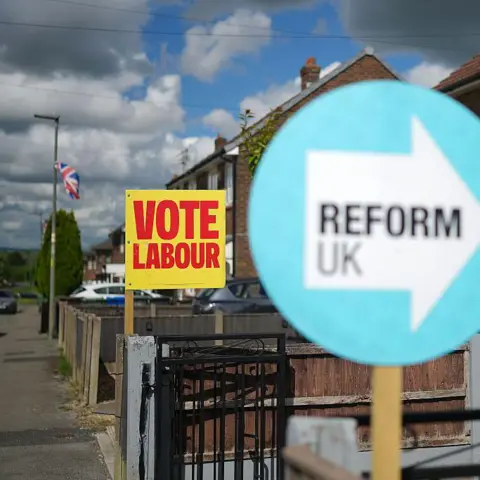
Makerfield has become a flashpoint for voters who are talking less about party labels than about buses, bills, housing and whether Westminster notices towns like theirs at all. The seat is now vacant and the by-election is set for Thursday 18 June 2026 after Josh Simons resigned as Labour MP on 14 May and the vacancy was formalised four days later through the Chiltern Hundreds. Andy Burnham’s decision to stand has pushed a local contest into national politics.
If Burnham wins, he would have to step down as Greater Manchester mayor and trigger a mayoral by-election, giving the result consequences well beyond Wigan borough. Labour confirmed him as its candidate on 19 May, and the race has since been framed as a measure of both Labour’s standing in post-industrial communities and Reform UK’s ability to turn frustration into votes.

The numbers show why neither party is treating Makerfield as routine. The constituency was redrawn in the 2023 boundary review, but the wider area has been Labour-held since the seat was created in 1983, with the former Ince seat also long dominated by Labour. At the 2024 general election, Labour won with 18,202 votes, or 45.2%, and a majority of 5,399 over Reform UK, which finished second on 31.8% with 12,803 votes. Turnout was 52.5% from an electorate of 76,641, making this look less like a safe seat than a Labour-Reform marginal.
That tension has sharpened after the May 2026 local elections. Reform won 24 of the 25 seats up for grabs in Wigan borough, a result that underlined its strength across the area. The eight wards covering Makerfield did not return a single Conservative councillor, a sign of how far the old two-party assumptions have broken down.
On the doorstep, residents and campaigners have been speaking about transport, the cost of living, anti-social behaviour, planning and housing pressures, alongside a deeper sense that the area has been left behind. One local report found people broadly happy with buses and trains despite a lack of services, a reminder that frustration is real but not uniform. Fourteen candidates were validly nominated, broadening the contest beyond a simple Labour-versus-Reform showdown.
Local reporting also suggests that comments attributed to Reform’s Robert Kenyon have put off some voters, especially women. Taken together, those conversations point to a constituency where party loyalty is still alive, but no longer automatic. Makerfield is now a test of whether Labour can hold working-class and lower-middle-income voters while Reform turns grievance into durable support.
This article was produced by Prism’s automated news system from verified source data, official records, and press releases, then run through automated quality and moderation checks before publishing. The system is built and supervised by the people who set the standards it runs under. Read our full AI policy.
Did this article answer your question?

