Anthropic accuses Alibaba of stealing Claude AI capabilities
Anthropic accused Alibaba-linked operators of using 25,000 fake accounts and 28.8 million Claude exchanges in what it called its largest known distillation attack.
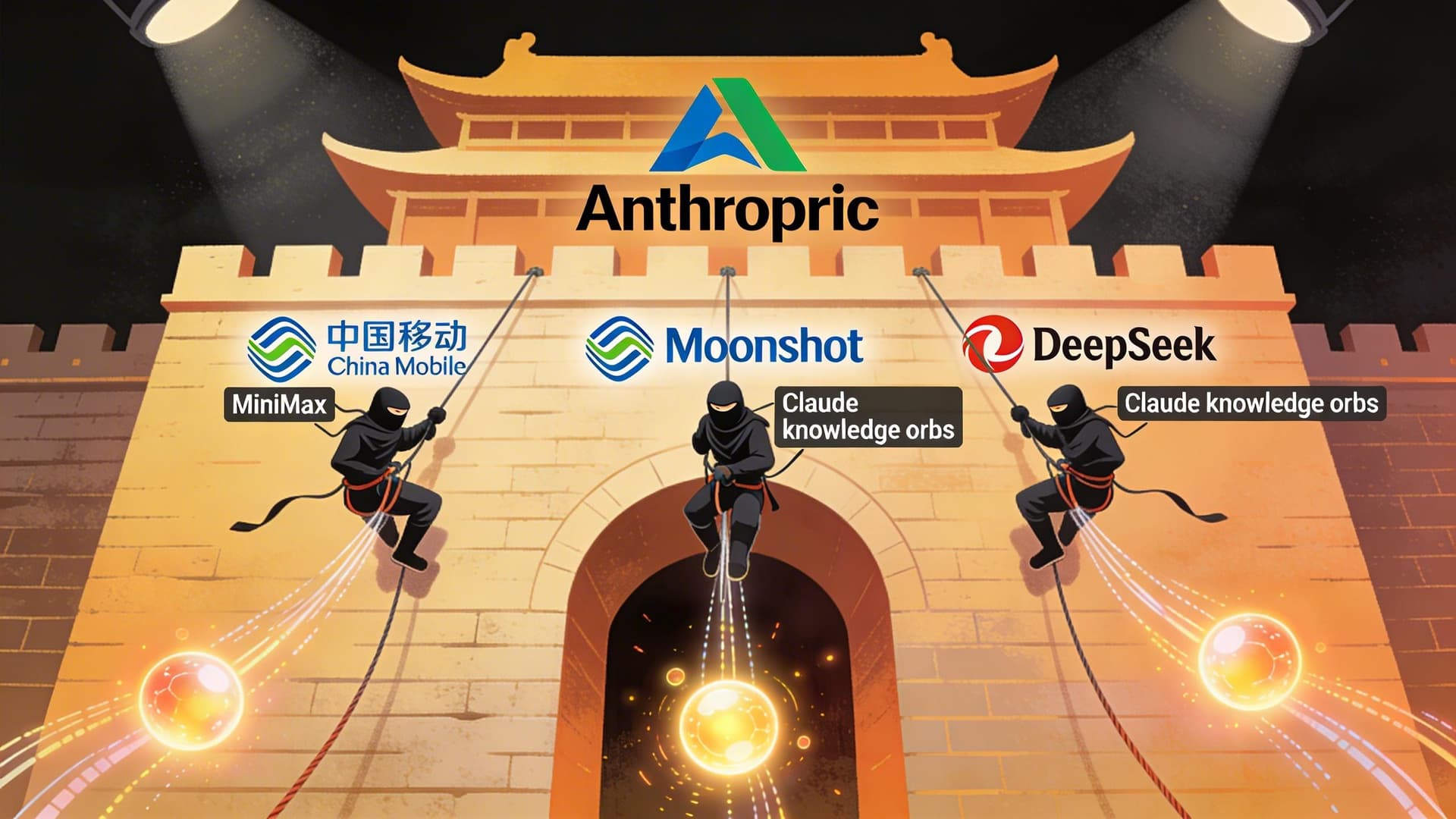
Anthropic accused Alibaba of improperly extracting Claude’s capabilities in a June 10 letter to Senate Banking Committee leaders Tim Scott and Elizabeth Warren, escalating a fight over whether frontier AI companies can keep their models protected once rivals can query them at scale. The company said operators affiliated with Alibaba and its AI lab, Alibaba Qwen, used roughly 25,000 fraudulent accounts and carried out 28.8 million exchanges with Claude between April 22 and June 5, targeting software engineering and agentic reasoning.
The dispute centers on model distillation, a technique that uses a large number of outputs from a strong system to train a cheaper imitator that behaves similarly. That makes the clash harder to fit neatly into older intellectual-property categories, because the alleged harm is not a copied codebase or a stolen dataset in the traditional sense. It is the systematic use of a model’s responses, through repeated access, to reconstruct capabilities that took billions of dollars and years of development to build.

Anthropic described the episode as the largest known distillation attack on the company to date. The allegation lands in a sector already bracing for more aggressive defenses, including stronger rate limits, authentication checks and account monitoring around advanced models. Alibaba did not immediately respond to a request for comment.
The letter also fits a pattern Anthropic has already laid out to U.S. officials. On Feb. 23, the company said it had detected industrial-scale distillation campaigns by DeepSeek, Moonshot AI and MiniMax, which it said produced more than 16 million exchanges with Claude through about 24,000 fraudulent accounts. In a separate post, Anthropic said distillation can steal capabilities from frontier models in a fraction of the time and cost of training from scratch, and that foreign actors can use that access to narrow the U.S. lead in advanced AI.
The political backdrop was already moving in that direction. The White House issued a memo on April 23 accusing China and other foreign entities of deliberate, industrial-scale campaigns to distill U.S. frontier AI systems, and President Donald Trump signed an executive order on June 2 on advanced AI innovation and security. Anthropic’s letter arrived in the middle of that push, turning a technical complaint into a direct test of how Washington treats model extraction in the U.S.-China AI race.
This article was produced by Prism’s automated news system from verified source data, official records, and press releases, then run through automated quality and moderation checks before publishing. The system is built and supervised by the people who set the standards it runs under. Read our full AI policy.
Know something we missed? Have a correction or additional information?
Submit a Tip