APEC trade officials meet in China amid tariff and supply chain strains
APEC officials met in Suzhou as China’s record $1.2 trillion surplus and tariff tensions sharpened pressure on supply chains. The talks fed into Shenzhen’s 2026 summit.

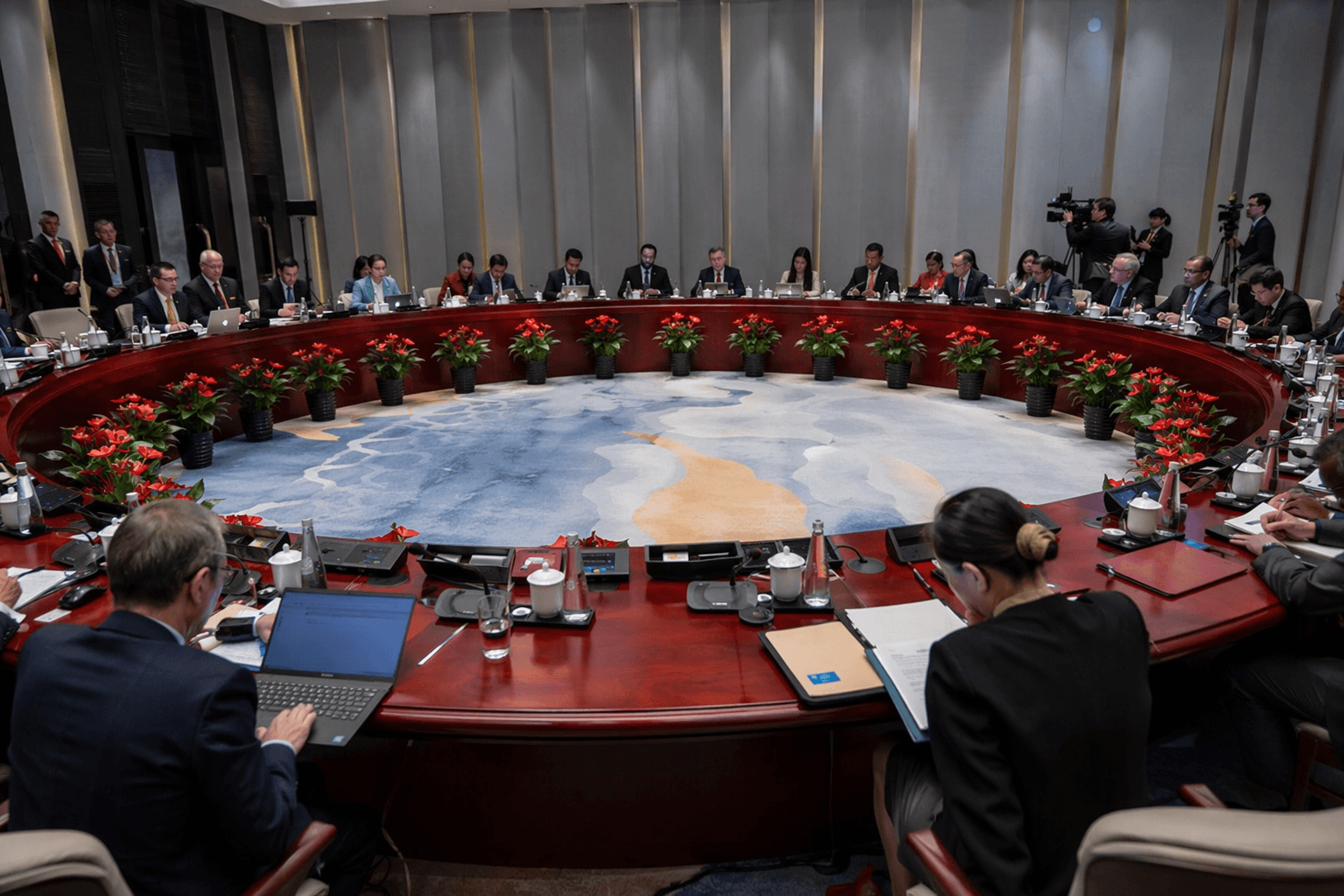
Trade officials from the 21-member Asia-Pacific Economic Cooperation bloc gathered in Suzhou, China, on Friday for two days of talks that went well beyond diplomatic formality. With APEC economies accounting for about 48 percent of world trade and roughly 62 percent of global GDP, the meeting became a test of whether the region can protect prices, manufacturing plans and shipping networks from another round of geopolitical strain. The stakes were especially high for the United States, whose Department of State says seven of its top 10 trading partners are APEC members.
China’s international trade representative and vice commerce minister, Li Chenggang, opened the meeting by urging participants to look for common ground and keep the regional economy moving through turbulence. He said the region should “strive to reach more consensus” as officials faced rising uncertainty, sluggish growth and mounting challenges across the Asia-Pacific. The agenda included the proposed free-trade area of the Asia-Pacific, digital trade, AI readiness and sustainable, inclusive growth, all issues that now shape how companies source parts, shift production and manage exposure to China without fully severing ties.
The Suzhou talks unfolded as China’s 2025 trade surplus hit a record roughly $1.2 trillion, intensifying concern in Washington and other capitals that the region’s imbalances are no longer sustainable. The Group of Seven finance ministers said in a May 2026 communiqué that reducing global imbalances was necessary for balanced and sustainable growth, while U.S. Treasury Secretary Scott Bessent has pushed for protections against a flood of cheap Chinese exports. For manufacturers across the Pacific, that combination of pressure points toward more costly hedging, more inventory held closer to home and a slower, more deliberate reworking of supply chains that remain deeply tied to China.
Business representatives used the same forum to argue for restraint. Li Fanrong, chair of the APEC Business Advisory Council, called for a pause on new trade restrictions to reduce uncertainty for companies operating across the region. ABAC said at its second 2026 meeting in Mexico City that the global trade and investment environment was under acute stress and called for coordinated action to restore confidence, resilience and long-term prosperity. The warning reflected the central dilemma now confronting APEC members: how to reduce dependence on China’s industrial reach without triggering the costs of a full decoupling.
The Suzhou session was also a preview of the larger political stage ahead. China will host the 33rd APEC Economic Leaders’ Meeting in Shenzhen, Guangdong Province, on Nov. 18-19, 2026, under the theme “Building an Asia-Pacific Community to Prosper Together.” Beijing has said its 2026 APEC Year will include about 300 events across multiple cities, a sign of how hard it is trying to cast itself as a steward of regional economic cooperation even as tariffs, trade imbalances and supply-chain fragility keep reshaping the Pacific economy.
Know something we missed? Have a correction or additional information?
Submit a Tip