Appeals Court Blocks Order to Reinstate Voice of America Staff
A federal appeals court blocked the return of more than 1,000 Voice of America journalists to their newsrooms, keeping the U.S. broadcaster dark across 49 language services.
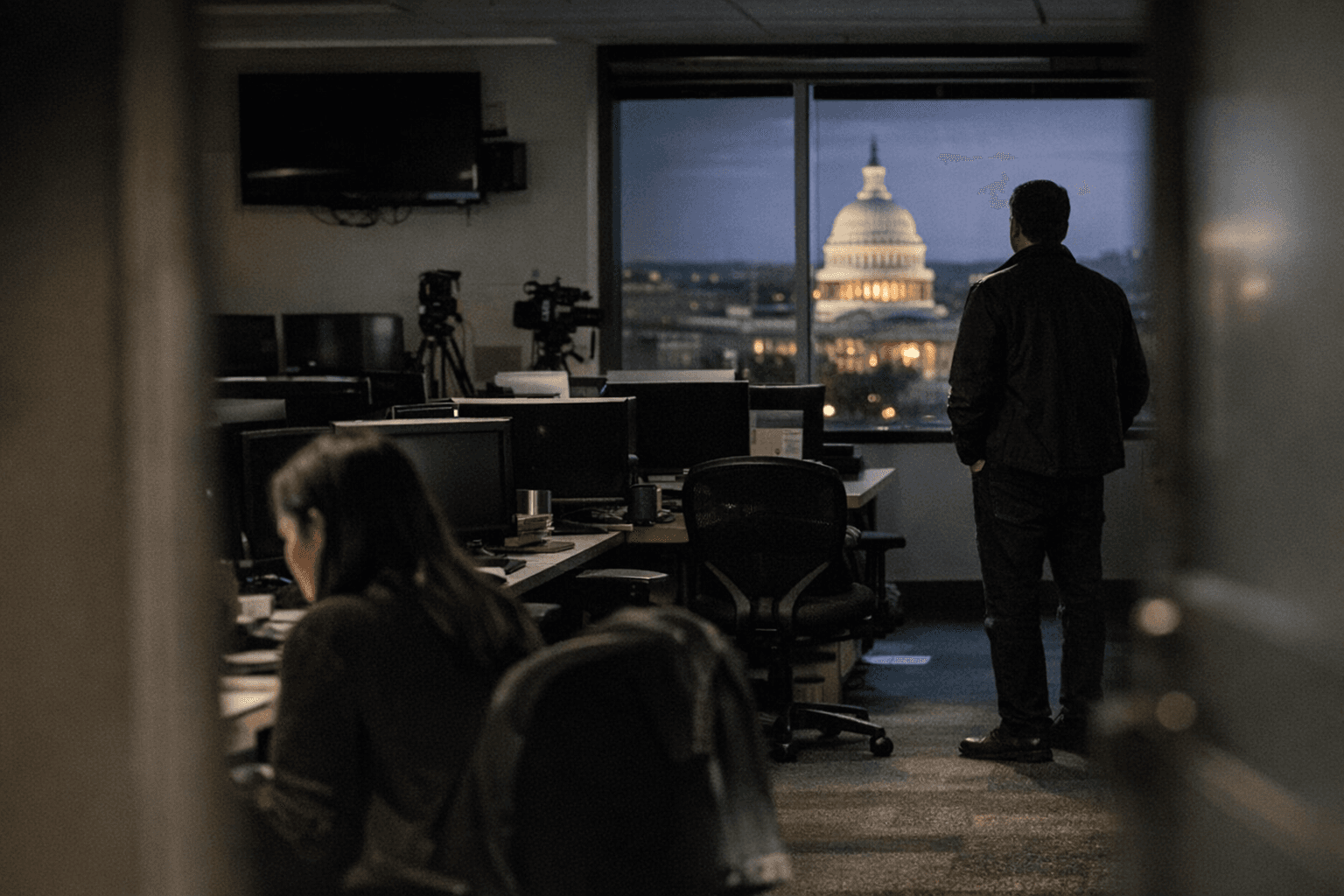
A three-judge panel of the U.S. Court of Appeals for the District of Columbia Circuit issued a stay Monday halting U.S. District Judge Royce Lamberth's March 17 order requiring the Trump administration to restore Voice of America's operations and return more than 1,000 employees from administrative leave. The ruling means VOA journalists will remain sidelined for months as the appeal works through the courts, preserving a communications blackout that has now stretched more than a year.
The three-judge panel issued a stay pending the government's appeal of Lamberth's March 17 ruling. More than 1,000 employees will remain on administrative leave while the appeals court weighs the case, a process that could take months.
The immediate effect on VOA's newsroom is concrete: reporters who had been preparing to return to their desks after Lamberth's ruling must now wait indefinitely. The case is assigned to Circuit Judges Karen LeCraft Henderson, who was nominated by Republican President George H.W. Bush; Robert Wilkins, nominated by Democratic President Barack Obama; and Gregory Katsas, nominated by President Trump.
The legal signal embedded in the stay is significant. The appeals court suggested in a 2-1 decision that Lamberth lacked jurisdiction to order the employees to return to work and to require the restoration of $15 million in grants for Radio Free Asia and Middle East Broadcasting Networks. That jurisdictional framing is not a ruling on the merits of the shutdown itself but rather a threshold question about which court has authority to remedy it, a distinction that could ultimately determine whether the district court can ever compel reinstatement.
Before Trump's executive order, Voice of America had operated in 49 different languages, broadcasting to 362 million people. The agency has been operating with a skeleton staff since Trump issued the executive order to shut it down. That reach encompassed audiences in authoritarian states and media-restricted environments where VOA represented one of few independent English-language or local-language news sources available. With experienced staff still barred from their roles, those coverage gaps persist across regions including Eastern Europe, Central Asia, and East Africa.
Lamberth also ruled that Kari Lake, Trump's choice to lead Voice of America, did not have the legal authority to do what she had done at the agency. That ruling, issued earlier in March, established the factual and legal backdrop against which the March 17 reinstatement order was built. The appeals court's willingness to stay the latter while not yet addressing the former leaves the legal architecture of VOA's shutdown in a fractured state.
VOA's White House bureau chief Patsy Widakuswara, a plaintiff in the lawsuit, said she is "eager to begin repairing the damage Kari Lake has inflicted on our agency and our colleagues, to return to our congressional mandate, and to rebuild the trust of the global audience we have been unable to serve for the past year." That return, at least for now, has been deferred by the appeals court's decision.
The case stems in part from lawsuits challenging the U.S. Agency for Global Media's actions, and federal judges had repeatedly ordered employees back to work only for USAGM to appeal and fire staff anew. The stay perpetuates that cycle. Until the DC Circuit rules on the jurisdictional question, Lamberth's authority to police USAGM personnel decisions remains in dispute, and the institutional credibility of a broadcaster founded in 1942 to counter wartime propaganda continues to erode with every week experienced staff remain off the air.
This article was produced by Prism’s automated news system from verified source data, official records, and press releases, then run through automated quality and moderation checks before publishing. The system is built and supervised by the people who set the standards it runs under. Read our full AI policy.
Did this article answer your question?

