Appeals Court Keeps White House Limits on Associated Press Access
The full D.C. Circuit refuses to lift restrictions that have curtailed the Associated Press’s presence at small presidential events, leaving a lower-court order stayed as the litigation proceeds. The move sustains a contested shift in who controls press pool selection and raises fresh questions about White House transparency and press freedom.
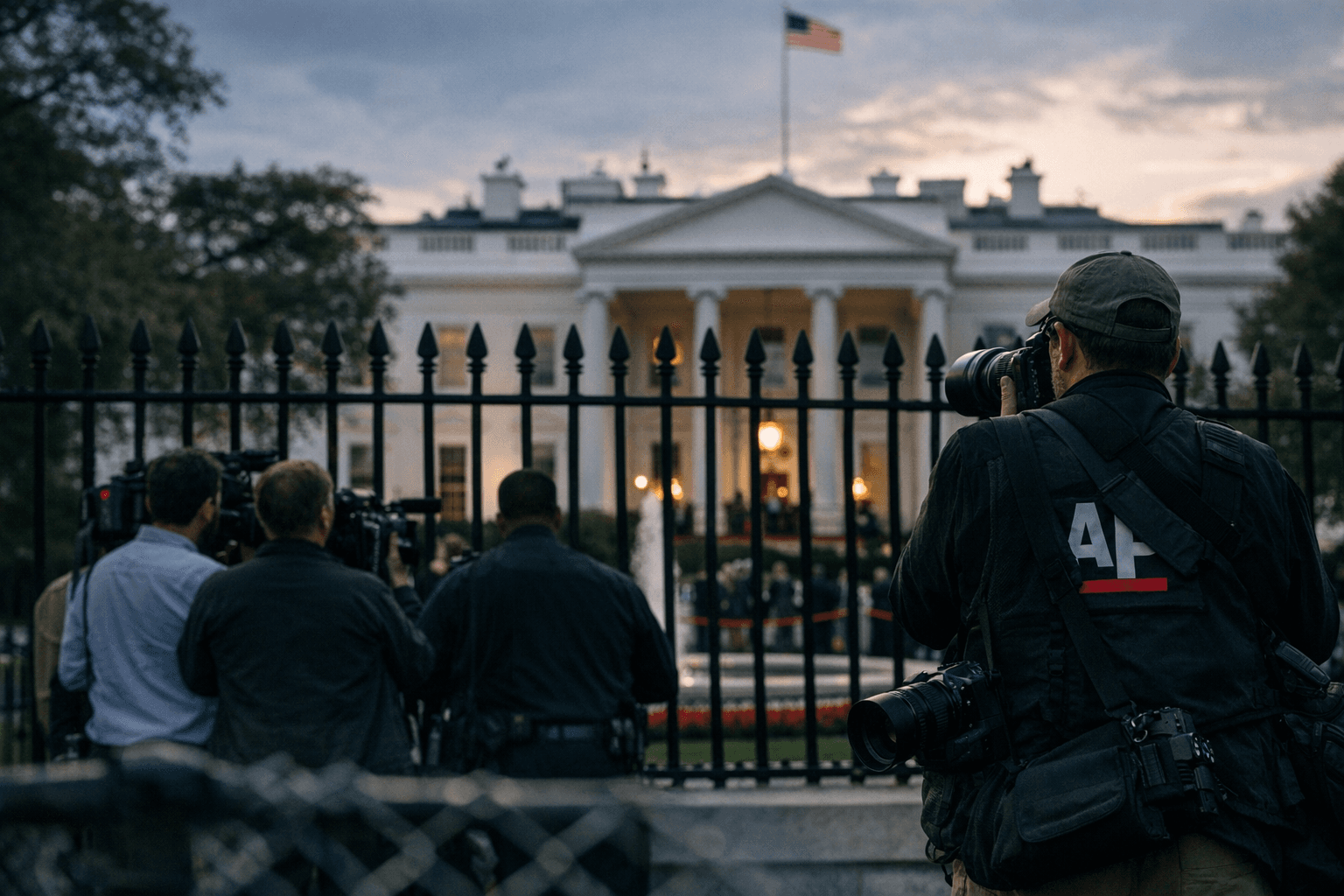
The full U.S. Court of Appeals for the D.C. Circuit declines to restore broader Associated Press access to certain White House presidential events, preserving an earlier three-judge panel decision that allows the administration to limit which news organizations may attend small, limited-space appearances. The procedural ruling leaves in place a stay of a district court order that had required the White House to lift the restrictions while litigation continues.
The decision is not a final ruling on the merits of the underlying First Amendment claims; it denies AP’s request for expedited rehearing and keeps the appellate process intact. A separate three-judge panel heard arguments earlier in the week; two judges on that panel are Trump appointees who previously sided against AP on an appellate panel last spring. The full court’s action means the April 8 district court ruling in AP’s favor stays on hold while the D.C. Circuit considers the appeal.
The dispute began after the White House imposed new rules for access to limited-space events, changing a longstanding practice in which the White House Correspondents’ Association selects press pool members. Under the new policy, White House officials have handpicked pool participants and limited which organizations may place reporters into tight quarters around the president. The administration has allowed AP photographers to return to many such spaces while AP reporters have been admitted only intermittently.
On April 8, U.S. District Judge Trevor McFadden ruled that the White House must restore AP’s access during the litigation. He later declined to order immediate reinstatement, finding that AP had not demonstrated irreparable harm, but he criticized the government’s legal posture and questioned why the administration would be bound by selections made by the private White House Correspondents’ Association. Judge McFadden said relevant case law “is uniformly unhelpful to the White House.”
Media organizations and press freedom groups framed the appeal as having broader implications for democratic accountability. The Reporters Committee for Freedom of the Press and the White House Correspondents’ Association, joined by 46 news and media organizations, urged the appeals court to restore AP’s access, arguing the expulsion undermined the press pool’s public-serving role. “The White House press pool exists to serve the public, not the presidency,” Reporters Committee President Bruce D. Brown said.
The case has produced additional clashes over ride-along access. The White House recently said it would not permit a Wall Street Journal reporter onto Air Force One for a presidential trip to Scotland, citing the outlet’s alleged “fake and defamatory conduct” in a story about the president and the late financier Jeffrey Epstein.
AP spokesman Patrick Maks said of the appeals court’s procedural ruling: “We are disappointed by today’s procedural decision but remain focused on the strong district court opinion in support of free speech as we have our case heard,” adding that “the press and the public have a fundamental right to speak freely without government retaliation.”
The White House did not immediately respond to requests for comment. For now, the appeals court’s denial to remove the restrictions is a temporary but consequential outcome: it preserves an administration practice that departs from decades of pool-selection precedent and keeps in place a structure that determines which outlets can witness and report from the president’s most intimate public appearances. The litigation will proceed, and the question of who controls access to the president in limited settings may return to the full court or to the district court for further resolution.
This article was produced by Prism’s automated news system from verified source data, official records, and press releases, then run through automated quality and moderation checks before publishing. The system is built and supervised by the people who set the standards it runs under. Read our full AI policy.
Did this article answer your question?