Apple expands high-end push after $599 MacBook Neo launch
Bloomberg’s Mark Gurman reports Apple will follow the $599 MacBook Neo with a slate of premium "Ultra" devices, including foldables and AI-enabled AirPods, reshaping pricing and supply choices.

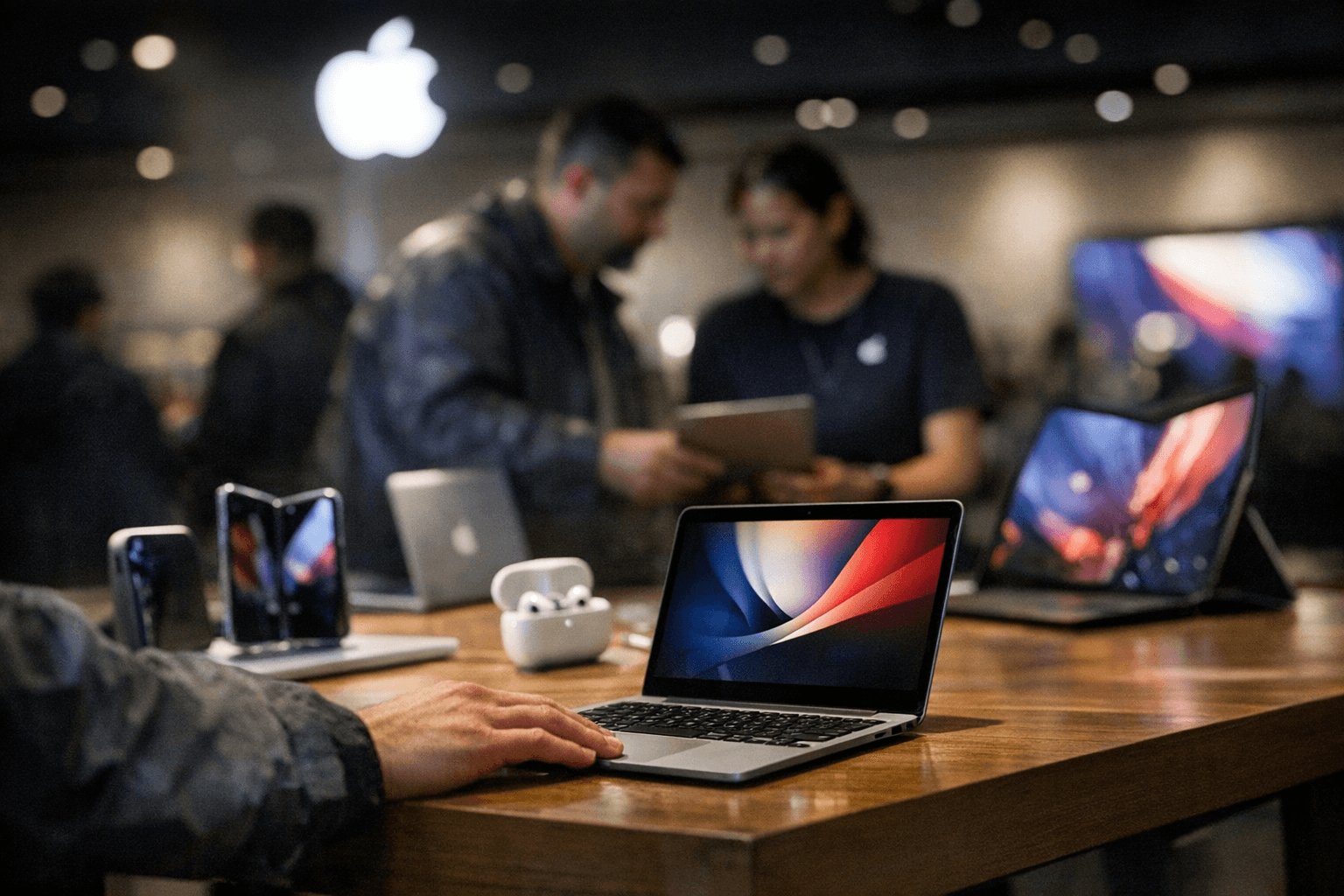
Apple has unveiled a $599 MacBook Neo and, according to Bloomberg’s Mark Gurman, is shifting its product focus back toward the top of the market with a planned expansion of "Ultra" devices. Gurman wrote that Apple "plans to push deeper into the high end with more Ultra devices," while also aiming to use 3D-printed aluminum and refreshing the iMac with new colors.
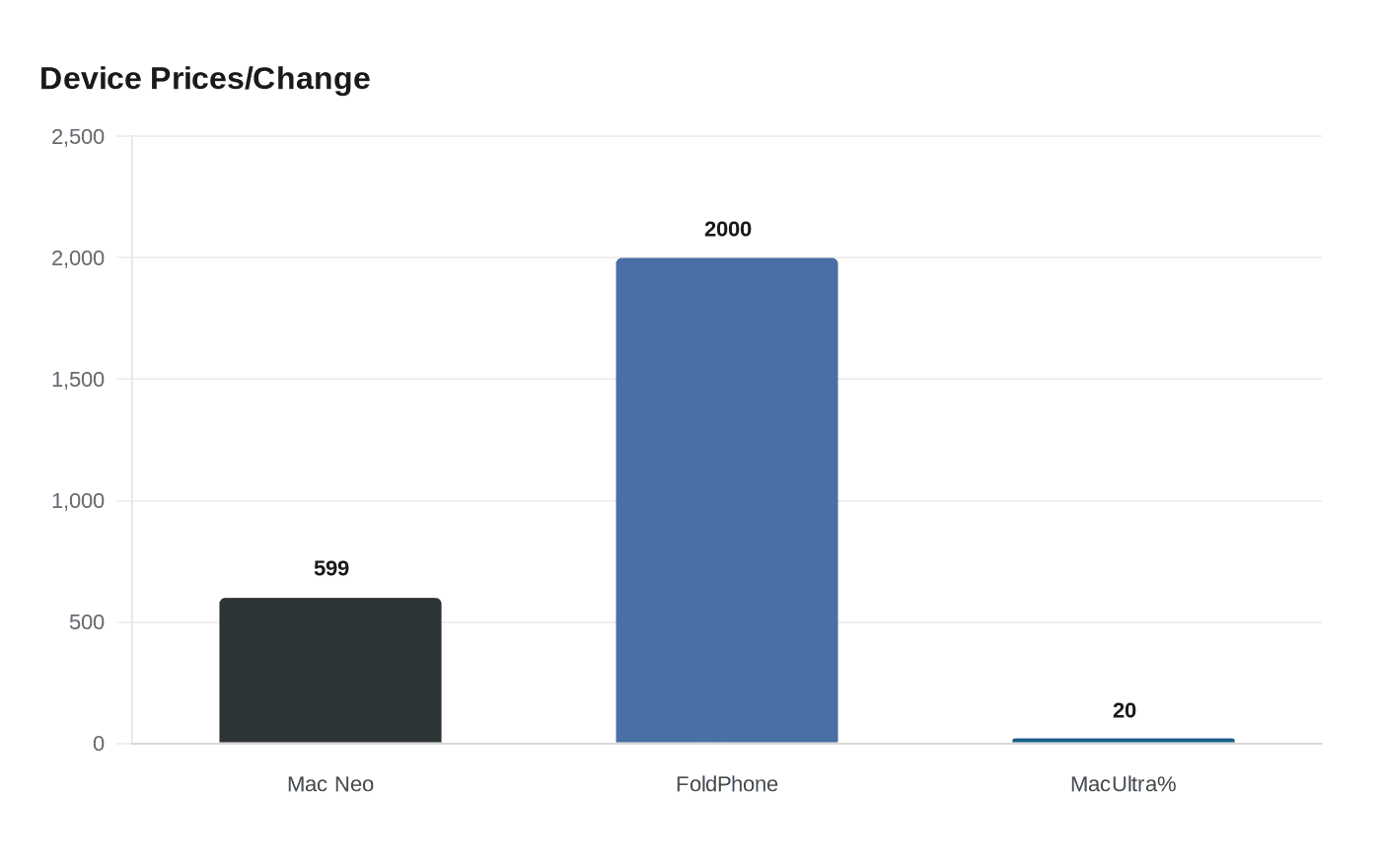
The Neo debuts as a demonstrable move down-market this month, part of a seven-product cadence MacRumors catalogued that included an iPhone 17e, an iPad Air with the M4 chip, updated MacBook Air and MacBook Pro models, a new Studio Display, a higher-end Studio Display XDR and the MacBook Neo priced at $599. The Bloomberg report positions Neo as the immediate pivot that frees Apple to accelerate investment in pricier hardware that can carry higher margins and harder-to-replicate features.
Reporting that traces to Gurman and amplified by outlets citing his Power On newsletter sketches a set of premium devices that will sit above Apple’s mainstream lines. The Verge enumerated several of the targets: an oft-rumored foldable iPhone, expected to cost around $2,000, a touchscreen MacBook Pro reportedly slated for the fall, and next-generation AirPods rumored to include cameras to feed visual context to Siri. The Verge summary noted these models "may not bear the 'ultra' name, like its Watch, but will all command price premiums over their mainline counterparts."
MacRumors underscored that Apple "may not use the Ultra branding for all of them," pointing to the Studio Display XDR as a recent example of a premium product that did not adopt the Ultra label. That naming nuance matters for investors and consumers: the product strategy appears to be less about a single brand badge than about creating discrete price tiers and capability differentials across iPhone, iPad, Mac and accessory lines.
Reader commentary reproduced on The Verge captured how the market could react: user ksec wrote that a foldable iPhone "with a ~$2,000 price tag, large inner display, and under-display sensors" would "cast a shadow over the rest of the lineup," and predicted that a MacBook Ultra "with a touch-enabled OLED display" could raise prices by "up to 20%." Those estimates are credibly sourced to community discussion rather than to Apple or Bloomberg reporting, but they illustrate the consumer expectation that premium variants will significantly widen price dispersion in Apple's range.
The operational footprint of this strategy carries policy and supply-chain implications. Bloomberg’s reporting that Apple "aims to use 3D-printed aluminum" suggests Apple is exploring new manufacturing technologies that could change supplier relationships and domestic production dynamics; the Bloomberg page also highlighted a separate "US Manufacturing Push" tag. A concerted move toward advanced materials and niche, high-cost product tiers could reinforce claims that Apple is optimizing for profit per unit and for differentiated supply partners, with consequences for component suppliers, contract manufacturers and labor policy where devices are assembled.
For regulators and policymakers, the combination of a low-cost model and a simultaneous upscale push will alter market maps: competition in entry segments may intensify while premium segments consolidate around feature-led differentiation that is harder for rivals to match. For voters and civic stakeholders concerned about industrial policy, Apple's stated manufacturing choices and the implied premium pricing strategy warrant scrutiny for their effects on supply-chain resilience and domestic job creation.
Bloomberg’s Mark Gurman is the primary reporter cited for the Ultra-expansion claim; other outlets have summarized and added context. Apple has publicly announced Neo’s price and the week’s product slate; the broader Ultra roadmap remains attributed to reporting and industry commentary rather than an official Apple product calendar.
Know something we missed? Have a correction or additional information?
Submit a Tip