Apple raises iPad and MacBook prices as retailers hold old deals
Apple pushed iPad and MacBook prices higher, but Amazon and Best Buy still had some old-stock deals. That discount window may be brief.

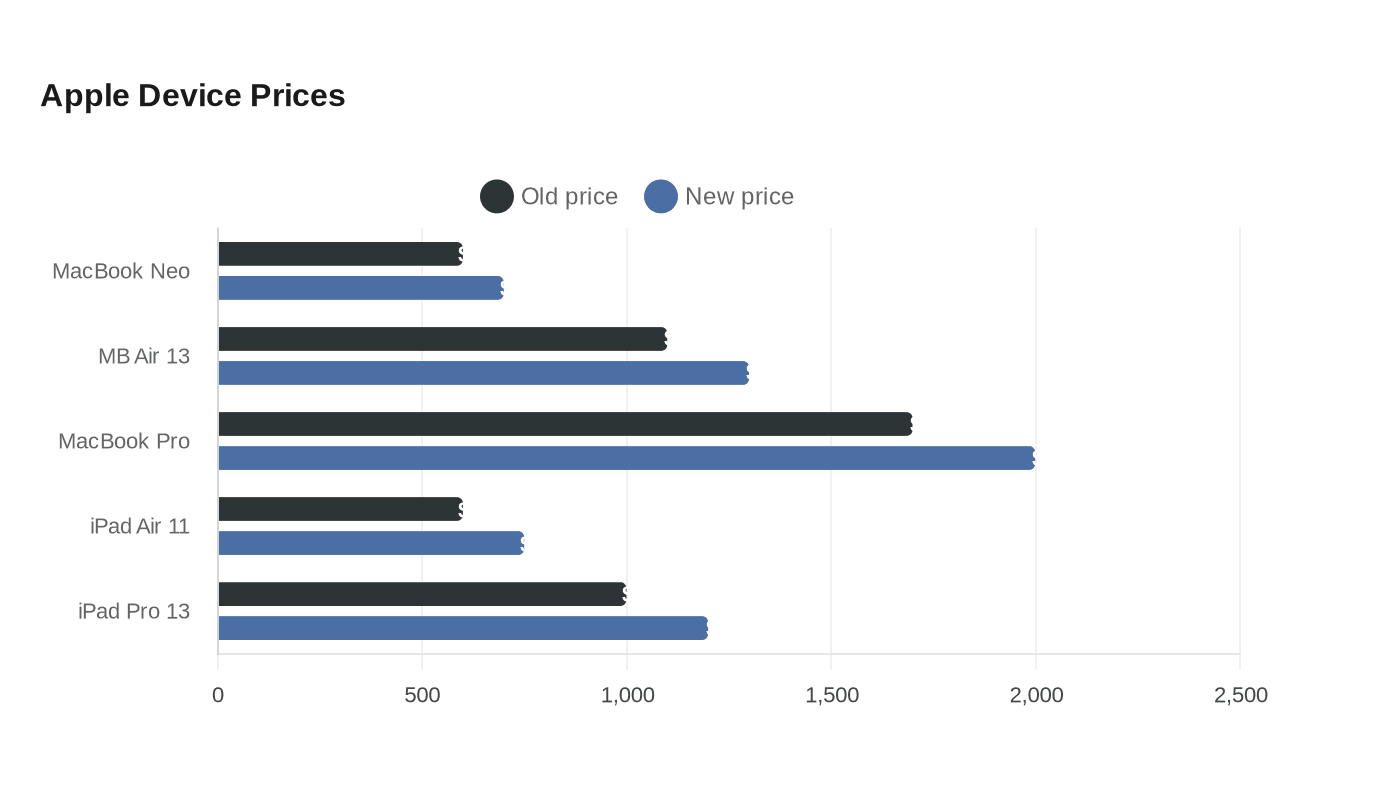
Apple raised prices across its iPad and MacBook lineup on Thursday, lifting the entry-level MacBook Neo to $699 from $599 and the 13-inch MacBook Air to $1,299 from $1,099. The MacBook Pro climbed to $1,999 from $1,699, while the 11-inch iPad Air rose to $749 from $599 and the 13-inch iPad Pro increased to $1,199 from $999.
The higher prices reflected a problem that has moved from chipmakers to consumers: Apple said it could no longer absorb soaring memory and storage costs tied to the artificial intelligence data-center buildout. Tim Cook had already warned in a June 17 interview that “price increases are unavoidable,” and the new pricing went live on Apple’s own store while leaving the iPhone untouched.

For shoppers, the timing matters more than the sticker shock. Amazon and Best Buy were still listing some Apple devices at pre-hike prices immediately after the announcement, but those shelves were already thinning. The old prices are most likely to survive only as long as current inventory lasts, which makes the discount window a short one rather than a comfortable wait-and-see period.
That puts buyers in a clear split. Anyone already set on an iPad Air, iPad Pro, MacBook Air, or MacBook Pro should move now if the goal is to avoid Apple’s higher MSRP. Buyers who can delay may wait for future promotions, but they should not expect the pre-hike pricing to linger once retailers receive new stock at the updated cost structure. The best deals now are on the units already in stores, not on what comes next.
Apple’s shares fell about 6% on June 25, their worst day in more than a year, as investors weighed weaker consumer demand against tighter margins. The iPhone’s exemption from the increase helped limit the damage, since it remains Apple’s main cash generator, but the move still signals that even the company with the strongest pricing power is running into higher component costs.
The broader read-through reaches beyond Apple. Micron’s latest-quarter revenue more than quadrupled, underscoring how the AI boom is squeezing consumer-electronics makers while rewarding the suppliers of memory chips. Heading into the next retail cycle, that leaves electronics pricing more vulnerable to upward resets, especially in products that rely heavily on storage and memory.
This article was produced by Prism’s automated news system from verified source data, official records, and press releases, then run through automated quality and moderation checks before publishing. The system is built and supervised by the people who set the standards it runs under. Read our full AI policy.
Know something we missed? Have a correction or additional information?
Submit a Tip