Apple Turns 50, Founded by Three People on April Fool's Day
Ronald Wayne sold his 10% stake in Apple for $800 just 12 days after co-founding it on April Fool's Day 1976, a share now worth billions.
Apple Computer Company began in a garage in Los Altos, California, with two engineers, one industry veteran, and a founding date that seemed to tempt fate: April 1, 1976. Fifty years later, the company that became the first in history to reach a one trillion dollar valuation marked the anniversary with Tim Cook ringing the Nasdaq Opening Bell from Apple Park in Cupertino.
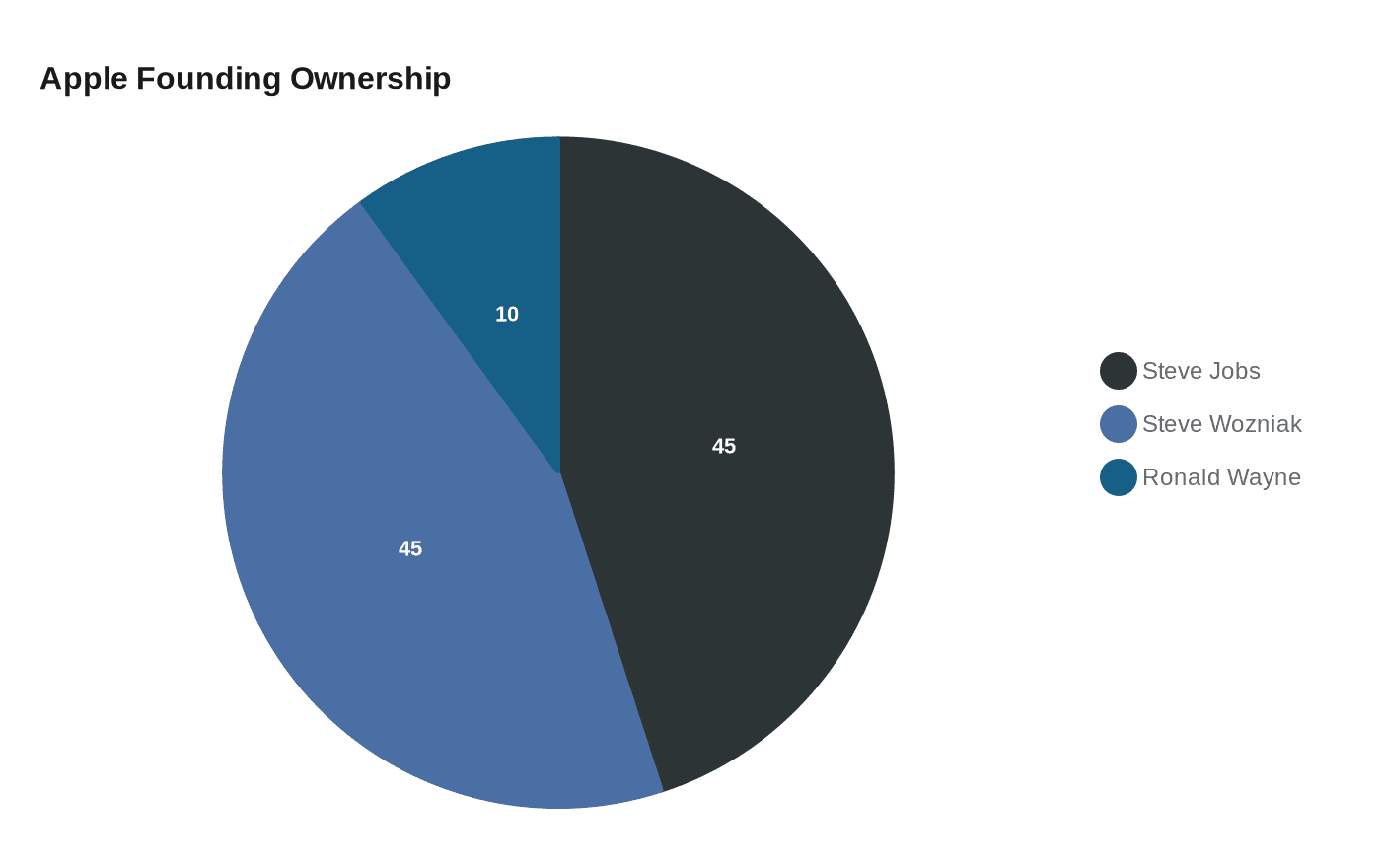
The origin story that popular culture has often reduced to two names actually involved three. Steve Jobs, then 21, and Steve Wozniak, then 26 and working as an engineering intern at Hewlett-Packard, each held 45% of the company. The third co-founder, Ronald Wayne, an experienced tech executive who had worked at Atari, held the remaining 10%. To finance the early venture, Jobs sold his Volkswagen Bus and Wozniak sold his HP-65 calculator.
Wayne made the decision that, in retrospect, looks like the costliest exit in Silicon Valley history. Just 12 days after the company's formation, he sold his stake back to Jobs and Wozniak for $800, the equivalent of roughly $4,597 in 2026 dollars.
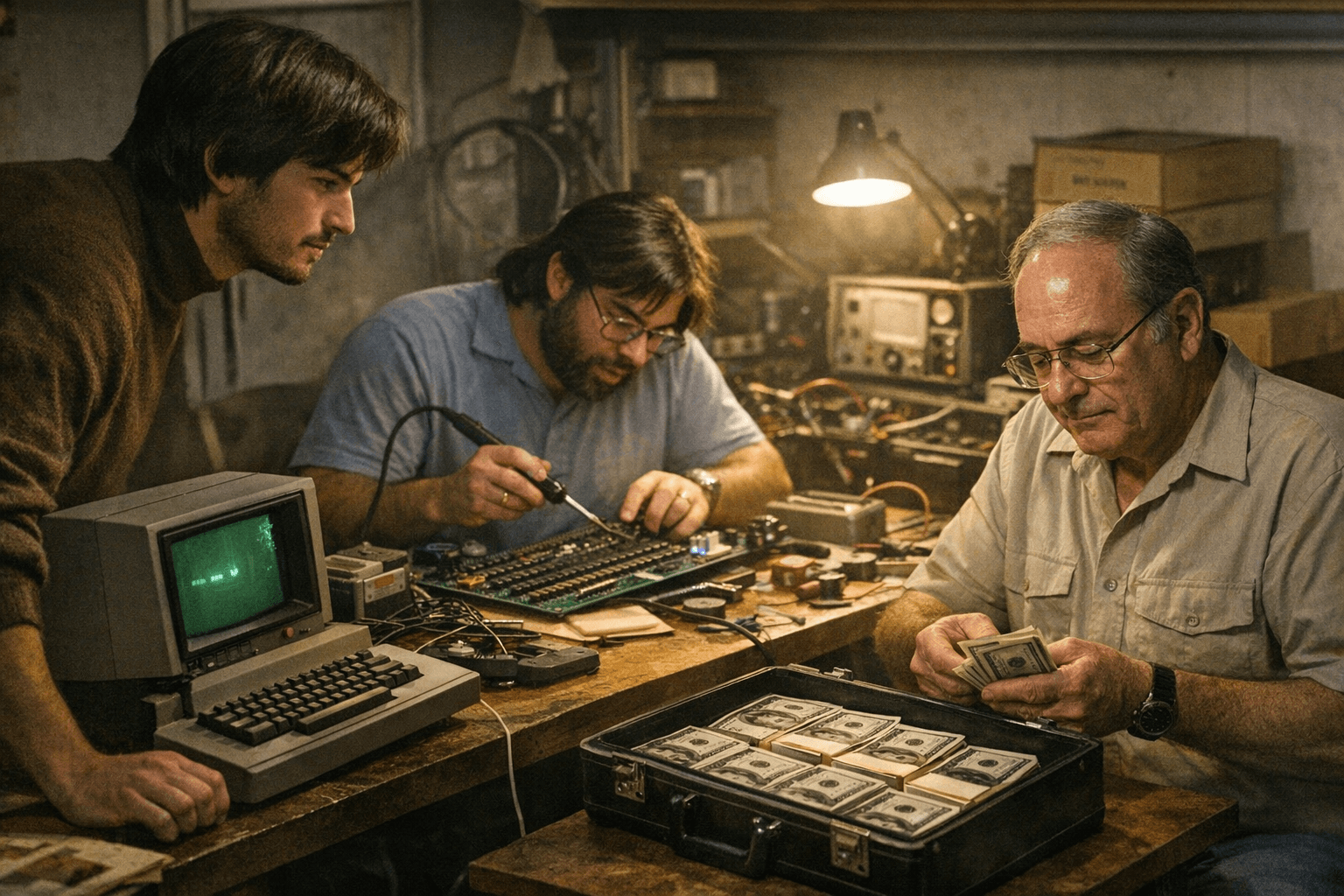
Their first product, the Apple I, was designed and hand-built entirely by Wozniak, priced at $666.66, and debuted at the Homebrew Computer Club in July 1976. The company was formally incorporated the following January, when investor Mike Markkula provided $250,000 in essential early funding.
Jobs' guiding philosophy drew from an unlikely analogy. "My model of business is the Beatles," he told CBS's 60 Minutes in 2003, after attending a Paul McCartney concert. He elaborated: "There were four guys who kept each other's negative tendencies in check. They balanced each other, and the total was greater than the sum of the parts." He used the same comparison at the launch of the iTunes Music Store that April, a reflection of how thoroughly the analogy had shaped his thinking.
The irony was considerable. Apple's admiration for the Beatles ran alongside a protracted legal feud with the band's own company, Apple Corps Limited, founded in 1968. Apple Corps sued Apple Computer for trademark infringement when the tech firm entered music, resulting in an $80,000 settlement and a promise to stay out of the music business. When the Mac gained the ability to play MIDI music, Apple Corps returned seeking $26.5 million, alleging breach of the earlier agreement. Jobs, speaking to Newsweek's Steven Levy, was unambiguous about the personal dimension: "It's unfortunate because we love the Beatles. I'd do anything for those guys."
Jobs died on October 5, 2011, at age 56, from pancreatic cancer. Tim Cook, who succeeded him, described a philosophy of diffuse innovation. Jobs, Cook recalled, "didn't expect innovation out of just one group in the company or creativity out of one group. He expected it everywhere in the company."
Wayne's $800 buyout remains the most famous small transaction in tech history, a footnote that quietly underscores the very lesson Jobs borrowed from the Beatles: the whole, when the right people stay in the room, ends up worth considerably more than the sum of its parts.
Know something we missed? Have a correction or additional information?
Submit a Tip