April Jobs Report Due Friday, Expected to Show Labor Market Trends
The April jobs report will test whether March’s 178,000 payroll gain and 4.3% unemployment marked resilience or the start of a slower labor market.
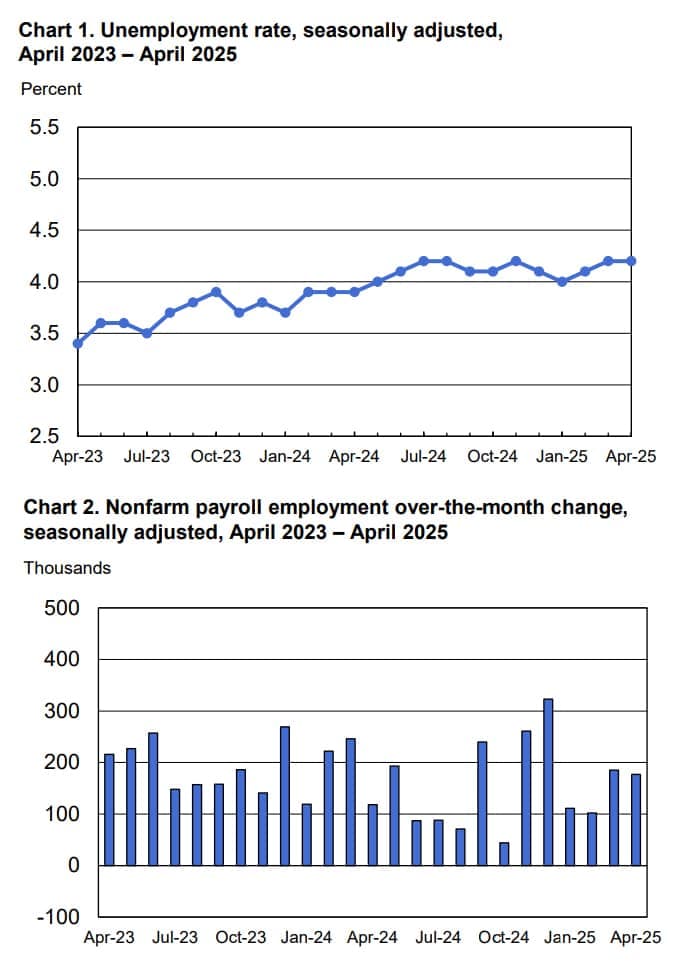
The fault line in Friday’s jobs report is not just how many payrolls were added in April. It is whether hiring, unemployment, wages and sector breadth point to a labor market that is still holding up or one that is beginning to cool enough to affect Federal Reserve policy and household confidence.
The U.S. Bureau of Labor Statistics is scheduled to release the Employment Situation for April 2026 at 8:30 a.m. Eastern Time. The report draws on two monthly surveys that often tell different parts of the same story. The household survey measures labor force status, including unemployment by demographic characteristics. The establishment survey tracks nonfarm employment, hours and earnings by industry. Together, they will show whether job growth broadened or whether a narrow set of industries kept the labor market afloat.

March offered a mixed backdrop. Total nonfarm payroll employment rose by 178,000, while the unemployment rate held at 4.3 percent. Job gains were recorded in health care, construction, and transportation and warehousing, but federal government employment continued to decline. That combination left investors parsing a labor market that was still adding jobs, yet showing signs of unevenness across sectors.
That unevenness is exactly what the April release will put under a brighter light. If gains again cluster in a handful of industries, it would suggest employers are still hiring but not broadly enough to signal a re-acceleration. If the household survey shows deterioration in unemployment or labor-force participation, it would strengthen the case that the market is losing momentum even if payrolls remain positive. Wage data, which the establishment survey also captures, will matter as well because pay growth can signal whether workers still have bargaining power or whether cooling conditions are beginning to restrain earnings.
The timing matters for markets and for the Fed. Labor-market releases often move financial markets because they shape expectations for interest-rate policy, and this report arrives as investors look for evidence on whether job growth is slowing or remaining resilient. The next Real Earnings release for April 2026 is scheduled for Tuesday, May 12, at 8:30 a.m. Eastern Time, which will add another measure of how pay is keeping up with prices. For now, Friday’s report is the official read on whether the labor market is merely easing or entering a more visible slowdown.
This article was produced by Prism’s automated news system from verified source data, official records, and press releases, then run through automated quality and moderation checks before publishing. The system is built and supervised by the people who set the standards it runs under. Read our full AI policy.
Did this article answer your question?

