Arctic blast sends U.S. natural gas futures to multi‑year highs
Arctic blast pushes natural gas futures roughly 20% higher, straining production and power grids and raising questions about winter resilience.
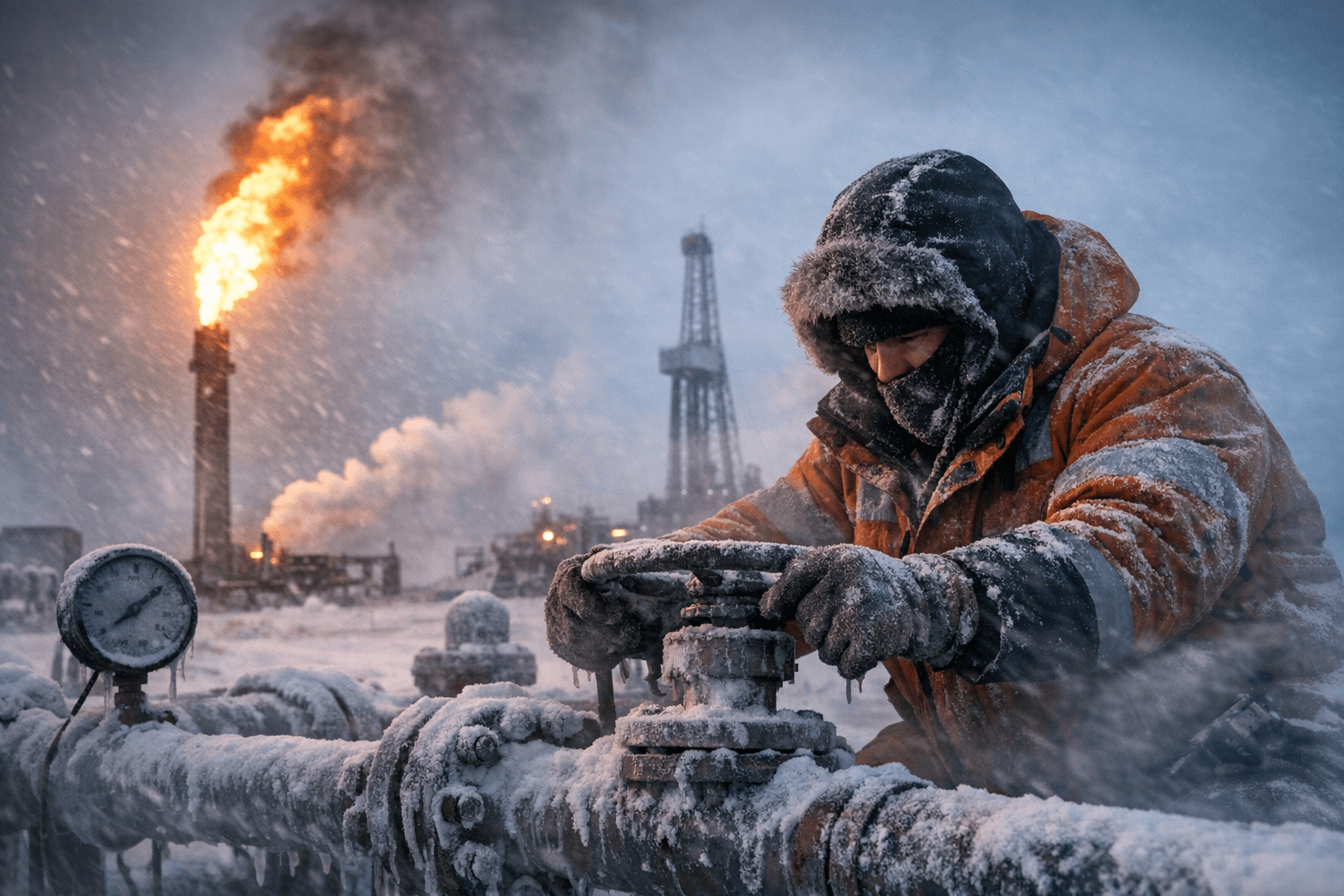
February front-month Henry Hub futures surged sharply on Jan. 27, 2026, climbing roughly 20 percent at points and reaching multi-year highs as a deep Arctic blast known as Winter Storm Fern tightened supplies and drove up demand for heating and electricity. The abrupt spike reflected a classic weather-driven squeeze: a rapid increase in regional demand coinciding with weather-related hindrances to production and delivery.
Traders cited a sudden escalation in heating degree days across the Midwest and Northeast, prompting utilities to burn more gas for power generation and residential heating. At the same time, operators reported disruptions at wellheads and midstream facilities where extreme cold and icing problems limited flow and complicated operations. The combination produced heavier-than-expected withdrawals from working gas inventories and a sharp rerating of near-term price risk on futures screens.
The market reaction was immediate. Volatility rose across prompt-month and calendar spreads, with the front-month premium widening as traders repositioned for tighter winter balances. Power markets mirrored the move: wholesale electricity prices in some regional grids spiked as utilities competed for constrained gas supplies to meet heating and generation needs. The rapid price move also pushed margin calls on leveraged positions and prompted accelerated hedging activity by utilities and industrial gas consumers seeking price protection for the remainder of winter.
Beyond the immediate trading effects, the episode highlights structural factors that have tightened the U.S. gas market over recent years. Sustained growth in U.S. liquefied natural gas exports has anchored a higher floor under domestic demand in winter and summer alike, while electrification trends have increased seasonal power consumption. At the same time, incumbent production and midstream capacity have limited ability to respond instantaneously to extreme short-term cold snaps, leaving the market susceptible to sharp price dislocations when weather departs from normal.
Policy implications are now in sharper relief. Grid operators and regulators face renewed pressure to bolster winter preparedness, including stricter winterization requirements for gas infrastructure, improved pipeline nomination and allocation protocols, and greater coordination between gas and power system operators. State and federal policymakers will likely revisit incentives for firming capacity and demand response as tools to reduce exposure to weather-driven fuel shocks. Investment in gas storage and dual-fuel capability at critical power plants also emerges as a likely focus for resilience planning.
For market participants, the episode reinforces the need for disciplined risk management and more granular weather analytics. For end users, the price shock translates into higher near-term energy bills and the prospect of volatility through the remainder of the heating season.
Looking further out, the event underscores a broader transition challenge: as the U.S. energy system decarbonizes and demand patterns evolve, short-term extremes are likely to become more consequential for prices and reliability. Policymakers and market operators will need to weigh near-term reliability measures against long-term decarbonization goals to ensure that the system can absorb extreme events without repeated, economically disruptive price spikes.
This article was produced by Prism’s automated news system from verified source data, official records, and press releases, then run through automated quality and moderation checks before publishing. The system is built and supervised by the people who set the standards it runs under. Read our full AI policy.
Did this article answer your question?

