Argentina beat Switzerland after first World Cup mistaken-identity red card
Breel Embolo’s second yellow in the 72nd minute turned a tied quarterfinal in Kansas City into the first World Cup red card under football’s mistaken-identity VAR rule.

Breel Embolo’s 72nd-minute dismissal changed Argentina’s quarterfinal against Switzerland and put a new VAR rule at the center of the tournament’s biggest refereeing flashpoint. With the match tied 1-1 in Kansas City, João Pedro Silva Pinheiro showed Embolo a second yellow card for simulation after a video review, and Switzerland were left furious as the forward was sent off in tears.
The decision came under a revised IFAB and FIFA framework for the 2026/27 laws of the game. The update allows VAR to correct mistaken identity when the wrong player is shown a yellow or red card, and it also lets officials review a clearly incorrect second yellow that turns into a sending-off. In this case, the review led to a red-card dismissal for Embolo, making it the first mistaken-identity red card in World Cup history.
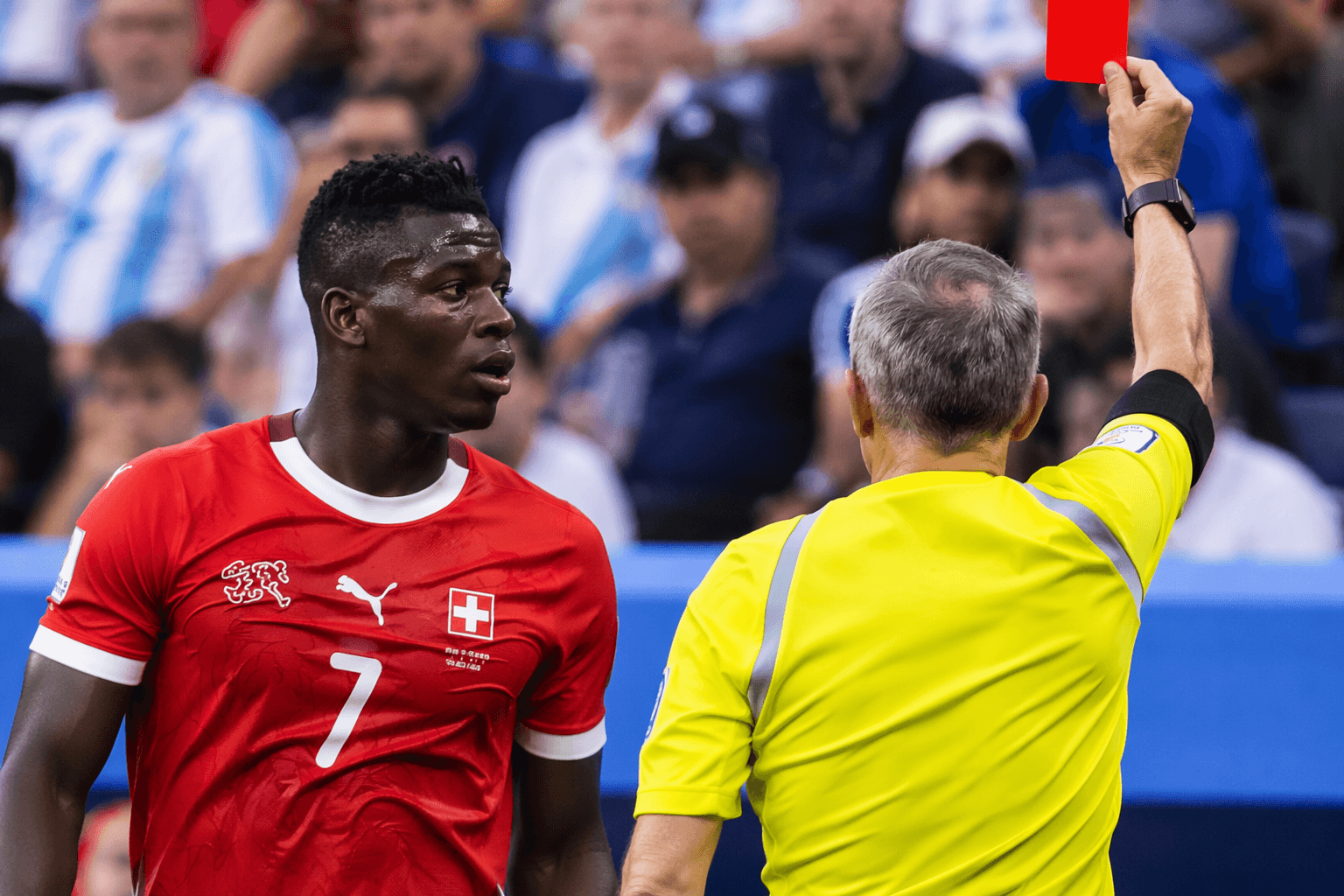
Switzerland coach Murat Yakin blasted the call afterward and called the rule unacceptable, arguing that it altered the course of the match. The reaction inside the Switzerland camp was immediate and emotional, with Embolo visibly distraught after the dismissal. ESPN and other coverage framed the incident as a test case for the expanded VAR protocol and for how much authority video review should have once a referee has already made an on-field disciplinary call.
The episode also revived older questions about how technology reshapes officiating rather than simply eliminating mistakes. An earlier World Cup match between the United States and Paraguay had already produced a mistaken-identity VAR correction, but not a red-card dismissal, showing that the system can now reach beyond the original decision and rewrite it in real time. That is what made this moment different: the video review did not just confirm an incident, it produced a dismissal that became the match’s defining event.

Argentina went on to win 3-1 after extra time and move Lionel Messi’s team into the semifinals, but the result was overshadowed by the second-half sending-off. For Switzerland, the debate over Embolo’s red card will linger well beyond the final whistle, because the new protocol was designed to reduce clear officiating errors and instead delivered one that changed a quarterfinal.
This article was produced by Prism’s automated news system from verified source data, official records, and press releases, then run through automated quality and moderation checks before publishing. The system is built and supervised by the people who set the standards it runs under. Read our full AI policy.
Did this article answer your question?