Arizona's Salt River Project Elections Draw Heavy Hitters, Test Turning Point
Turning Point Action flooded Arizona's little-known SRP utility election with hundreds of staffers and ballot collectors, marking the group's first major political test since founder Charlie Kirk's murder.
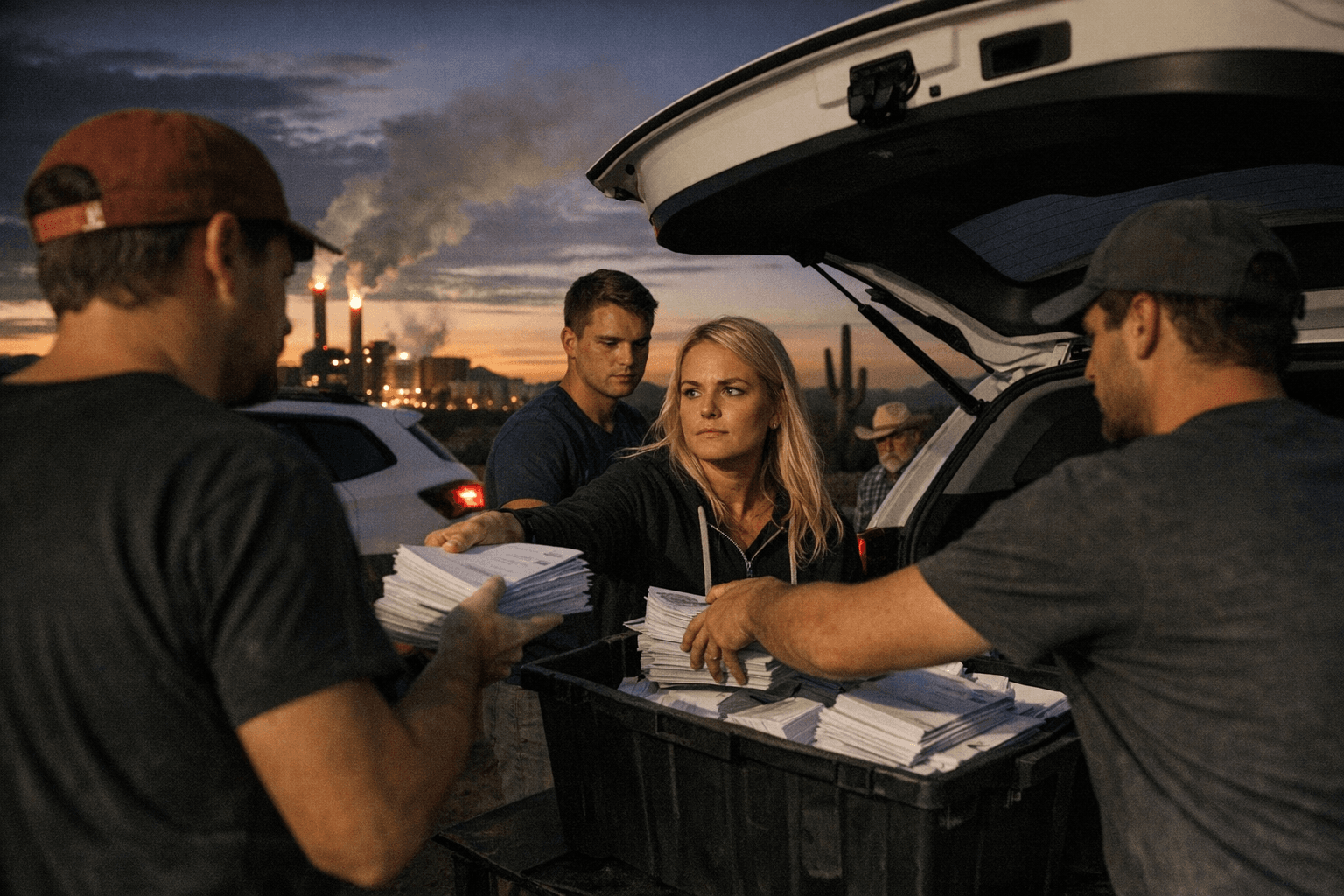
What normally produces around 7,500 ballots in a sleepy spring utility election generated more than 35,000 ballot requests this cycle, as the Salt River Project's April 7 board elections became the most contested in the Phoenix public utility's 123-year history. The surge was driven largely by Turning Point Action, which treated the obscure landowner vote as its first major organizational test since the murder of founder Charlie Kirk last year.
The conservative group founded by the late Charlie Kirk is one of several major players throwing its weight around elections for the board of Salt River Project, which serves 1.1 million people in the Phoenix area. What set this election apart from previous ones was the involvement of Turning Point Action, the Phoenix-based conservative activist organization cofounded by the late Charlie Kirk. Tyler Bowyer, Turning Point Action's chief operating officer, confirmed the group deployed "hundreds and hundreds of full-time staff" and substantial financial resources to support the Affordable Reliable Rate slate.
Bowyer told KTAR News 92.3 FM: "We haven't committed a dollar amount. (The SRP election) stops radical policies and really bad ideas that stem from progressivism." Turning Point's involvement served dual purposes. "The SRP territories, they're pretty blue," Bowyer said. "If we can get turnout and activate the toughest place in the state for us right now, that could play a huge role for us later on in November."
The strategic logic was explicit. Bowyer described the effort as a "ballot chase," with efforts to register voters and ensure turnout laying "the groundwork for voter interaction that needs to happen in order to get out the vote for 2026 (midterm elections)." He wrote on X: "My goal is to out register the Democrats 10-1 for the (SRP) Election."
The clean energy advocates faced a harder task thanks to Turning Point's deployment of hundreds of volunteers and an additional $500,000 in spending from a pro-business political finance group. Clean energy advocates expected the pro-business slate to outspend them by a 10-to-1 margin.
The race also produced a striking contradiction. Bowyer and the late Charlie Kirk had both argued that ballot collection is a vector for cheating or stealing elections, often amplifying dangerous conspiracy theorists. But Turning Point deployed volunteers going door-to-door to collect ballots from homeowners in SRP's service area as part of the campaign. Arizona law specifically exempts private elections, such as the SRP race, from its ballot harvesting ban.
The two slates offered sharply divergent visions for a utility that controls decisions over electricity rates, water supply and how Arizona handles surging demand from data centers. The race pits the Affordable Reliable Rate ticket backed by Turning Point against the Clean Energy Slate led by Sandra Kennedy, a former Arizona Corporation Commission member running for president of both the Association and the District. According to the American Public Power Association, SRP is the largest public utility by generation, controlling a fleet that generated nearly 33,000 megawatt-hours in 2023, more than similar public utilities serving San Antonio, Los Angeles and parts of New York state.
Turnout surge at SRP has been stark: in the last two elections, an average of 7,500 ballots were turned in. As of five days before election day, turnout had already topped 22,000, according to SRP. SRP said it received about 35,000 requests for ballots in this cycle, more than double the requests from the 2024 election.
Not everyone in SRP's territory welcomed the outside mobilization. Laura Kajfez, a 66-year-old retiree from Tempe, said of Turning Point's involvement: "Very, very, very troublesome. We don't need that intervention in our local politics."
SRP is a public-private entity that predates Arizona statehood, with a governance structure in which votes for most seats are weighted by acreage, giving large landowners outsized influence. Its board sets rates affecting more than 2 million customers and will soon decide whether data centers pay full infrastructure costs or shift those expenses onto residential ratepayers. For Turning Point, a group navigating its first election cycle without its most prominent voice, the SRP results will serve as an early read on whether its ground game can deliver in Arizona's most competitive territories heading into November.
This article was produced by Prism’s automated news system from verified source data, official records, and press releases, then run through automated quality and moderation checks before publishing. The system is built and supervised by the people who set the standards it runs under. Read our full AI policy.
Did this article answer your question?

