Army places military police on standby for Minneapolis unrest
The Pentagon issued prepare-to-deploy orders for Army military police and other units amid Minneapolis protests; officials say deployment is not yet decided.
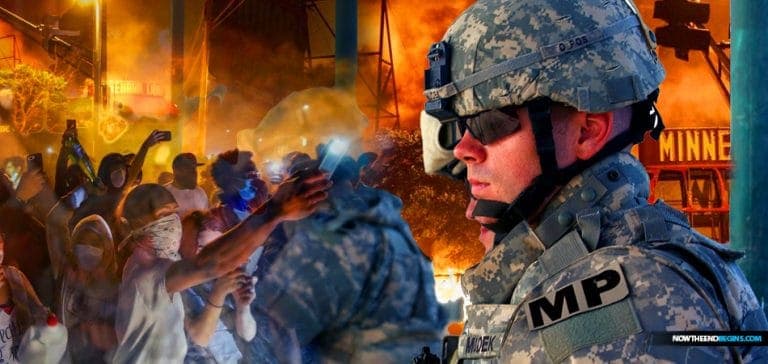
The Pentagon placed active-duty Army military police and other units on prepare-to-deploy orders for a possible deployment to Minneapolis amid protests linked to a federal immigration enforcement operation and the killing of Renee Good by an ICE officer. Defense officials said the measures were precautionary, and no formal deployment order had been issued.
A military police brigade at Fort Bragg, North Carolina, was placed on prepare-to-deploy status, alongside prior orders that had put roughly 1,500 soldiers from the Army’s 11th Airborne Division in Alaska on similar standby. Officials also counted about 200 Texas National Guard troops among forces prepared for potential movement. Estimates for the Fort Bragg alert diverged among defense officials, with assessments ranging from a small contingent to several hundred troops. Several defense officials spoke on condition of anonymity because of the sensitivity of the planning.
If committed, military police would most likely "offer support to civil authorities" in Minneapolis, officials said, performing tasks military police have handled in past domestic operations: securing federal facilities and routes, protecting personnel and property, and assisting with crowd-control and security functions. Officials compared the posture to recent domestic deployments in which active-duty forces were used to guard federal sites rather than to carry out civilian law enforcement functions.
The move follows sustained protests after the Jan. 7 killing of Renee Good and after President Donald Trump suggested he might invoke the Insurrection Act to use active-duty forces as law enforcement. The president said, "If I needed it, I'd use it," and later said there was not a reason to use the act "right now." Minnesota’s governor urged restraint and publicly invited the president to Minnesota to "help restore calm and order and reaffirm that true public safety comes from shared purpose, trust, and respect."
Pentagon officials offered limited comment. A Pentagon official said, "We have nothing to announce at this time, and any tip about this is pre-decisional." Another defense official emphasized that prepare-to-deploy orders are issued routinely as part of force readiness and do not guarantee that units will be sent to a particular location.

The legal threshold for deploying active-duty troops for law enforcement rests on the Insurrection Act, a rarely used statute that permits use of the military in domestic law enforcement under limited circumstances. Officials said invoking the act would involve additional legal and political considerations and would likely follow sustained consultation with state authorities and the White House.
Key details remain unresolved. Officials differ on the Fort Bragg troop count and on whether any of the forces on standby will be directed to Minneapolis. There is no public confirmation that military police or other active-duty units have been ordered to move or have arrived in the city.
For local leaders and civil rights advocates, the preparations underscore tensions over the use of military assets in American cities and raise questions about the lines between federal authority, state sovereignty, and civilian policing. Pentagon statements framed the steps as precautionary and routine, but the prospect of deploying active-duty forces to assist in domestic unrest has already intensified political debate and will put scrutiny on how federal and state officials coordinate any potential response.
This article was produced by Prism’s automated news system from verified source data, official records, and press releases, then run through automated quality and moderation checks before publishing. The system is built and supervised by the people who set the standards it runs under. Read our full AI policy.
Did this article answer your question?

