Arsenal back in Champions League final for first time since 2006
Arsenal’s return to Europe’s biggest stage is also a test of how far the club has moved from Wenger’s young 2006 side to Arteta’s deeper, more global squad.

Arsenal’s place in the Champions League final carries more than a chance to end a 20-year wait. It turns a familiar comparison into a sharper question about what elite clubs become after a near miss: Arsenal’s 2006 team was a bright, youthful first breakthrough, while Mikel Arteta’s side is a broader, more heavily recruited squad built for a different kind of competition.
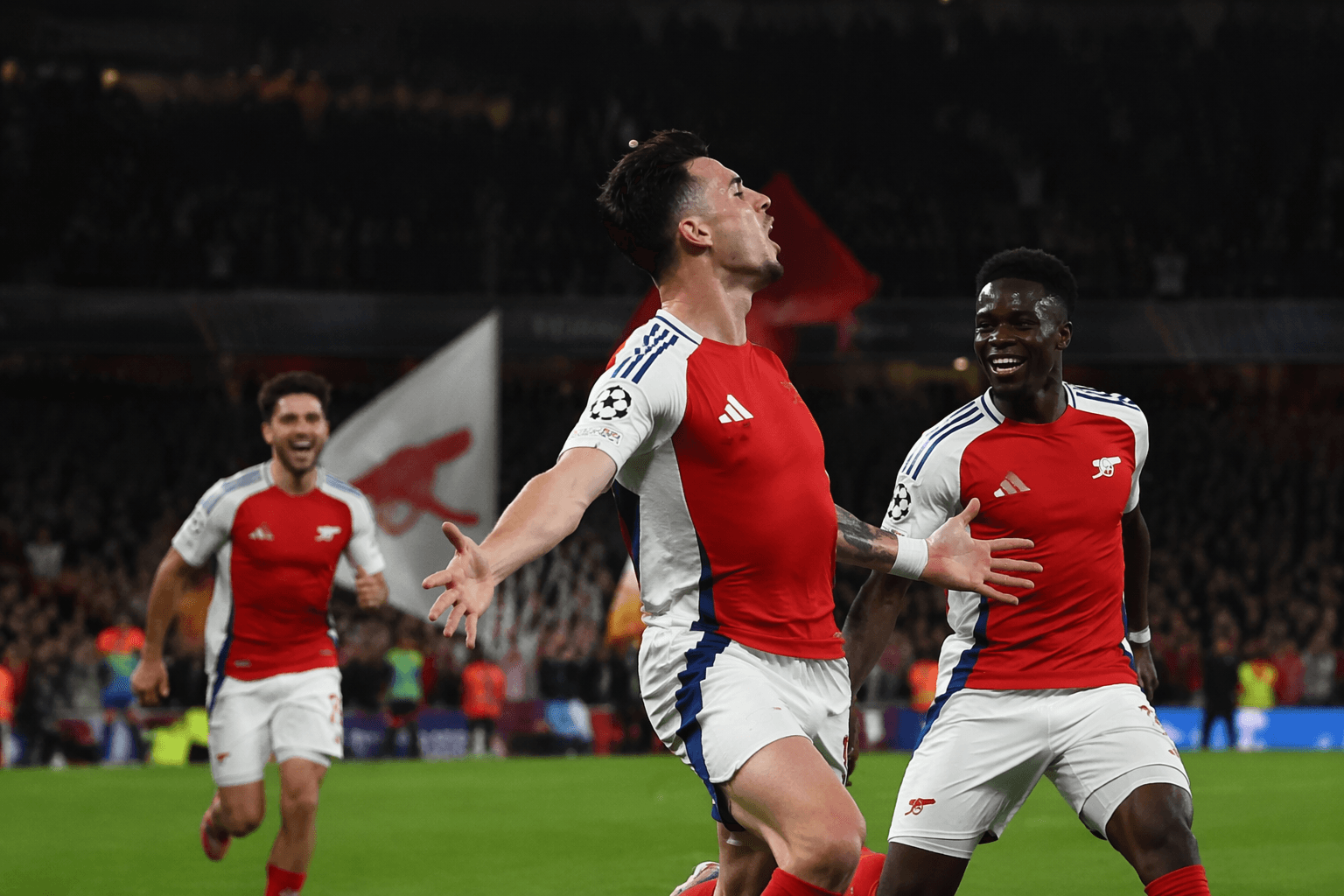
Arsenal will face Paris Saint-Germain at the Puskás Aréna in Budapest on Saturday, May 30, 2026, at 5pm UK time, after Bukayo Saka’s goal against Atlético Madrid sent the club through on aggregate. It is only Arsenal’s second Champions League final, and the first since the 2005/06 campaign ended in a 2-1 defeat to Barcelona at the Stade de France in Paris on May 17, 2006.
That night is still the reference point. Sol Campbell put Arsenal ahead in the 37th minute, only for Samuel Eto’o to equalize in the 76th minute and Juliano Belletti to strike the winner five minutes later. Arsenal’s final XI featured Jens Lehmann, Ashley Cole, Robert Pirès, Fredrik Ljungberg, Alexander Hleb, Thierry Henry, Cesc Fàbregas, Gilberto Silva, Campbell, Emmanuel Eboué and Kolo Touré. The bench included Manuel Almunia, José Antonio Reyes, Mathieu Flamini, Dennis Bergkamp, Robin van Persie, Philippe Senderos and Gaël Clichy.
What made that side distinct was not depth but identity. Arsenal’s own history has described the run as built on bravery, artistry and youthful endeavour, and UEFA noted the team kept 10 successive clean sheets on the way to Paris, a Champions League record at the time. Thierry Henry, the captain and Arsenal’s all-time top scorer with 228 goals, was the emblem of that era: a star at the peak of a side that still felt unfinished.
The 2026 squad tells a different institutional story. Arsenal’s first-team list includes David Raya, Kepa Arrizabalaga, William Saliba, Ben White, Gabriel Magalhães, Jurrien Timber, Riccardo Calafiori, Myles Lewis-Skelly, Martin Ødegaard, Declan Rice, Bukayo Saka, Gabriel Martinelli, Viktor Gyökeres, Eberechi Eze, Noni Madueke and Kai Havertz. The club also said there were eight new faces after the summer reshuffle: Kepa Arrizabalaga, Eberechi Eze, Viktor Gyökeres, Piero Hincapié, Noni Madueke, Cristhian Mosquera, Christian Nørgaard and Martin Zubimendi.

That matters because modern success is measured differently. Wenger’s 2006 team arrived with history on the line and few margin-for-error options. Arteta’s Arsenal, backed by a 25-man Premier League squad list shaped by home-grown limits, arrives with more size, more positional variety and more recruitment layers. UEFA’s 20-years-on retrospective on May 6 underlined the club’s own decision to reconnect these two eras. The comparison is not just about which XI looks stronger on paper. It is about how Arsenal changed from a young, almost romantic project into a club built to survive the harsher mathematics of the modern Champions League.
This article was produced by Prism’s automated news system from verified source data, official records, and press releases, then run through automated quality and moderation checks before publishing. The system is built and supervised by the people who set the standards it runs under. Read our full AI policy.
Did this article answer your question?
.jpg&w=1920&q=75)