Arsenal must prove they can finish title races after Manchester City defeat
Arsenal’s defeat to Manchester City is more than a setback. It is another test of whether Mikel Arteta can turn elite progress into a title-winning finish.
The City defeat sharpens the question around Arteta
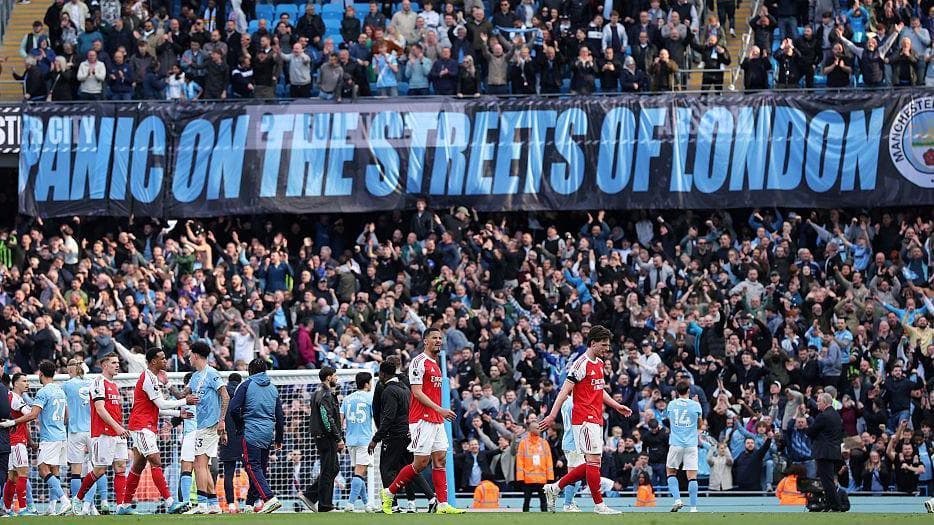
Arsenal did not just lose a game at the Etihad Stadium. They reopened the most difficult debate around Mikel Arteta’s project: whether this is a side on the verge of glory or one that is learning how to come close without ever crossing the line. BBC chief football writer Phil McNulty’s verdict was blunt, saying Arsenal and Arteta may still have a season of glory but must prove they are not “nearly men” after the Manchester City loss.
That framing matters because the criticism is no longer about a single bad afternoon. It is about whether a team that has spent multiple seasons looking like a title contender has developed the ruthless edge required when pressure peaks. Manchester City, under Pep Guardiola, have made those moments routine. Arsenal still have to show they can do the same.
A pattern of near-misses is now hard to ignore
The immediate context makes the defeat more damaging. Arsenal finished runners-up in the Premier League last season, and BBC analysis highlighted how close they had come to control the race before the collapse set in. They led Manchester City by eight points after 18 games, only for the challenge to begin to falter. BBC reporting noted that by this stage in the previous season, their title bid had already started to unravel.
That history is what turns a single result into a broader test of credibility. McNulty has previously argued that Arteta needs to address Arsenal’s shortcomings, and the club still has to prove that it can sustain a title charge to the final day. In other words, the issue is no longer whether Arsenal can compete with the best for long stretches. The issue is whether they can finish the job when the race tightens.
The evidence so far points to a team that has repeatedly placed itself in position to challenge, then failed to hold the standard required to finish first. That is why the Manchester City defeat is being read as more than a slip. It threatens to confirm a pattern.
What the numbers say about Arsenal’s ceiling
The Premier League table does not lie, and Arsenal’s recent record gives this debate its force. They have not won the title since the 2003-04 season, a wait that now stretches across two decades. For a club of Arsenal’s size and spending power, that drought has become the defining backdrop to every promising run under Arteta.
There is also the detail that makes the recent near-misses sting more. Arsenal have reached the Champions League semi-finals in consecutive seasons, showing that the squad has grown into one capable of competing at the highest European level. Yet that progress has also fed a harder question: if Arsenal can go deep in Europe, why has that same control not translated into domestic silverware?
Arteta has argued that the quality of the Premier League title race has been “unprecedented”, and that point is not without merit. The standards at the top have been ferocious, with Manchester City still the benchmark and the margin for error vanishingly small. But elite competition does not erase the burden on Arsenal. It merely clarifies it. A team that believes it belongs in the title race must still prove it can outlast the others when the season turns toward pressure and fatigue.
Recruitment has raised the level, but not settled the argument
One reason Arteta’s tenure remains so divisive is that Arsenal’s recruitment and development have undeniably improved the squad. The side looks stronger, deeper and more cohesive than the one he inherited, and the club has rebuilt itself into a consistent challenger rather than an occasional disruptor. But improvement is not the same as completion.
That is where the legacy question becomes uncomfortable. If the squad has been assembled to compete with the best, then the standard is not simply to be competitive in October or January. It is to survive the final stretch, when title races are most often decided by composure, discipline and the ability to avoid the one damaging run of dropped points. BBC reporting has already described Arsenal as having dropped points at a crucial stage, and that is exactly the sort of sequence that can define a season.
Arteta himself has shown awareness of the issue. After Arsenal fell to their second defeat of the season in another BBC coverage, he said the team needed to “reset” and admitted, “We were nowhere near our level.” That language suggests a manager who knows how quickly momentum can slip. It also underlines how much Arsenal still depend on self-correction at the very moment a champion would be expected to impose itself.
The Champions League progress cuts both ways
Arsenal’s European run should not be dismissed. Reaching the Champions League semi-finals in consecutive seasons is a genuine marker of growth, and it shows that the club is no longer simply chasing top-four security. The team has become relevant in knockout football again, which is a meaningful step in its rebuild.
Yet the European progress also sharpens the domestic critique. If Arsenal can get that far in the Champions League, then the argument that the squad lacks quality no longer holds much weight. Arteta’s view that this Arsenal side was the best team in the Champions League this season, despite their exit, only reinforces the sense that this group has the talent to win big things. The question is not talent. It is whether the team can translate it into a trophy when the margins are smallest and the stakes are highest.
That is why the Manchester City defeat has narrative power beyond the three points lost. It feeds a storyline that Arsenal are improving, even impressively so, but still falling short at the point where history is written. If the club cannot reverse that trend, each near-miss will stop feeling like a stepping stone and start looking like the defining feature of Arteta’s reign.
What comes next is about more than one result
Arsenal still have time to make this season into something greater. But the burden on Arteta is now heavier because the club’s progress has to prove it can survive the final examination. The standards are clear: last season’s runners-up finish, the eight-point lead that slipped away after 18 games, the repeated warnings that the title challenge has faltered at a similar stage, and the long wait since 2003-04 all point in the same direction.
This is no longer only about disappointment after Manchester City. It is about legacy. Arteta has built a side that looks good enough to challenge. He now has to show it is ruthless enough to win.
This article was produced by Prism’s automated news system from verified source data, official records, and press releases, then run through automated quality and moderation checks before publishing. The system is built and supervised by the people who set the standards it runs under. Read our full AI policy.
Did this article answer your question?