Arsenal Seek European Magic Again After Last Season's Fairytale Run
Arsenal reached the 2025 Champions League semi-finals before PSG ended the dream; now Mikel Arteta's side face Sporting CP with a shot at going further.
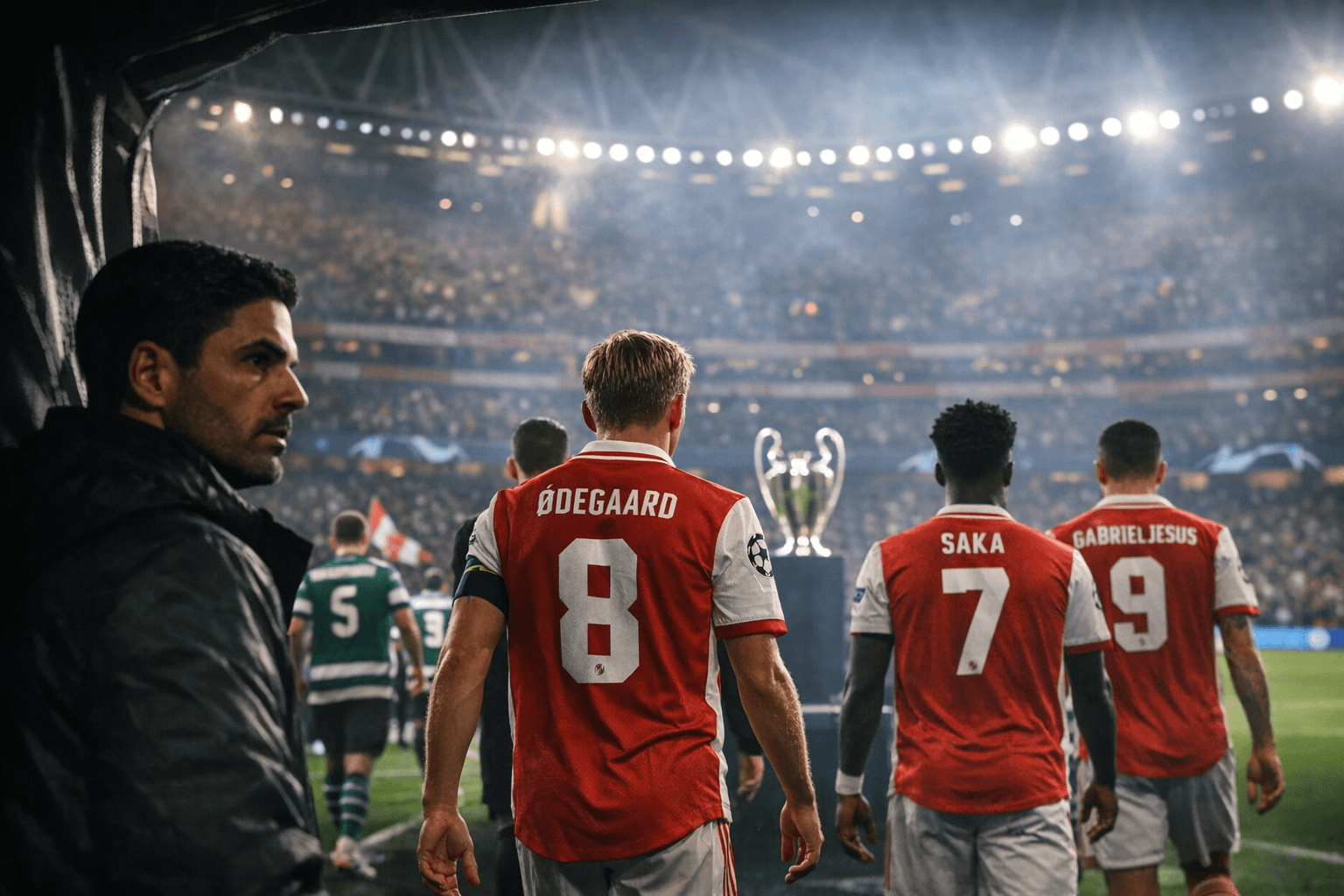
The Weight of an Unfinished Story
One year ago, Arsenal stood inside the Parc des Princes with 20 minutes to pull off one of European football's great reversals. They couldn't. Paris Saint-Germain completed a 3-1 aggregate victory in the 2024-25 Champions League semi-finals, with goals from Fabián Ruiz and Achraf Hakimi sealing a tie Arsenal had half-opened when Bukayo Saka converted late. It was a genuinely painful exit, made harder by the fact that Mikel Arteta's side had beaten those same PSG opponents 2-0 at the Emirates Stadium earlier in the league phase. The potential was undeniable; the execution, at the highest pressure point, fell short.
What that run gave Arsenal was something harder to quantify than a trophy: proof that their model works at the continental level. Twelve months on, they have reached the quarter-finals of the Champions League for the third consecutive season, and the draw has handed them a fixture loaded with history, intrigue, and a subplot so good it almost writes itself.
How They Got Here
Arsenal entered this 2025-26 campaign carrying genuine belief rather than hope. Their league phase included a 3-1 defeat of Bayern München, and they navigated the knockout bracket with controlled aggression. In the round of 16, they drew Bayer Leverkusen, a tie that marked the first meeting between the clubs since 2002. The second leg at the Emirates settled any nerves emphatically: Eberechi Eze produced a stunning top-corner volley, then Declan Rice, in the 74th minute, rolled an inch-perfect finish inside the post for a 2-0 win on the night and 3-1 on aggregate. Leverkusen's goalkeeper Janis Blaswich made ten saves; Arsenal simply had too much.
The progression confirmed something about this squad's developing European literacy. It is now Arsenal's 21st Champions League campaign since the competition's modern format began in 1992-93, and the incremental learning from each deep run is visible in how they manage tie momentum across two legs.
The Gyokeres Reunion
The quarter-final draw placed Arsenal against Sporting CP, and then a secondary fact landed with considerable force: Viktor Gyokeres, Arsenal's own striker, spent two transformative years in Lisbon, scoring 97 goals in 102 competitive games between 2023 and 2025 before completing his move to north London. On April 7, he will walk back into the Estadio José Alvalade, the stadium where his career accelerated into something exceptional, now wearing Arsenal red.
It is exactly the kind of recruitment narrative Arteta's coaching staff has built this project on: identify elite performers operating at high levels in specific systems, acquire them, and integrate them into a structure where their strengths compound rather than dilute. The fact that Gyokeres's intimate knowledge of Sporting's defensive triggers and pressing vulnerabilities now sits inside Arsenal's analysis room rather than against it is a significant advantage Arteta can deploy from the first minute.
Tactical Identity Under Pressure
The mechanism that separates Arsenal's European performances from their domestic routine is the precision of their pressing triggers. Against Sporting in the 2024-25 league phase, a 5-1 win in Lisbon that saw Gabriel Martinelli and Kai Havertz score within the first half, Arsenal's high press forced turnovers repeatedly in dangerous areas. Sporting's full-backs struggled with the pace of Arsenal's press, and the spaces between Sporting's midfield and defensive line became the real battleground.
Martin Ødegaard and Bukayo Saka drove that game's tempo. In the Leverkusen knockout tie this season, it was Eze and Rice who provided the creative and physical energy in central areas. The rotation of these responsibilities between multiple players is perhaps the most underrated structural element of Arteta's system: no single midfield pairing carries the full workload across a two-legged tie.
Squad depth becomes decisive at this stage of the competition. Ben White started the Leverkusen second leg, only his second appearance since late January, covering for the absent Jurrien Timber. Noni Madueke came into the squad picture before suffering a knock during the international break. Martin Zubimendi also sat out Spain's last fixture due to knee discomfort. Managing those fitness questions into April is precisely the kind of operational test that Champions League quarter-finals exist to apply.
What Sporting Bring
Sporting arrived at this stage with enormous momentum of their own. Their round of 16 tie against Bodo/Glimt was a statement: 3-0 down after the first leg in Norway, they won the return 5-0 to advance 5-3 on aggregate in one of the more remarkable two-legged comebacks the competition has seen. It is the kind of resilience that demands respect regardless of what the pre-tie statistics suggest.
Arsenal hold an unbeaten European record against Sporting (two wins, three draws), including that 5-1 result in Lisbon last season. But that overall record includes the 2022-23 Europa League exit on penalties, a tie that ended 3-3 on aggregate with Gabriel Martinelli's missed spot-kick the decisive moment. Sporting can clearly hurt Arsenal when the conditions are right, and Amorim's team's shape in transition is organised and quick.
Sporting will be without captain Morten Hjulmand through suspension and winger Nuno Santos with a thigh injury. Those absences weaken the left-flank defensive structure and reduce the midfield control Hjulmand provides, which is precisely where Arsenal will look to exploit space on April 7.
The Horizon Beyond Lisbon
Should Arsenal advance past Sporting, the semi-final bracket offers a potential collision with either Barcelona or Atletico Madrid. That prospect has been sitting in the background of every Arsenal tactical discussion since the draw was confirmed. UEFA has confirmed the semi-final dates, meaning the schedule is set, the infrastructure is ready, and the only outstanding question is whether Arsenal can now convert a third consecutive quarter-final into something more permanent in European football's memory.
Last season's run to the semi-finals was extraordinary. A third consecutive quarter-final, against a Sporting side they know intimately through Gyokeres, built on a tactical identity that has clearly matured across three seasons at this level, suggests the fairytale chapter is still being written.
This article was produced by Prism’s automated news system from verified source data, official records, and press releases, then run through automated quality and moderation checks before publishing. The system is built and supervised by the people who set the standards it runs under. Read our full AI policy.
Did this article answer your question?

.jpg&w=1920&q=75)
