Artemis II Crew Approaches Moon's Far Side for Historic Monday Flyby
Four Artemis II astronauts are closing in on the Moon's far side, set to break Apollo 13's 1970 distance record and witness the Orientale basin with human eyes for the first time.
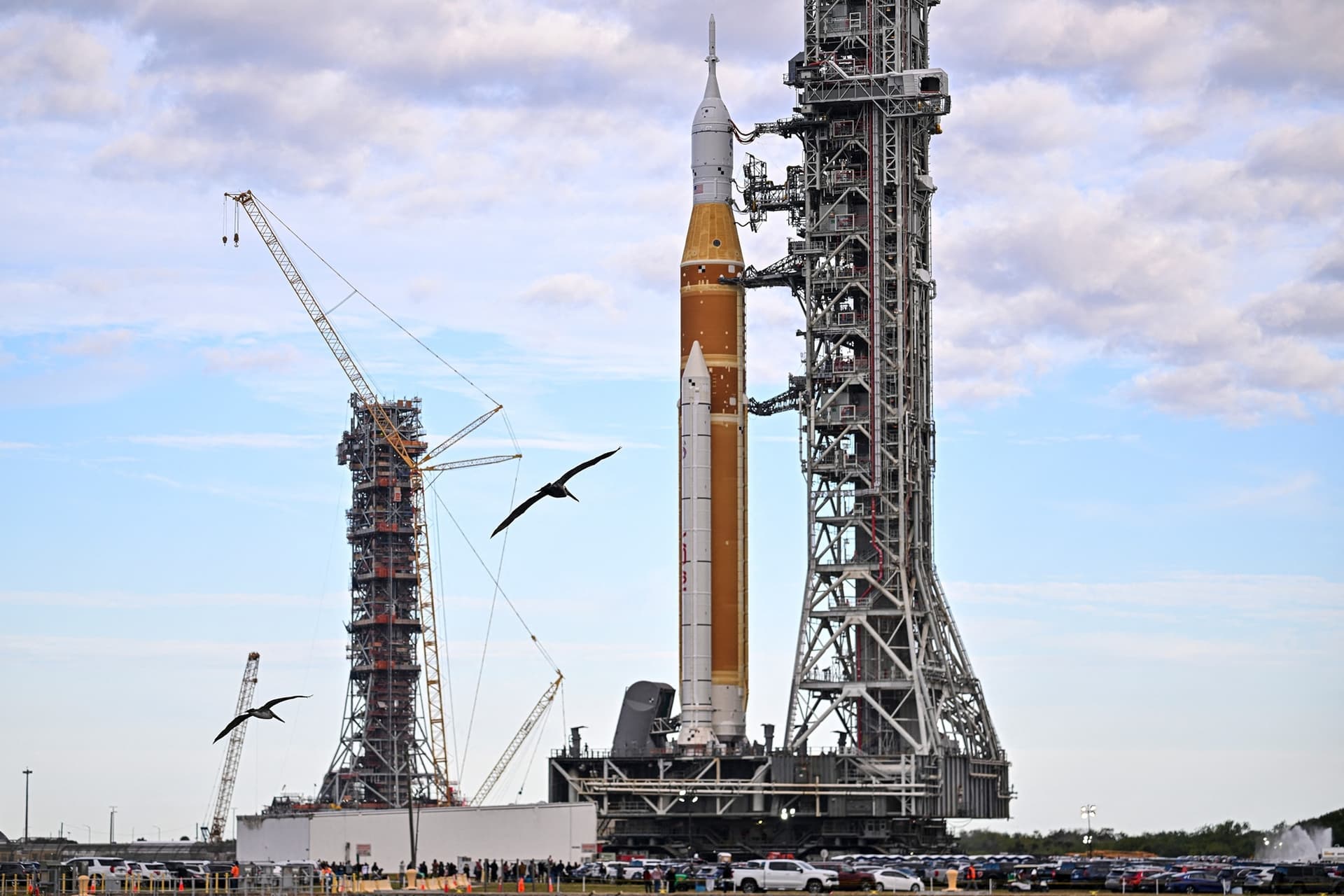
Less than 60,000 miles from the Moon and closing, the Artemis II crew is set to complete the first crewed lunar flyby in more than 50 years on Monday, April 6, with a seven-hour observation window that will place human eyes on terrain no person has ever seen.
Commander Reid Wiseman, Pilot Victor Glover, Mission Specialist Christina Koch, and Canadian Space Agency Mission Specialist Jeremy Hansen launched from Kennedy Space Center's Launch Pad 39B on April 1. The four already represent a constellation of firsts: Glover is the first person of color, Hansen the first non-U.S. citizen, Koch the first woman, and Wiseman the oldest to travel beyond low Earth orbit and near the Moon.
Monday adds another milestone. At approximately 1:56 p.m. CT, Artemis II will surpass the all-time human spaceflight distance record held since April 1970 by Apollo 13's crew, Commander Jim Lovell, Fred Haise, and Jack Swigert, who reached 248,655 miles during their emergency return. Artemis II's maximum distance of 252,757 miles bests that mark by 4,102 miles.
About 20 percent of the Moon's far side will be sunlit during the flyby, terrain never visible from Earth due to tidal locking and that even Apollo crews had little exposure to. The centerpiece target is the Orientale basin, an impact crater three times as wide as Massachusetts. Robotic probes have photographed it, but no human has ever seen the full basin with unaided eyes. NASA Artemis Science Flight Operations Lead Kelsey Young, speaking at a Saturday press conference, called it "an impact basin that has played such a critical role in not just lunar science, but in planetary and solar system science."
Koch already had a preview. In an interview from the Orion capsule, she described the disorientation of seeing the Moon from an unprecedented vantage: "The darker parts just aren't quite in the right place," she said. "And something about you senses that is not the moon that I'm used to seeing." Glover was reported to be mesmerized by early sightings of the Orientale basin.
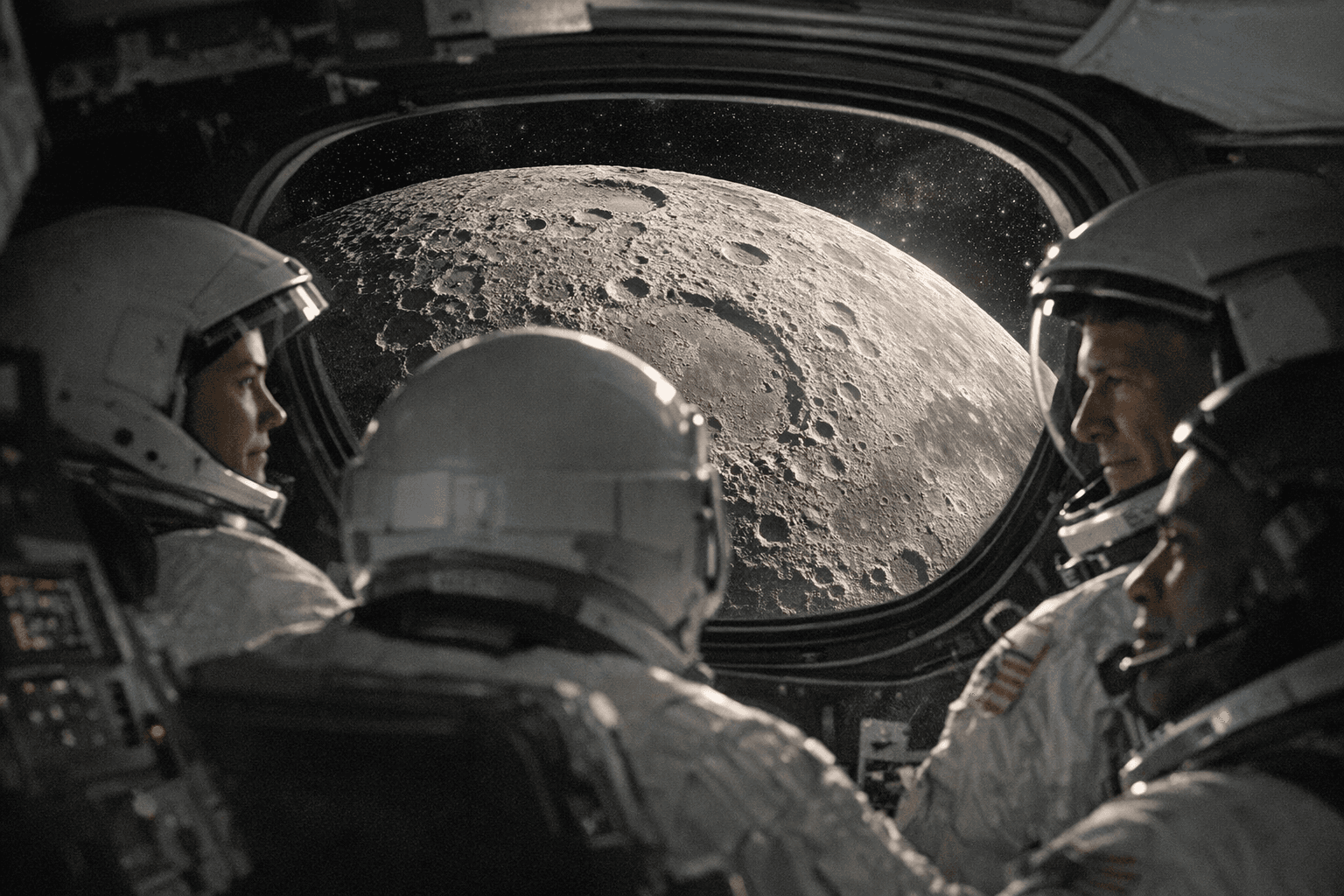
NASA Artemis II Flight Director Judd Frieling on why having humans aboard elevates the science: "Human eyes can resolve details much better than taking a picture and then looking at the picture even with a telephoto lens." The crew memorized 15 distinctive lunar features before launch to stay oriented during the flyby.
Closest approach, within 4,066 miles of the lunar surface, is scheduled for 7:02 p.m. EDT Monday. Mission control expects a brief communications blackout at 6:47 p.m. as Orion passes behind the Moon. The spacecraft follows the same figure-eight free-return trajectory as Apollo 13, neither orbiting the Moon nor landing on it.
Artemis II is a test flight designed to verify Orion's systems in the deep space environment, clearing the path for Artemis III, which aims to return humans to the lunar surface for the first time since Apollo 17 in December 1972. Splashdown is scheduled off the coast of San Diego at approximately 8:07 p.m. EDT on Friday, April 10, concluding a 10-day mission covering 695,081 miles in total.
Sources:
Know something we missed? Have a correction or additional information?
Submit a Tip