Artemis II Crew Splashes Down Safely After Historic Lunar Flyby Mission
Integrity splashed down 50 miles off San Diego, setting a new human distance record at 252,756 miles, but unresolved heat shield and hardware flaws now shape the path to a Moon landing.
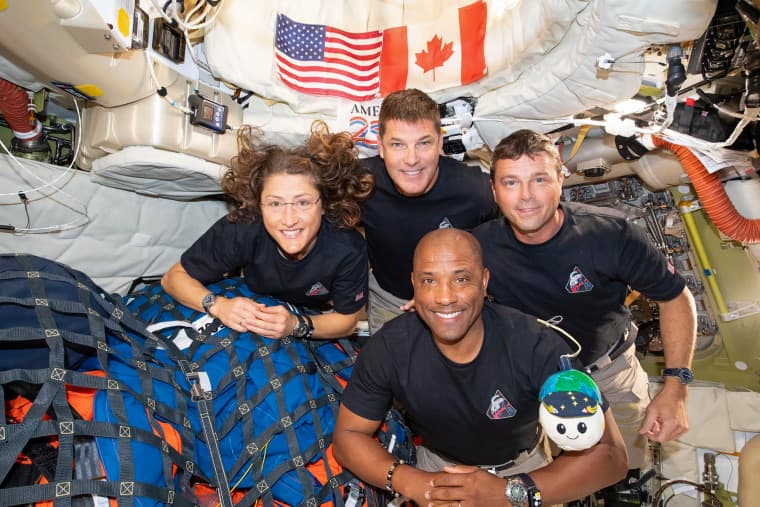
The heat shield held. That single fact, confirmed as Orion tore through Earth's atmosphere at Mach 33 on April 10, 2026, answered the most consequential engineering question facing America's return to crewed lunar exploration. Three technical problems remain open, and they will define whether NASA can land astronauts on the Moon before the decade ends.
The spacecraft, named Integrity by its crew, splashed down approximately 50 miles off San Diego at 5:07 p.m. Pacific Time, ending a 9-day, 1-hour, 32-minute, 15-second mission covering 694,481 miles. Mission Control called it "a perfect bullseye splashdown," adding: "Integrity's astronauts, back on Earth." Commander Reid Wiseman radioed that all four crew members were doing well.
The mission stacked historic firsts: Victor Glover became the first person of color to travel beyond low Earth orbit; Christina Koch became the first woman to travel toward the Moon; Jeremy Hansen of the Canadian Space Agency became the first non-U.S. citizen to travel beyond low Earth orbit; and Wiseman became the oldest person to do so. The four were, collectively, the first humans to travel toward the Moon in more than 50 years, since Apollo 17 in 1972.
Orion's reentry performance was the mission's defining technical test. The heat shield carried documented design flaws from the 2022 Artemis I uncrewed flight, when it returned pockmarked. NASA developed a modified reentry path for Artemis II specifically to protect it. Before reentry, Wiseman had said: "If we stick to the new reentry path that NASA has planned, then this heat shield will be safe to fly." It held through more than 5,000 degrees Fahrenheit of atmospheric heating, but engineers must now conduct close post-flight inspection before certifying the design for any future crewed mission.

Two additional problems surfaced and remain unsolved. A toilet urine venting system failed early and was never repaired in flight. A helium valve in the Orion service module requires a redesign. Those faults, alongside the heat shield's continuing review, have already forced a structural change to Artemis III: the mission, originally planned as a 2027 lunar surface flight, will instead become an Earth-orbiting test flight. The crewed south pole landing now falls to Artemis IV, targeted for around 2028. NASA Associate Administrator Amit Kshatriya was direct about the stakes: "The path to the lunar surface is open, but the work ahead is greater than the work behind us. It always will be."
During the April 6 lunar flyby, the crew set a new record for the farthest distance any humans have ever traveled from Earth: 252,756 miles (406,771 km), breaking Apollo 13's 1970 mark of 248,655 miles. They witnessed a 54-minute total solar eclipse from a vantage point near the lunar far side, the first people to view that terrain with naked eyes. In a moving moment during the flyby, the tearful crew asked Mission Control for permission to name two craters after their spacecraft and after Carroll Wiseman, the commander's late wife.
Approximately 100 NASA and contractor personnel, supported by the U.S. Navy, executed the recovery from the USS John P. Murtha, stationed roughly 50 miles off the San Diego coast. All four astronauts were extracted from the capsule and aboard the ship within about two hours of splashdown. NASA Administrator Jared Isaacman, who greeted each astronaut personally on the Murtha's deck, posted: "America is back in the business of sending astronauts to the Moon and bringing them home safely." The unresolved questions about heat shields, helium valves, and mission timelines will determine how soon that promise becomes a footprint on the lunar south pole.
Sources:
Know something we missed? Have a correction or additional information?
Submit a Tip