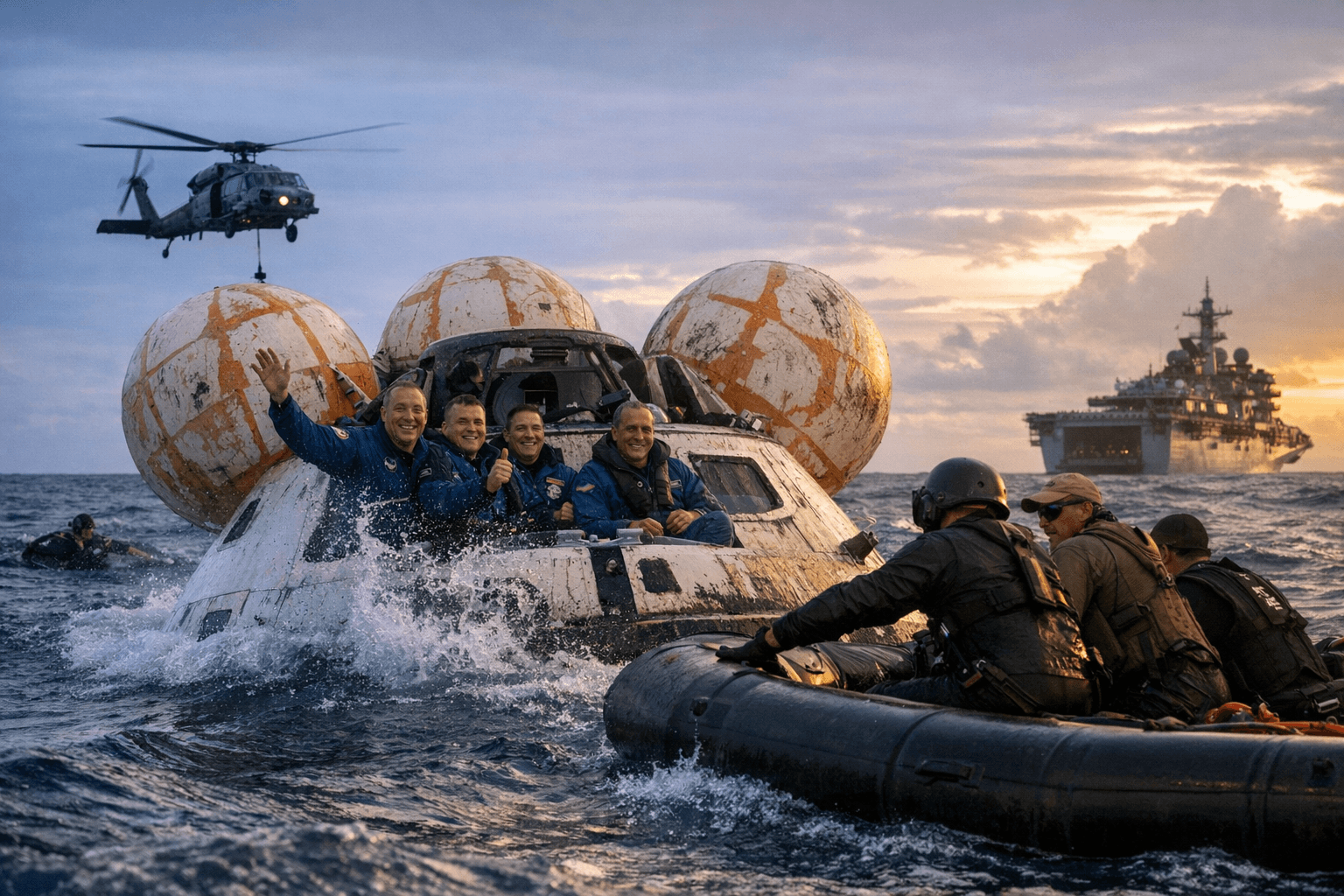
Artemis II Crew Splashes Down Safely in Pacific, Completing 10-Day Moon Mission
Orion's 11-parachute cascade braked the capsule from Mach 33 to 17 mph, a feat NASA certified through years of deliberate failure testing at Yuma.
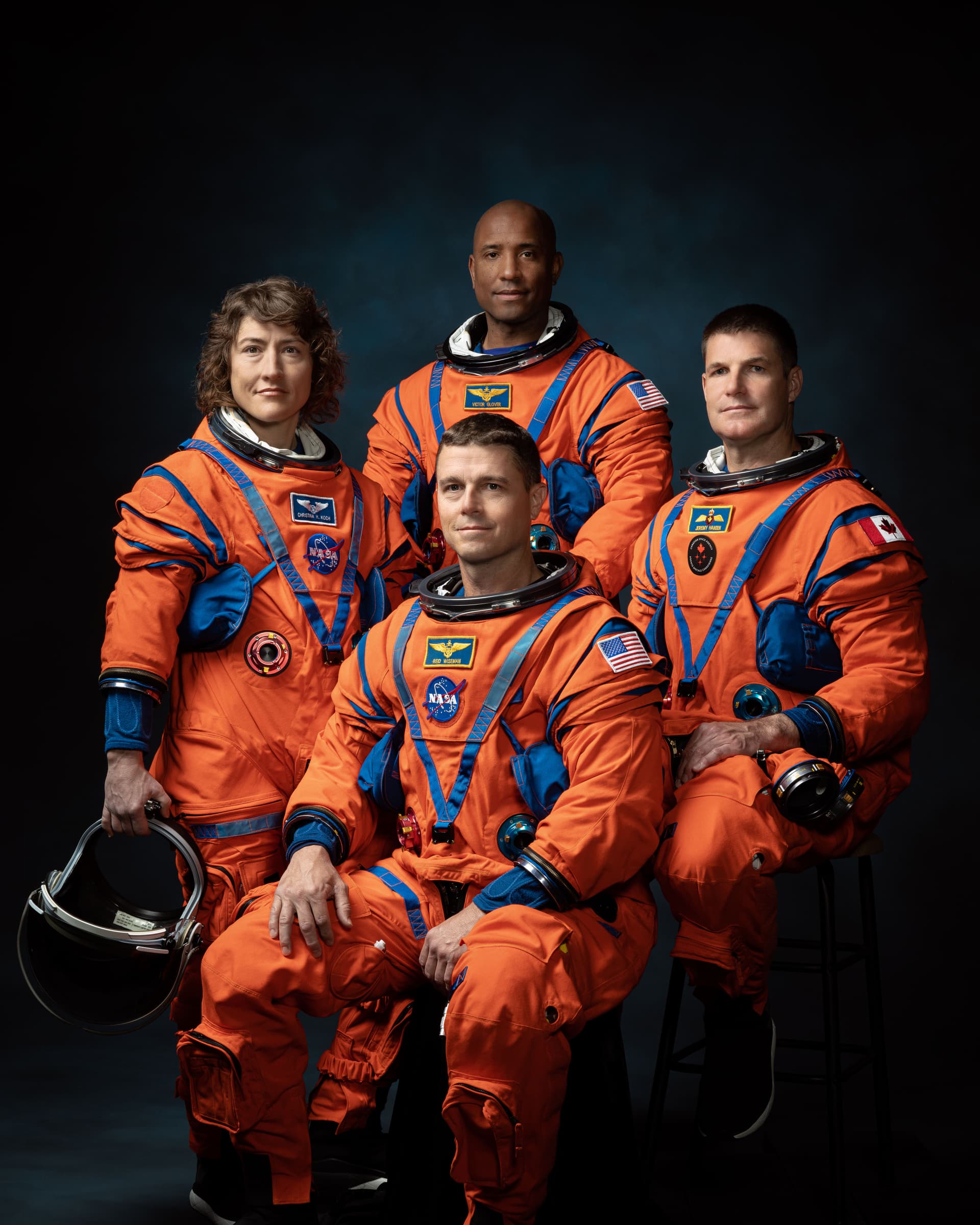
When the Orion capsule named Integrity punched into Earth's atmosphere at 24,000 mph on Friday evening, its crew of four had already survived the most dangerous minutes of a 10-day journey beyond the Moon. What brought them home was an 11-parachute cascade whose engineering reflects six decades of hard lessons about what happens when a critical system has nowhere to fail gracefully.
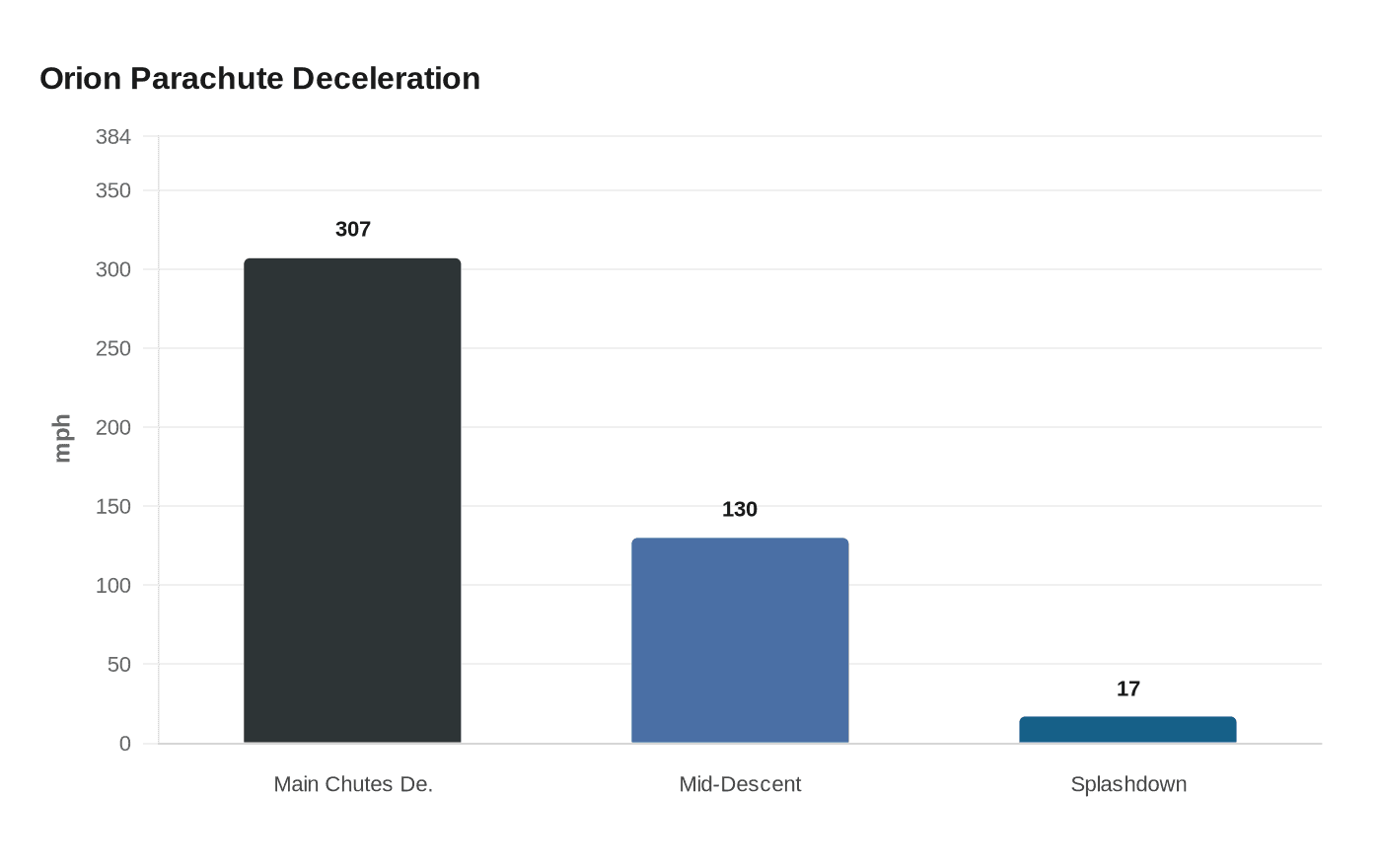
Orion's descent begins with two drogue parachutes that deploy at roughly 22,000 feet to stabilize the tumbling capsule from speeds exceeding 300 mph. Three main parachutes, each 116 feet wide, then unfurl at approximately 6,000 feet, stepping Integrity's speed down from 307 mph to 130 mph and finally to 17 mph at splashdown. The full system comprises more than 30 miles of Kevlar lines attached to 36,000 square feet of canopy material.
The numbers define what NASA commentator Rob Navias called "a perfect descent for Integrity": a controlled, measurable reduction in kinetic energy across three discrete deceleration stages, each one a potential single point of failure. The system is designed to withstand the failure of either one drogue or one main parachute and still ensure a secure landing, but that margin is narrow. Lose two main chutes and the physics become unsurvivable.
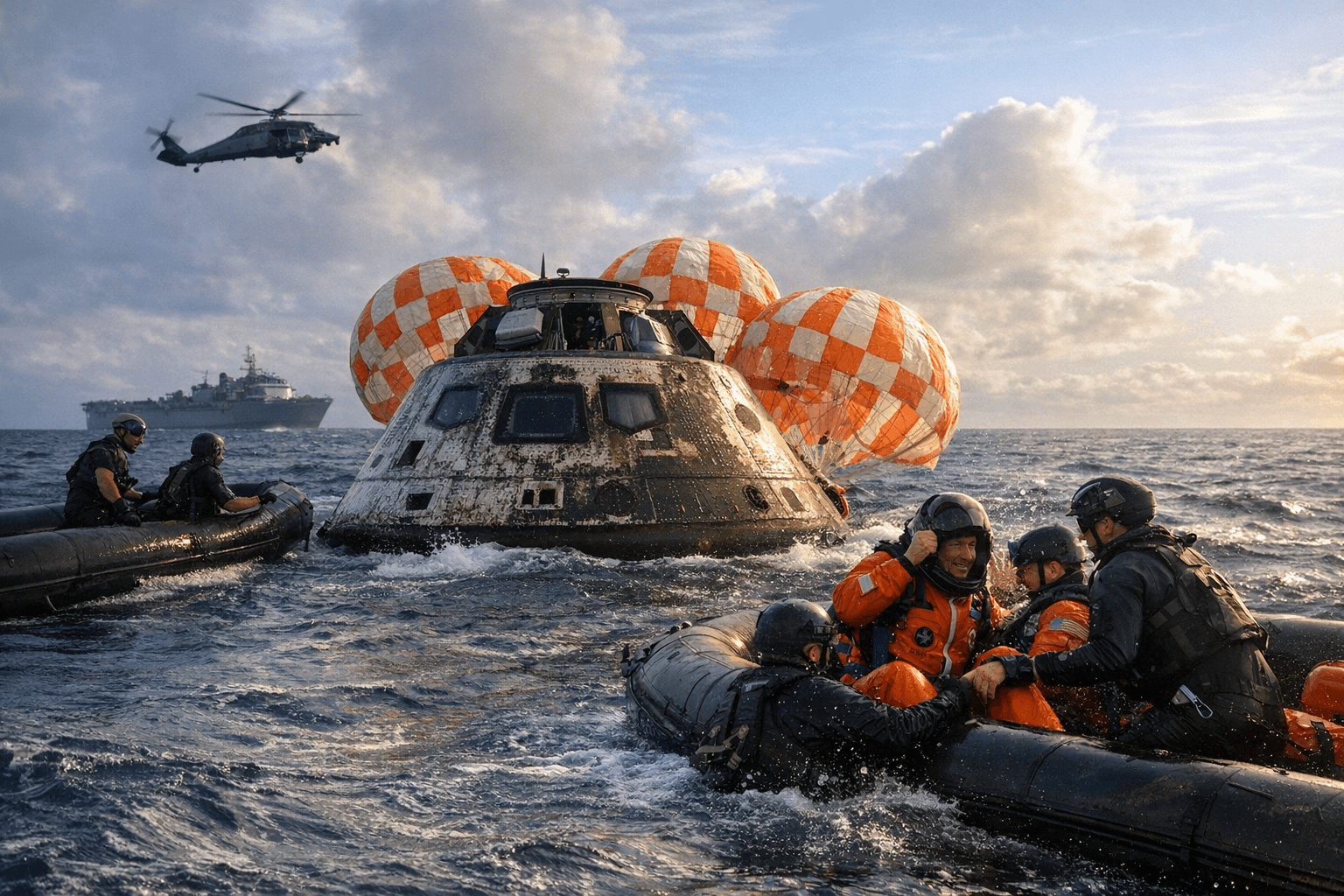
That vulnerability is precisely why NASA spent 12 years qualifying this system before putting humans on top of it. Over the course of eight drop tests at the U.S. Army's Yuma Proving Ground in Arizona, engineers evaluated performance during normal landing sequences as well as failure scenarios and a variety of potential aerodynamic conditions. The final test came in September 2018; the program deliberately simulated nearly every failure mode imaginable.
The parachute architecture is more complex than anything that preceded it. Apollo's command module used nine parachutes: two drogues, three pilot chutes, and three mains, each 83.5 feet across, covering 7,200 square feet of canopy. Those mains deployed at 10,700 feet and slowed the capsule from 175 mph to 22 mph at splashdown. Orion's three mains, collectively covering 36,000 square feet, must handle a heavier vehicle returning from deeper space at higher velocities. SpaceX's Crew Dragon uses two drogues at 18,000 feet and four main parachutes at 6,000 feet, with the mains deploying while the vehicle is moving at approximately 119 mph. The Soyuz approach is fundamentally different: a single large main canopy decelerates the descent module, with solid-fuel retrorockets firing just before touchdown to cushion the land landing on the Kazakh steppe.
Orion's greater complexity reflects a greater entry challenge. Before parachutes could deploy, Integrity hit the atmosphere at Mach 33, generating exterior temperatures of approximately 2,760 degrees Celsius and a plasma layer that briefly severed communications with the crew. Contact was restored only as the drogues deployed. That sequence, from blackout to parachute deployment, represents the tightest engineering handoff in human spaceflight: the heat shield must perform perfectly to deliver the capsule to an altitude where the parachutes can do their work.
The heat shield itself carried residual risk from the 2022 Artemis I uncrewed flight, which revealed more than 100 sites of unexpected material loss. NASA modified the skip-entry trajectory for Artemis II to allow the ablative material to dissipate heat more gradually. That modification, and the confirmed parachute deployment, gave engineers confirmation that both fixes performed as intended.
"You know, for me, the greatest moment was the parachutes, the main chutes deploying," said Howard Hu, NASA's Orion program manager. "I think seeing that, I was chanting, go, go, go by myself. That was just a tremendous moment." Minutes after splashdown at 8:07 p.m. EDT off the coast of San Diego, Commander Reid Wiseman radioed "four crew green." Wiseman, Victor Glover, Christina Koch, and Canadian astronaut Jeremy Hansen were airlifted to the USS John P. Murtha, all four walking to the ship's medical bay with little assistance. For a parachute system designed around the possibility of failure, the only outcome NASA was willing to accept was the one it got.
Know something we missed? Have a correction or additional information?
Submit a Tip