Artemis II SLS and Orion move to Pad 39B for final tests
NASA rolled the Artemis II SLS and Orion to Launch Pad 39B for pad hookups, system checks and a wet dress rehearsal. The crewed lunar flyby targets a Feb. 6 launch window.
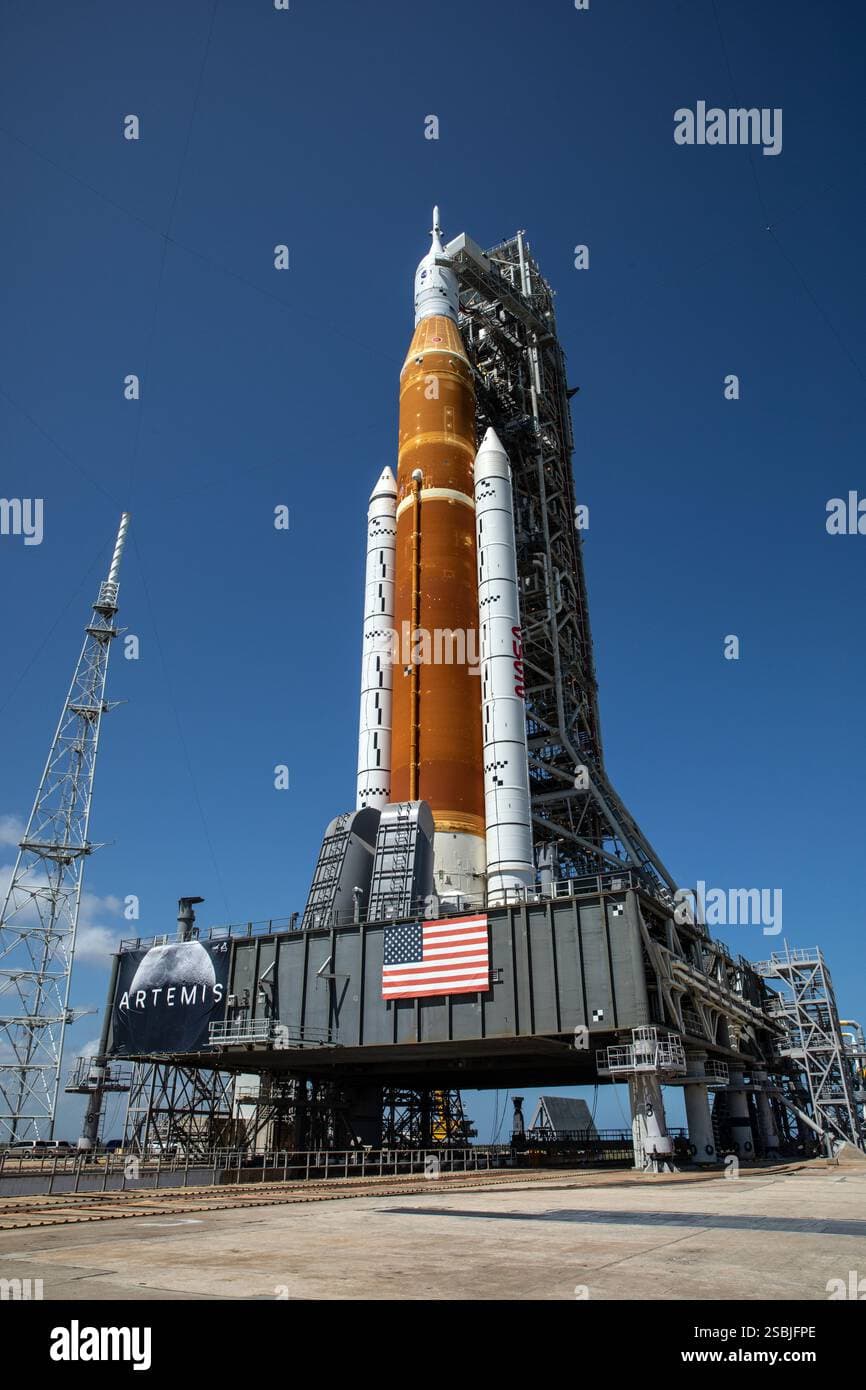
A 322-foot Space Launch System rocket topped by the Orion crew capsule was slowly moved from the Vehicle Assembly Building to Launch Complex 39B at NASA’s Kennedy Space Center, positioning the fully stacked Artemis II vehicle for final pad work and a wet dress rehearsal ahead of a planned crewed lunar flyby.
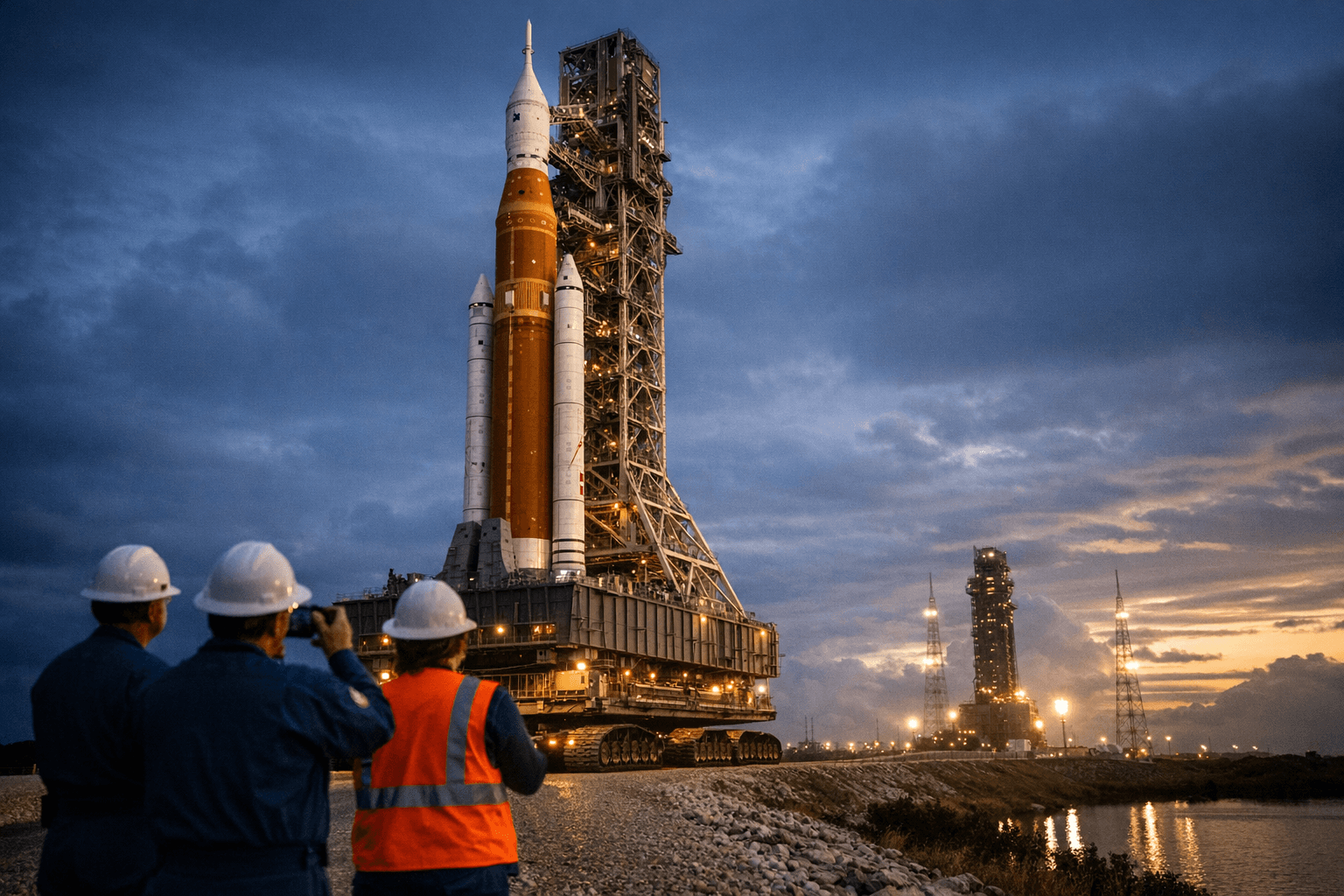
The integrated stack, secured to the mobile launcher and weighing roughly 11 million pounds, began its near 12-hour crawl at about 7:04 a.m. Eastern and reached Pad 39B at 6:42 p.m. on Jan. 17, 2026. Crawler-transporter 2 carried the 4.2-mile journey at speeds up to about 0.82 miles per hour, slowing further around turns as ground teams monitored the transporter and vehicle systems.
Rollout completed a major logistics milestone in the Artemis II campaign and begins a concentrated sequence of pad-level work that must be finished and certified before the four-person crew can fly. The mission’s astronauts are NASA’s Reid Wiseman, Victor Glover and Christina Koch, joined by Canadian Space Agency astronaut Jeremy Hansen for an approximately 10-day journey around the Moon and back. The mission is currently scheduled no earlier than Feb. 6, with primary launch windows spanning Feb. 6–11 and additional opportunities in March and April.
Technicians on the pad will now focus on connecting and validating commodity lines from the pad to the mobile launcher for cryogenic hydrogen and oxygen, electrical power and other essential services. Teams will rig and test the pad emergency egress system, which includes zip-line capability that must be assembled each time the mobile launcher arrives because its egress hardware is not permanently fixed to LC-39B. Engineers will also verify crew access arm operation and other interfaces designed to ensure safe ingress and egress.
A wet dress rehearsal is the next major test. That exercise will include fully loading propellants and running through launch-day procedures up to the T-minus 29-second mark in the countdown, as described by launch director Charlie Blackwell-Thompson. NASA’s public schedule allows for the possibility of multiple rehearsals; if additional testing or corrective work is required, teams could roll the vehicle back to the Vehicle Assembly Building for further maintenance and troubleshooting before returning to the pad.
NASA streamed the rollout live and released photographs showing the illuminated stack at Pad 39B, with imagery credited to agency photographers. Agency leadership and mission personnel spoke with media during the rollout activities as engineers began transition checks at the pad.
Artemis II carries both technical and symbolic weight as NASA’s first crewed Artemis mission and the first crewed lunar flight since Apollo 17 in 1972. Success in the coming weeks will depend on flawless coordination of pad hookups, propellant loading, crew access systems and emergency procedures. Formal agency updates will announce the timing of the wet dress rehearsal, any additional rehearsals deemed necessary, and final launch windows as the campaign progresses toward the anticipated February liftoff.
This article was produced by Prism’s automated news system from verified source data, official records, and press releases, then run through automated quality and moderation checks before publishing. The system is built and supervised by the people who set the standards it runs under. Read our full AI policy.
Did this article answer your question?


