Arteta and Guardiola renew tactical rivalry in crucial Arsenal-Man City clash
A shared Pep Guardiola education has not made Mikel Arteta predictable. Arsenal-Man City now turns on how far he has moved beyond his mentor.
Shared roots, different managerial identities
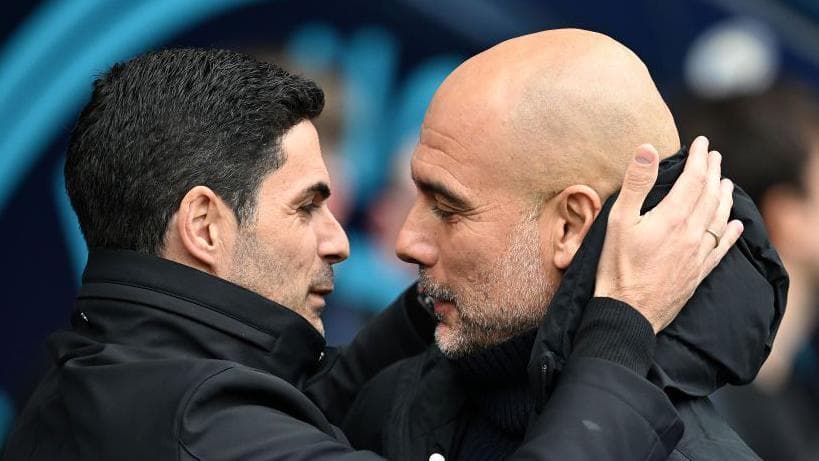
Pep Guardiola and Mikel Arteta arrive at this Arsenal-Man City clash with the same coaching DNA, but not the same managerial instincts. That is what makes this rivalry more than a reunion: it is a test of how an apprentice has altered his mentor’s ideas to survive the pressure of a title race.
Arteta spent the formative stage of his coaching career under Guardiola at Manchester City from July 2016, then helped deliver the 2017/18 Premier League season of 100 points, along with two EFL Cups and one FA Cup. Guardiola became City manager on 1 July 2016, and Arteta did not leave the orbit of that system until he became Arsenal manager on 22 December 2019. Since then, the relationship has hardened into one of the Premier League’s defining tactical rivalries.
The Premier League has described Guardiola v Arteta as a master-and-apprentice contest, and with good reason. Arteta is the first Guardiola student to face his tutor as a manager at another club, which gives every meeting a built-in narrative. But the bigger story is not friendship or lineage. It is the way two coaches who once worked from the same blueprint have developed different answers to the same problem: how to win when every detail is magnified by elite opposition.
How Arteta changed Arsenal first, then changed himself
When Arteta walked into Arsenal, he inherited a team in trouble. The club were 10th in the Premier League with 22 points from 17 matches, a position that demanded repair before ambition. The first phase of his project was about restoring structure, standards and conviction, bringing in many of the control principles he had learned from Guardiola.
That foundation mattered. Premier League analysis has tracked how Arteta gradually implemented Guardiola-inspired ideas at Arsenal, but also how he loosened those principles as the squad grew into a genuine contender again. In other words, he did not simply copy Manchester City. He adapted the model to a different club, a different dressing room and a different competitive reality.
That evolution is central to this rivalry. Early Arteta teams often looked like Guardiola’s younger relatives, intent on reproducing the same patterns of circulation and pressing. The newer version is more flexible, more willing to change the temperature of a match, and more pragmatic when the demands of the table require restraint rather than domination. The result is an Arsenal side that can still play on the front foot, but is no longer trapped by the idea that possession alone is proof of control.
Guardiola still sets the benchmark
Guardiola’s own standard remains the reference point. At City since 1 July 2016, he has built a team whose identity is based on territory, tempo and control of the ball. That is why the meetings with Arsenal have become so intriguing: Arteta understands the framework better than almost anyone, which forces Guardiola into a contest not just of plans but of adaptation.
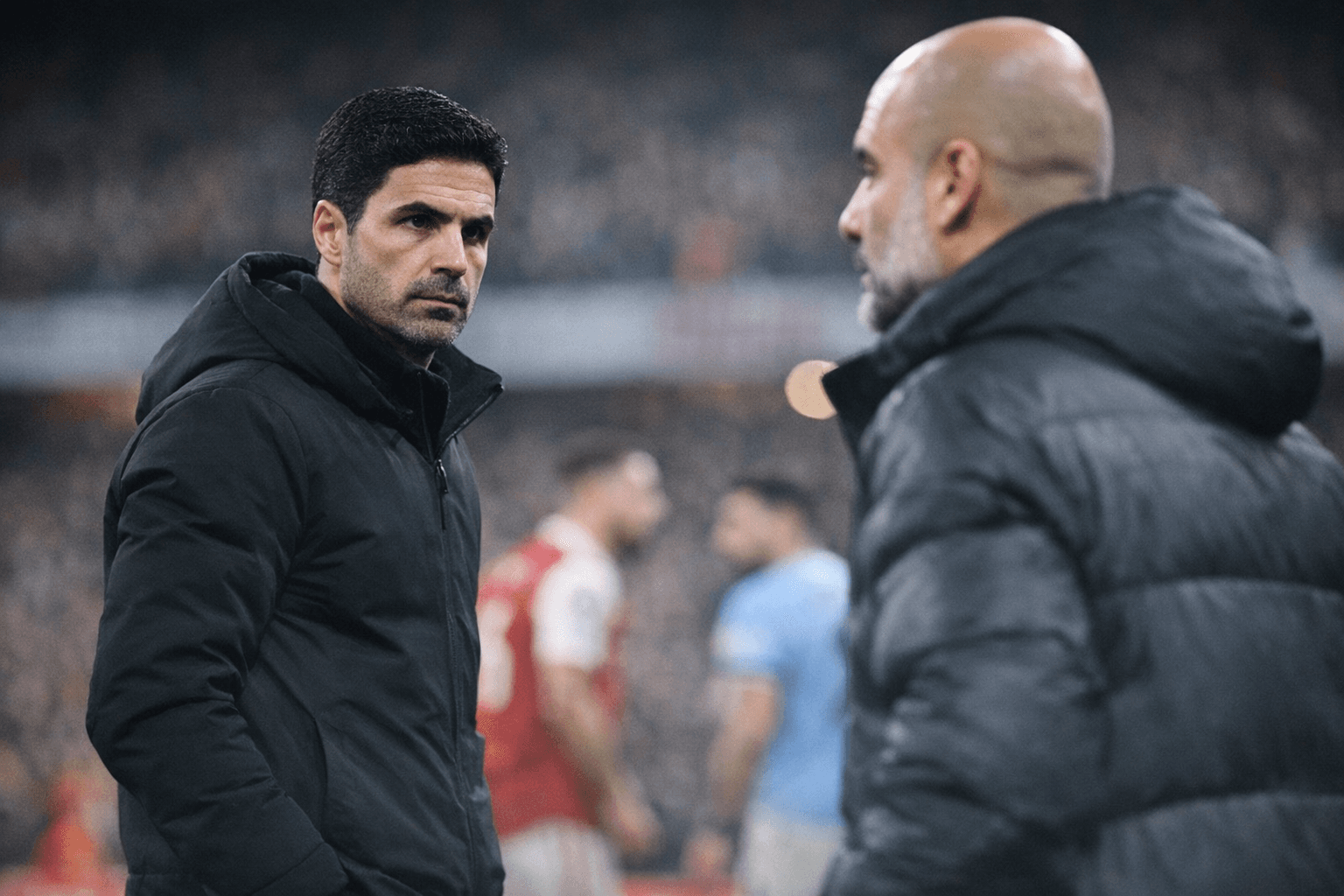
By 6 October 2023, the two managers had already met 10 times in competitive coaching battles, and those games had become increasingly tactical, closely fought contests. The rivalry has been described as a war of attrition as much as a clash of styles, because both sides now know where the other wants to hurt them. That familiarity has not produced caution so much as precision. Each meeting tests whether Guardiola can impose his usual control, or whether Arteta can disrupt it enough to make the game ugly for City.
That tension matters because Guardiola’s best teams are usually defined by their grip on the ball and the rhythm of the match. Against Arteta, that grip has repeatedly been challenged by a former assistant who knows how to anticipate the passes, the angles and the pressing triggers before they appear.
The matches that changed the tone
Arsenal’s 1-0 win over City in October 2023 was a landmark because it was widely framed as Arteta finally getting the better of Guardiola. It did not settle the rivalry, but it changed the emotional balance of it. For Arteta, it was proof that a former pupil could solve the puzzle on the biggest stage. For Guardiola, it was another reminder that familiarity can be as dangerous as novelty.
The next major reference point came in September 2025, when Arsenal and City drew 1-1. That game underlined how both managers had continued to adapt, and it carried a striking statistical edge: Arsenal’s 67 per cent possession was reported as the lowest share any Guardiola team had ever recorded in a top-flight league match. That is a remarkable marker of Arteta’s progress, because it suggests City were being dragged into a game shape they usually control themselves.
The context before that match was equally revealing. Arteta said it was the perfect test of Arsenal’s level, a line that captured the way he now uses City as a measuring stick for his own project. Guardiola, for his part, said City were in a good vibe after wins over Manchester United and Napoli, and he described Arsenal as one of City’s chief rivals for honours in recent years under Arteta. Arsenal also entered that contest having won three of their first four league matches and conceded only once, a start that made the stakes at the top of the table impossible to ignore.
What decides the next chapter
This is why the latest Arsenal-Man City meeting carries title-defining weight. The tactical question is not whether both teams will have a plan. It is whose plan survives contact with pressure. Guardiola still seeks control through possession and position. Arteta now has enough confidence to disturb that control, even if it means ceding the ball in order to win the spaces that matter more.
The shared history between the two managers gives the rivalry its edge, but the divergence between them gives it meaning. Arteta learned from Guardiola, then built something less orthodox and more resilient at Arsenal. Guardiola created the benchmark; Arteta learned how to beat it. In a contest where margins are tiny and adaptation is everything, that difference can decide more than a single match. It can shape the title race itself.
This article was produced by Prism’s automated news system from verified source data, official records, and press releases, then run through automated quality and moderation checks before publishing. The system is built and supervised by the people who set the standards it runs under. Read our full AI policy.
Did this article answer your question?