Artist converts Cornish Flat farms into rural arts campus and working farm
Ken DiPaola and partner Andrea Stern bought multiple Cornish Flat properties to create an artist residency that preserves farmland and reuses existing barns. This affects local land use, farm continuity, and community cultural life.

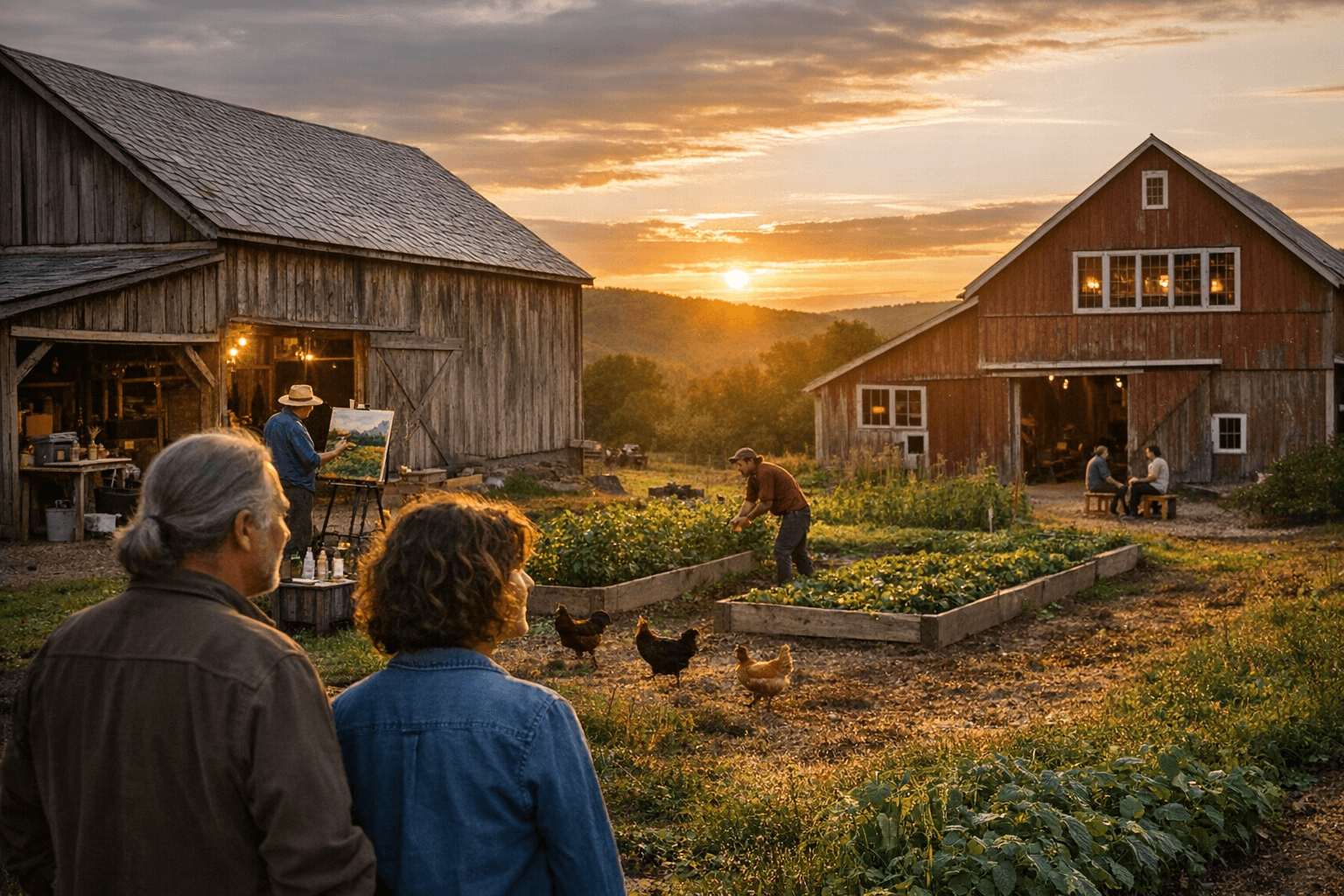
Ken DiPaola, an artist and builder, has been assembling roughly 115 acres in Cornish Flat and nearby parcels to create a small rural arts campus that keeps agricultural activity at its center. What began as a plan for a personal studio expanded as DiPaola and his partner, Andrea Stern, purchased several adjoining lots between 2021 and 2025, acquiring long barns, outbuildings and fields that once belonged to longtime farmer Charles Stone.
The project emphasizes adaptive reuse rather than new construction. DiPaola’s shop and studio occupies roughly 7,000 square feet and renovation work will proceed in phases, with existing barns and buildings repurposed for residence and studio space for visiting artists, fabrication for large-scale sculpture, and continued farm operations. The terrain and long barn forms on the site sit among neighboring working farms, including an operation still milking cattle, anchoring the campus in active agricultural rhythms.
Locally, the development represents a blend of cultural investment and land preservation at a time of brisk rural property sales and a steady flow of artists into the Upper Valley. By restoring farm infrastructure and keeping fields in production, the campus aims to prevent parcel fragmentation and maintain open space while bringing visitors and programming into the valley. DiPaola and Stern have framed their work as an intentional move away from development pressure toward a model where making art and managing land coexist.
Public health and community wellbeing are part of the project’s social footprint. Preserving working landscapes supports local food systems and environmental health, while arts residencies and community events can bolster mental health, social cohesion and access to creative activities that rural residents often lack. At the same time, the arrival of new arts projects in rural towns can change housing and property dynamics; keeping renovation focused on existing structures and on-site residency housing may help limit pressure on the local housing stock.
For neighbors, the phased renovations mean construction over time rather than immediate large-scale building. The plan to integrate residency programming with farm schedules points toward collaborations with farmers and events timed to the agricultural calendar. That approach could create seasonal opportunities for community gatherings, educational programs and shared use of farm infrastructure.
As the campus takes shape, residents can expect incremental work on barns and outbuildings and occasional public activity tied to artist residencies. The development offers a local model for creative reuse of farm properties that preserves land in productive use while introducing cultural programming. For Sullivan County readers, the project highlights how arts-led stewardship can be part of broader efforts to protect open space, support local agriculture and expand community access to creative and health-promoting resources.
Sources:
Know something we missed? Have a correction or additional information?
Submit a Tip