A's Eye Freddy Peralta: Affordable Rotation Upgrade Ahead of Vegas
The Oakland A’s have a clear, cost-effective window to pursue Brewers right-hander Freddy Peralta, whose $8 million club option for 2026 creates a low-risk path to upgrade a struggling rotation. Landing Peralta, either via trade or as a free agent if Milwaukee declines the option, would have sporting and business implications for Oakland as it tries to rebuild credibility before its planned move to Las Vegas.
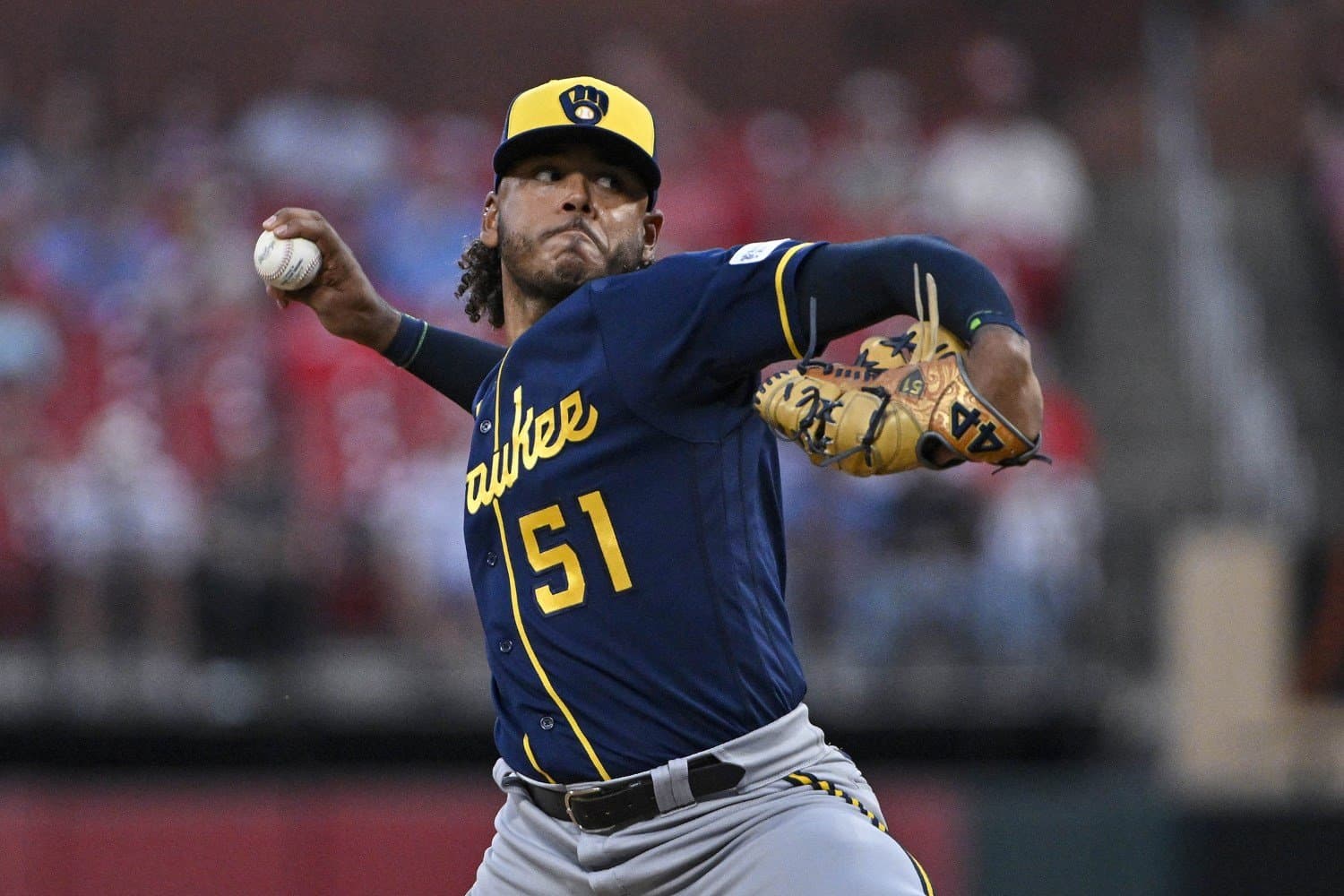
Freddy Peralta’s contract situation has suddenly made him one of the more intriguing trade or free‑agent targets for a rebuilding Oakland Athletics franchise. Peralta carries an $8 million club option for 2026, a bargain for a front-line starter that gives the A’s a couple of realistic avenues to add veteran pitching without a blockbuster payroll outlay.
For Oakland, the allure is obvious: a veteran presence capable of stabilizing a rotation that has suffered extended losing stretches, including runs as painful as 1-20. Adding a pitcher who has demonstrated high-end strikeout ability and the durability of a regular starter would be a logical complement to a roster that needs innings-eaters and ceiling arms as it phases toward competitiveness. Peralta will enter his age-30 season in 2026, meaning any move that lands him with a new franchise would see him entering his age-31 campaign, a factor that typically limits the length and cost of multi‑year guarantees, and reduces long‑term risk for a cash‑conscious club.
The mechanics of acquiring Peralta could take two main forms. A midseason trade would require Oakland to offer a combination of lower‑level major‑league talent or prospects while assuming or sharing salary obligations; that path is feasible but would compete with other buyers in a market that prizes controllable pitching. Alternatively, if Milwaukee declines the $8 million option and lets Peralta reach free agency, Oakland could pursue him in the 2026 winter window with a short‑term deal designed to provide immediate innings and veteran leadership. Industry trends favor teams paying premium dollars for short, high‑quality pitching rentals rather than multiyear bets on arms entering their mid‑30s, which could make Peralta both attainable and affordable relative to other available aces.
Beyond the on-field calculus, the move would carry business and cultural weight. Oakland’s front office has been under pressure to show progress ahead of the franchise’s planned relocation to Las Vegas in 2028. A credible veteran signing would help restore faith among local fans, improve marketability for season tickets and sponsorships, and provide a tangible narrative of competitiveness that could ease the transition to a new market. For the Oakland community, which has wrestled with franchise instability and economic uncertainty, the presence of a marquee starter could also rekindle civic pride and draw greater local engagement.
At the league level, the Peralta scenario underscores evolving valuation of starting pitching: teams willing to use short, high-impact contracts or modest trades to shore up rotations, rather than gamble on long, expensive multi‑year extensions for pitchers entering their 30s. For Oakland, the question is less about whether Peralta could improve the rotation than whether ownership and the front office are prepared to seize a narrow, cost‑efficient opportunity to accelerate the rebuild and shape a competitive identity before the move to Las Vegas.
This article was produced by Prism’s automated news system from verified source data, official records, and press releases, then run through automated quality and moderation checks before publishing. The system is built and supervised by the people who set the standards it runs under. Read our full AI policy.
Did this article answer your question?
.jpg&w=1920&q=75)