Asheville, Buncombe Officials Testify in Raleigh Rebutting DEI Racial Bias Claims
Asheville and Buncombe officials testified in Raleigh to rebut allegations that DEI programs favor Black residents, a dispute that affects local scholarships, grants and county policies.
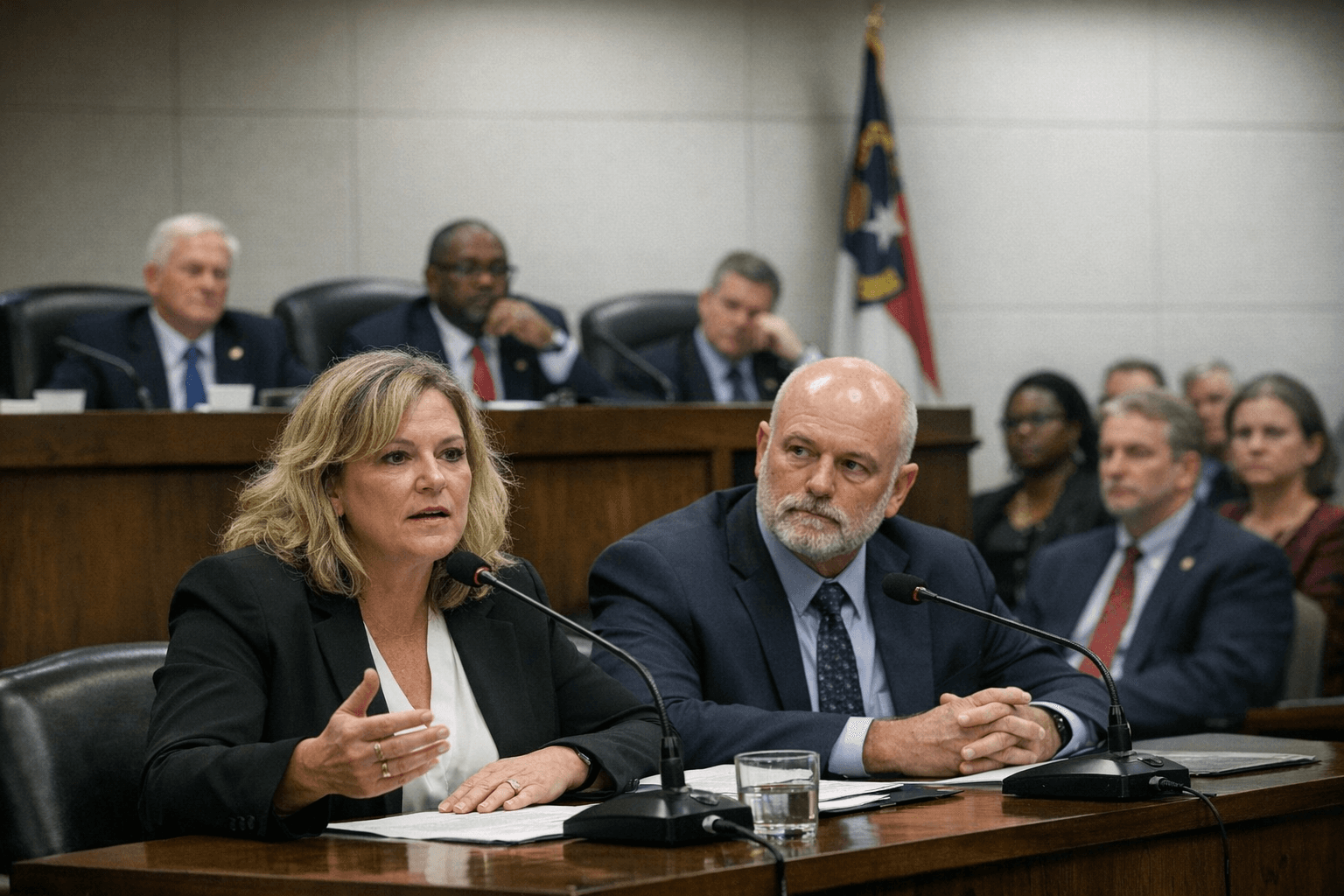
Officials from the City of Asheville and Buncombe County traveled to the North Carolina Legislative Building in Raleigh to answer a Republican-led inquiry into whether local diversity, equity and inclusion policies unlawfully favor Black residents over others.
Buncombe County Chairwoman Amanda Edwards opened the county’s rebuttal by telling the House Select Committee on Government Efficiency, “We are here to correct the record and any misinterpretations.” Edwards later told lawmakers, “There have been no instances where race-based criteria or other protected characteristics have been used in any of our work, including hiring contracts or allocations of revenue.” Her testimony came Feb. 11, following earlier Jan. 7 testimony by Asheville attorney Ruth Smith alleging the county and city used “equity” to allocate resources by race.
Smith’s January presentation cited several specific programs and plans, including a 2021 Buncombe Racial Equity Plan, the county’s Racial Equity Action Plan or REAP, internships and scholarships she said excluded white and Asian students, Isaac Coleman Grants, small business relief grants and the City of Asheville Black Scholarship Fund. Smith told the committee that the scholarship fund was created with $500,000 from a class-action settlement over illegal water fees and that “Every race was excluded, except for Black folks.” Following a lawsuit, the scholarship was reportedly redrafted to include all high school students, while a teacher-focused award for Black educators remains.
County Attorney Kurt Euler described the Community Reparations Commission as an information-gathering body formed after George Floyd’s death to examine historical discriminatory practices such as redlining and urban renewal. City Attorney Brad Branham told lawmakers the commission’s recommendations “were not about providing individuals money, but were aimed at community investment policies.” Mayor Esther Manheimer summarized the commission’s findings as showing “great disparities” between Black and white city residents in education, health, homeownership and poverty.
The hearing highlighted a partisan divide over language and policy. Rep. Keith Kidwell said, “The moment you inject equity, you lose equality, because equity is going to give you the outcome that is desired by whatever group is setting the equity tolerance.” Rep. Brian Echevarria challenged Edwards to acknowledge past failings, telling her, “Go ahead and confess your faults.” Democratic Rep. Phil Rubin urged focus on outcomes, citing local disparities: he said the poverty rate and infant mortality rate for Black residents in Buncombe County are about 2½ times those of white residents. “How can we get it to be that infant mortality isn’t so different by race across the state? Because that reflects poorly on us, and it is not getting better,” Rubin said.
The session also played out against a broader state backdrop. The legislature passed a bill banning DEI initiatives in state and local government and authorizing employees to sue over violations; Gov. Josh Stein vetoed the bill and an override had not occurred as of mid-February. A separate, strongly worded letter quoted in coverage warned that one enforcement office would “be closely monitoring your actions” and stood “ready to investigate and enforce violations of federal civil rights laws to the fullest extent possible.”
For Buncombe residents, the hearing foregrounds concrete stakes: who is eligible for local scholarships and grants, how local programs are designed, and whether federal or state scrutiny will reshape funding rules. The committee’s inquiry and pending legislative and legal actions mean citizens should expect follow-up, more detailed records on REAP and the Community Reparations Commission, and possible policy adjustments that could affect schools, nonprofits and small businesses across Asheville and Buncombe County.
Know something we missed? Have a correction or additional information?
Submit a Tip