Asheville City Council to Meet March 10, Budget Worksession Addresses Fiscal Pressure
Asheville faces a projected $30 million General Fund gap; City Council meets at 5 p.m. Tuesday, March 10 in the Council Chamber at City Hall to begin budget work sessions and take early public comment.
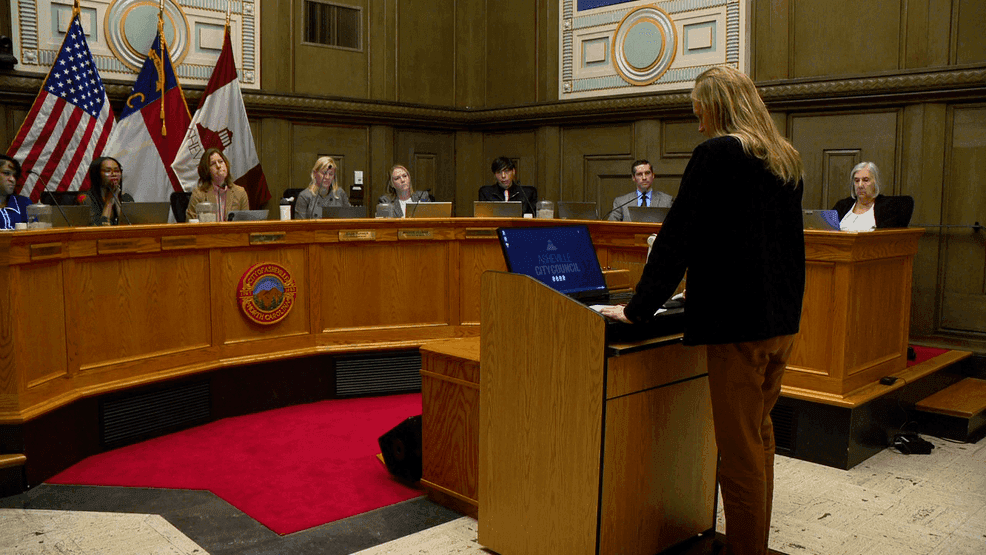
A projected $30 million General Fund shortfall has city finance staff and council preparing for a budget worksession at 5:00 p.m. Tuesday, March 10, in the Council Chamber, 2nd Floor, City Hall, 70 Court Plaza. The March 10 meeting will be in-person, with remote access available pursuant to North Carolina General Statute § 143‑318.10, and will include early public comment as the city opens its FY2026-27 budget process.
City materials list March 10 as the first of two spring work sessions, with a second work session set for March 24; the council is scheduled to vote on fees and charges March 24. The city manager’s proposed budget is expected May 12, the state-required public hearing is set for May 26, and final budget adoption is scheduled for June 9. City staff told WLOS they aim to gather community input earlier than the later state hearing by taking comments at the March 10 session.
The fiscal backdrop is detailed in recent reporting: Council adopted a $256.4 million budget last year that included a 3.26-cent property tax increase, and the General Fund relies on property taxes for roughly 50 percent of revenue and on sales and other taxes for about 23 percent. Personnel costs, including salary, overtime and benefits, remain the largest single expense. Sales tax collections are up compared with 2024 but growth is “minimal,” and City finance staff, quoted in the Citizen-Times as Spangler, said sales tax revenues are expected to come in under budget for fiscal year 2026.
City leaders have already tapped one-time fixes while navigating post-Helene revenue impacts. WLOS reports the city relied on a FEMA Community Disaster Loan, draws from fund balance and other temporary adjustments that together exceeded $12 million. WLOS also reported staff warned there is “no low-hanging fruit” left in the budget. Spangler told the Citizen-Times, “We want to assure council and the public that staff is truly exhausting all avenues to find efficiencies. We want to make sure that we’re limiting the impact to the community as much as possible so we’re digging as much as we can, leaving no stone unturned.” WLOS further reported that McDowell said the city “is in the early stages of the process and will continue working with council and residents in the coming months,” and McDowell is expected to address the gap at Tuesday’s meeting.
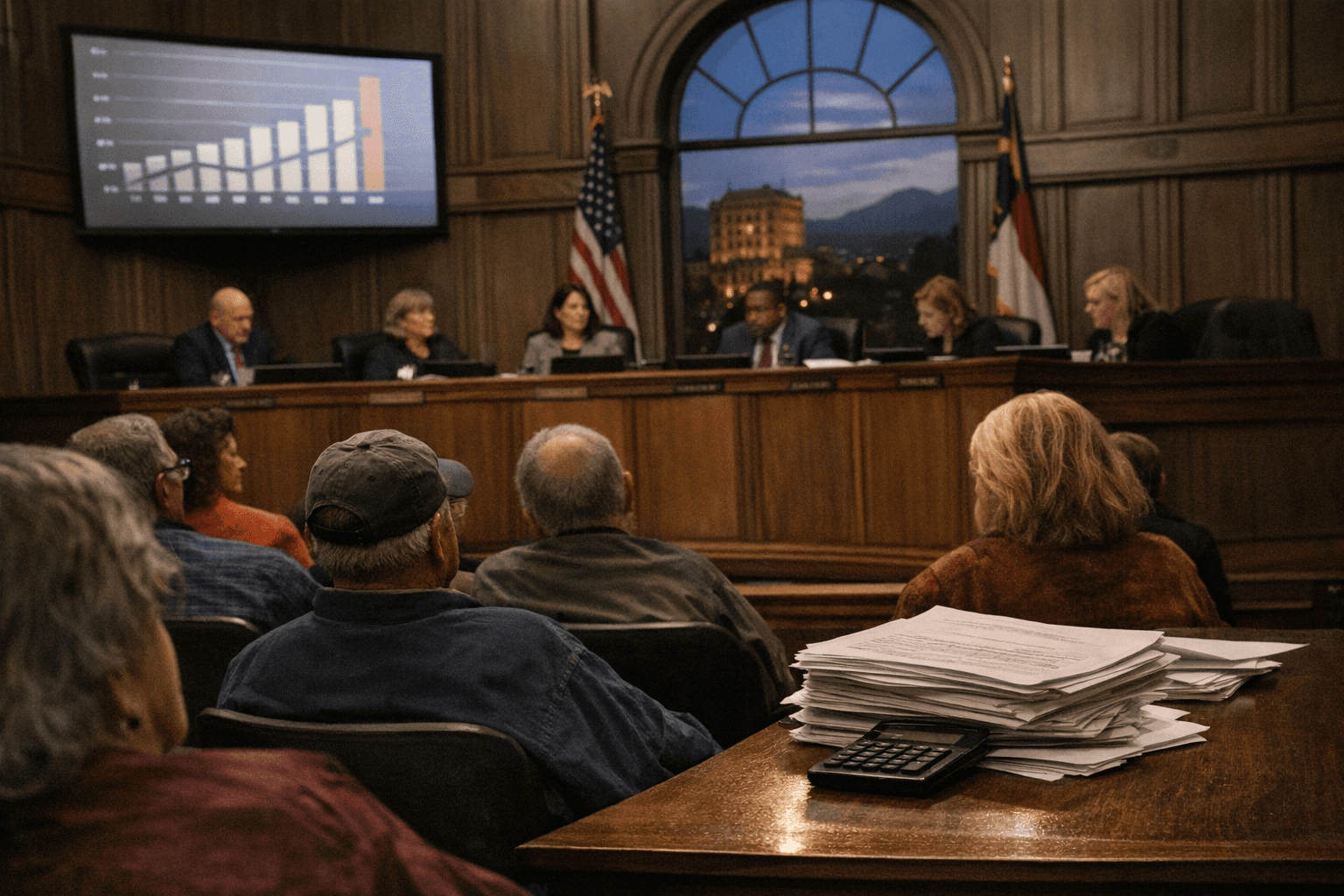
Residents who want to participate in person must sign up at the door before entering the Council Chamber. Those who cannot attend can submit remote comments through the Engagement Hub until 9:00 a.m. on the day of the meeting by emailing ashevillecitycouncilmar102026@publicinput.com or leaving a voicemail at (855) 925-2801, meeting code: 3181. Presentations, including slides or PowerPoints, must be submitted to Maggie Burleson at mburleson@ashevillenc.gov by 12:00 p.m. the day before the meeting. Interpretation services are available upon request using the request for translation form by 5:00 p.m. on the Friday before the meeting. The council meeting will be livestreamed on the City’s YouTube Channel and via the City’s Virtual Engagement Hub.
With work sessions on March 10 and March 24 marking the start of a compressed timeline toward a manager’s proposal in May, the March meetings will be the first public test of how Asheville plans to close a large projected gap while managing reduced occupancy tax revenues and lingering regional unemployment above pre-Helene levels. City staff are scheduled to present options and solicit feedback during the March 10 session.
Know something we missed? Have a correction or additional information?
Submit a Tip

