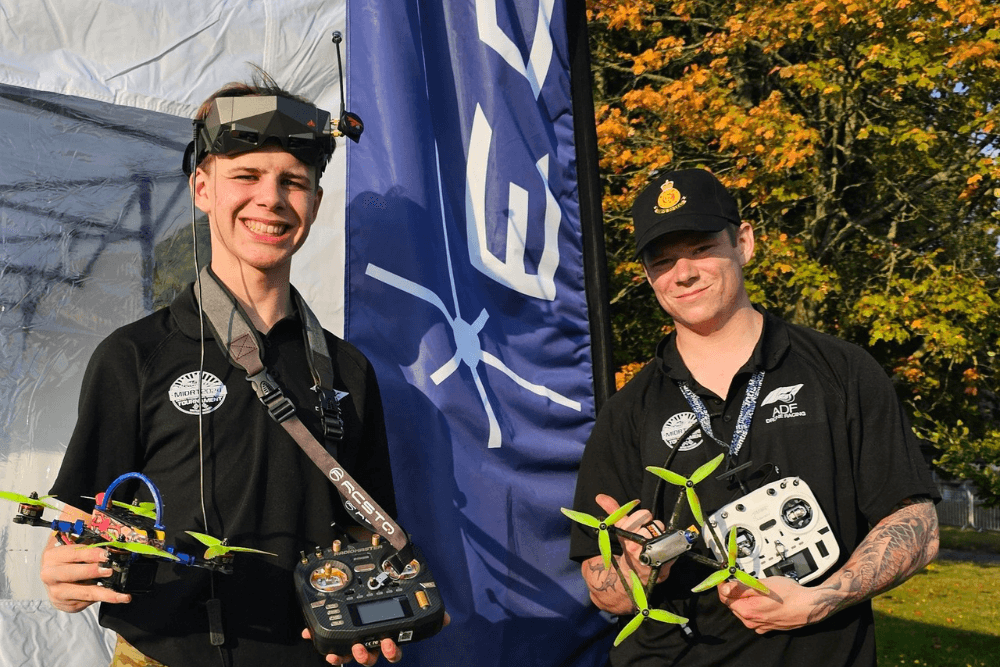
ASPIRE-led A2RL Drone Championship Showcases Autonomous Racing Talent in Abu Dhabi
Minchan Kim edged out TII Racing 5-4 in a best-of-nine human vs AI final after the autonomous drone clipped a gate on the deciding run in Abu Dhabi.
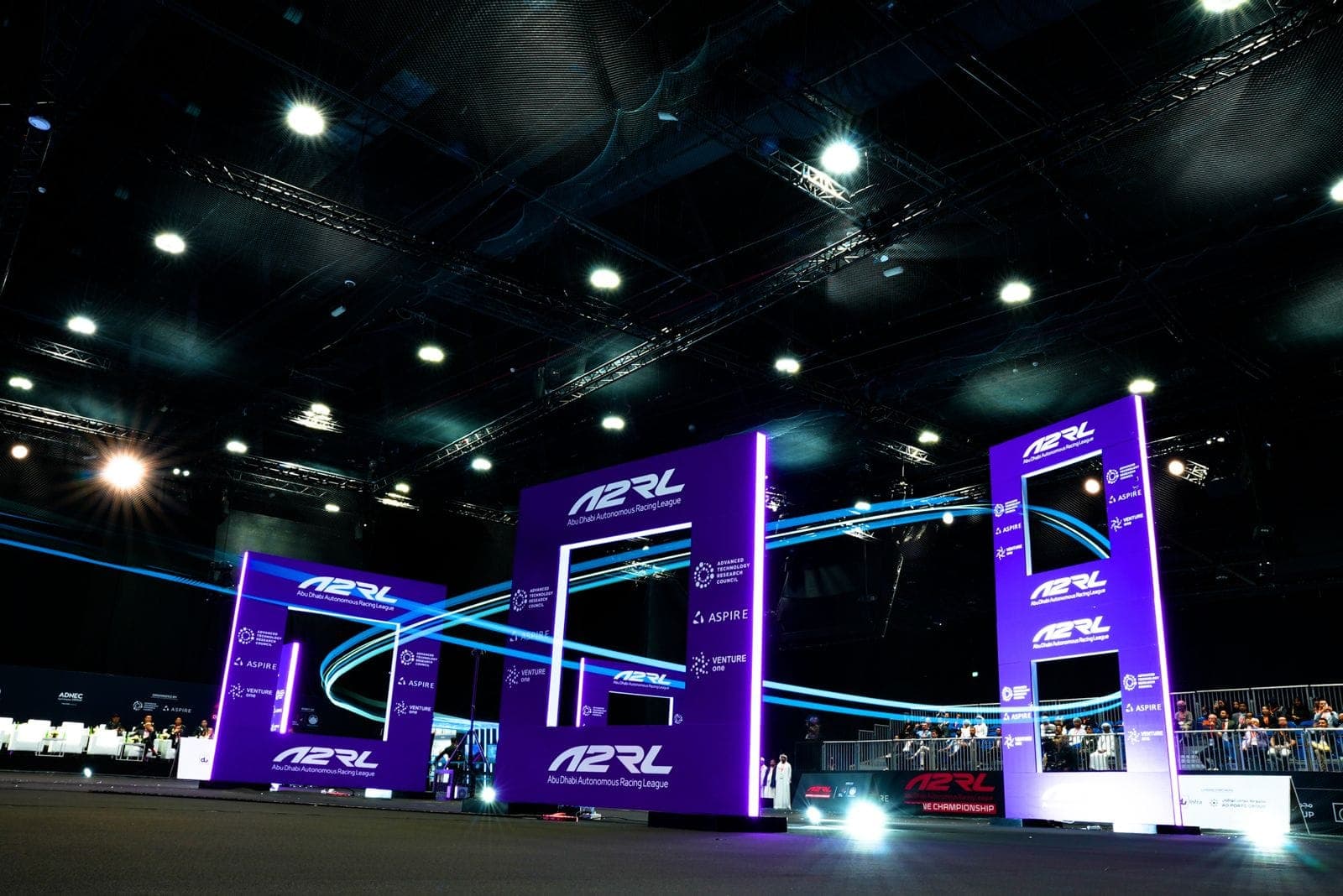
Minchan Kim, the World FPV Champion, narrowly defeated Technology Innovation Institute’s TII Racing 5-4 in the A2RL Drone Championship human vs AI best-of-nine final in Abu Dhabi on 23 January 2026, after the contest was tied 4-4 and the autonomous racer struck a gate on the decisive ninth run. Organised by ASPIRE, the innovation acceleration arm of the Advanced Technology Research Council, the event staged head-to-head matchups that tested split-second perception and precision control under sustained pressure.
The final unfolded as a down-to-the-wire showdown: Kim held the lead on the final lap while the autonomous machine collided with a course gate and failed to recover, handing the human pilot the overall victory. The competitive format placed human reflexes and judgement directly against state-of-the-art vision-based autonomy in a best-of-nine series, producing one of the Championship’s defining moments and underscoring how narrow margins decide supremacy in high-speed drone racing.
TII Racing nonetheless set the benchmark in pure autonomous speed, claiming the AI Speed Challenge by posting the fastest autonomous lap of the Championship. TII Racing is the Technology Innovation Institute’s autonomous squad, and its fastest-lap performance establishes a new pace for vision-only autonomy in closed-course conditions while highlighting algorithmic gains even under strict sensor rules.
Those sensor rules were central to the event’s technical design: every autonomous entry ran fully autonomously using only a single forward-facing monocular RGB camera and an inertial measurement unit. No LiDAR, no stereo vision, no GPS, and no external positioning systems were permitted, intentionally mirroring the perception available to human pilots so that performance gains would be driven by software rather than sensor complexity.
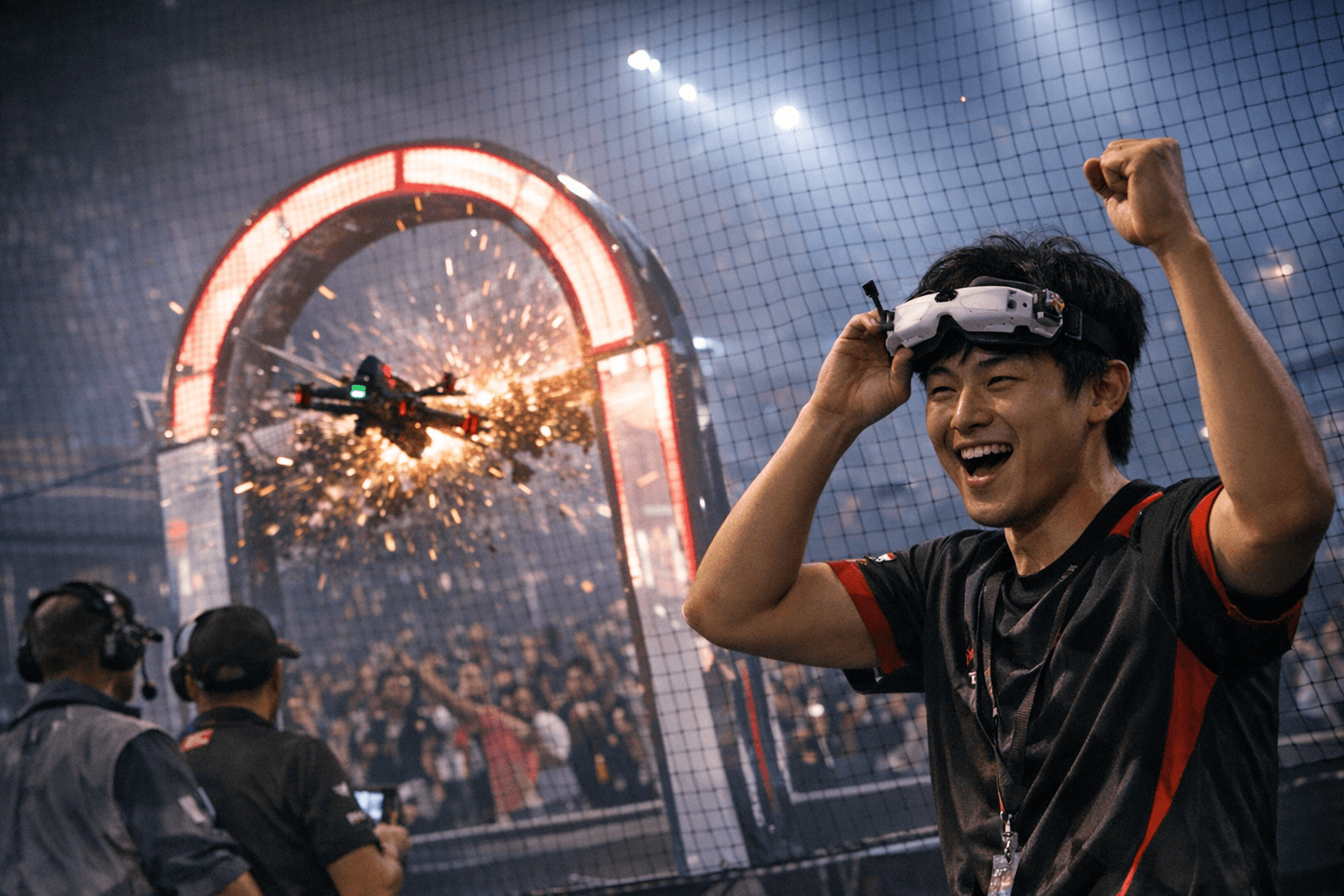
MAVLAB (TU Delft) secured the multi-drone title at the 2026 Championship, demonstrating robust multi-agent coordination in shared, complex environments. That multi-drone victory contrasts with the inaugural A2RL x DCL event in April 2025, when MavLab dominated several AI formats and TII Racing took the AI Multi-Autonomous Drone Race; Christophe De Wagter, MavLab team principal, said of the earlier wins, “Winning the AI Grand Challenge and the AI vs Human race is a huge milestone for our team. It validates years of research and experimentation in autonomous flight. To see our algorithms outperform in such a high-pressure environment and take home the largest share of the prize pool, is incredibly rewarding.”
Beyond podiums and lap times, A2RL is positioning these competitions as a pathway from research to deployment. A2RL’s programming and the associated Summit 3.0 examine pathways from competition to deployment while the like-for-like sensor constraint keeps results relevant to civilian autonomy scenarios. That framing is central to ASPIRE’s goal of accelerating innovation in vision-based autonomy and converting race-tested algorithms into operational systems.
Social impact and workforce development were explicit parts of the A2RL agenda. The A2RL x DCL Drone STEM Program, run with UNICEF under ATRC supervision during the inaugural 2025 cycle, trained over 100 Emirati students, with more than 60 percent earning Trusted Operator Program certification and 24 students achieving perfect scores; the 2025 event also drew more than 2,500 spectators and carried a reported $1 million prize pool across four race formats. The mix of elite competition, demonstrable technical constraints, and local training initiatives in Abu Dhabi shows how drone racing is evolving into a testing ground for commercially relevant autonomy and a recruitment pipeline for the next generation of operators and engineers.
Know something we missed? Have a correction or additional information?
Submit a Tip