Aston Martin's 2026 Struggles Stem From Chassis Woes, Not Just Honda Engine
GPS data from Bahrain reveals the AMR26 chassis, not Honda's engine, accounts for over 2.5 of Aston Martin's roughly 4-second-per-lap deficit to the front.
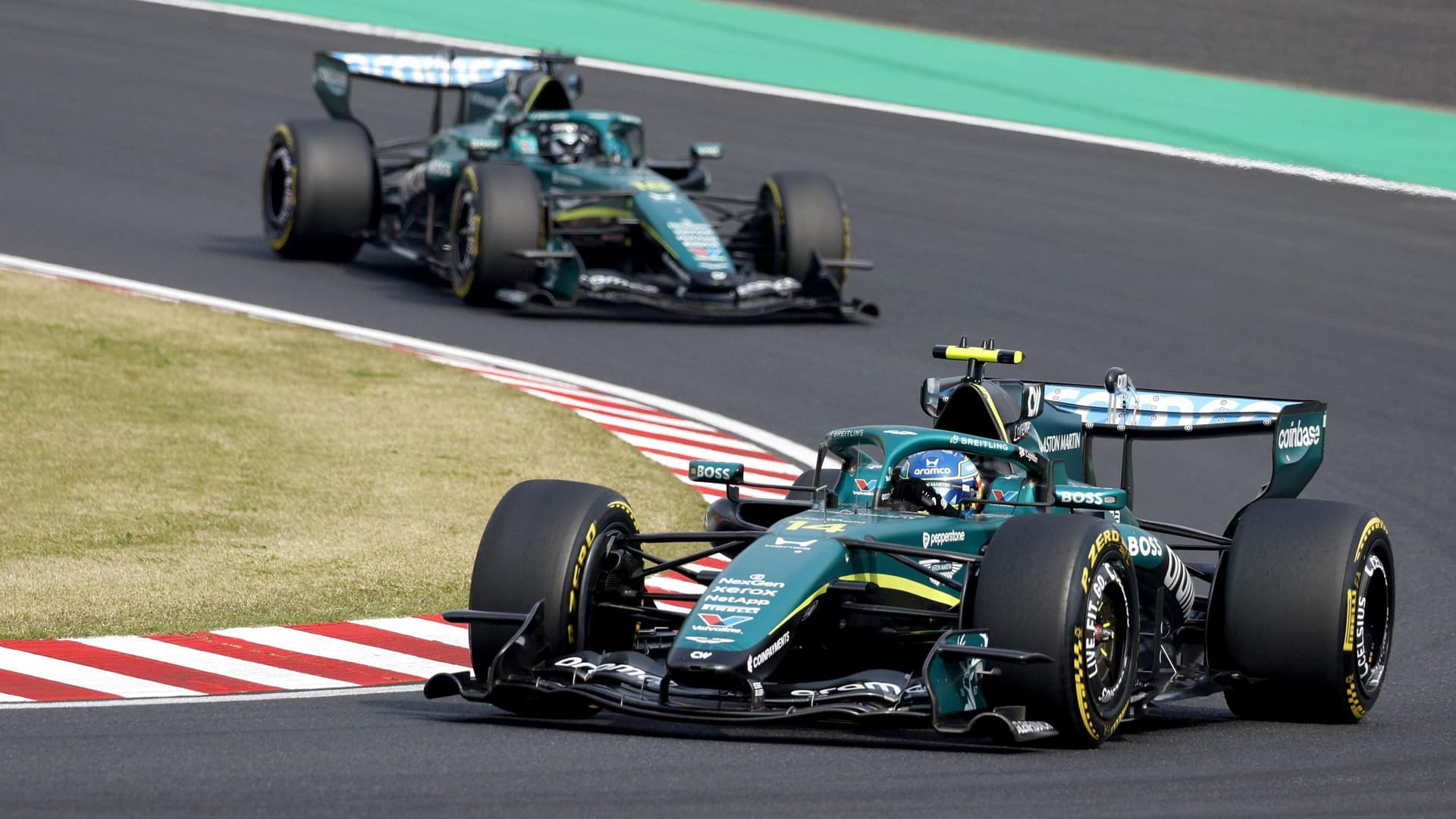
The most damaging number in Aston Martin's 2026 season does not belong to Honda. GPS telemetry from Bahrain pre-season testing shows that roughly 1.5 seconds of Aston Martin's approximate four-second-per-lap deficit to the front of the field is attributable to the Honda RA626H power unit, about 37.5% of the total gap. The remaining 2.5-plus seconds comes from the AMR26 chassis itself, a conclusion corroborated by a very senior figure present at Suzuka during the Japanese Grand Prix weekend and cross-referenced against GPS data available to all eleven teams. The AMR26 also performs progressively worse the slower the corner gets, according to the same telemetry analysis.
That Adrian Newey's first car built at Aston Martin carries such a fundamental flaw traces directly to its development timeline. The AMR26 arrived approximately four months behind schedule, a consequence of Newey's delayed departure from Red Bull arriving three months after design work could have started, compounded by wind tunnel problems at Silverstone that were not resolved until April 2025. Designing its own gearbox for the first time, having previously sourced that component from Mercedes, added significant engineering burden to an already compressed programme.
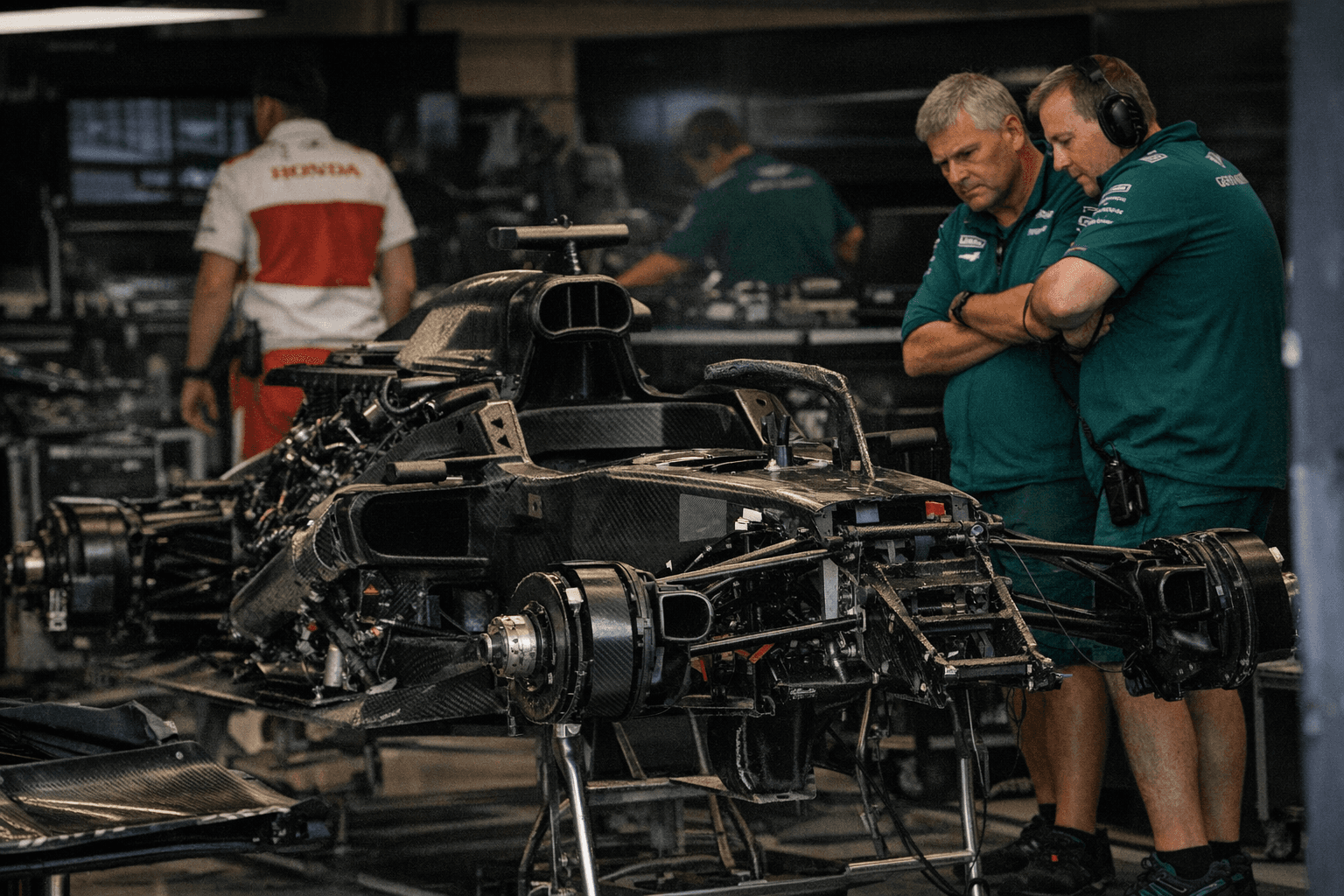
Honda's troubles, while representing less than half the deficit, were severe enough to parallyse the team's early campaign. Excessive vibrations from the RA626H posed genuine physical risks: Newey disclosed at the Melbourne press conference that the shaking was being transmitted into the fingers of Fernando Alonso and Lance Stroll, carrying a risk of permanent nerve damage. Honda Racing Corporation President Koji Watanabe acknowledged the failure directly: "We did expect some vibration from the real-vehicle dyno, but the actual values exceeded expectations." Honda's facility in Sakura had not replicated the severity seen in real-world running.
The vibrations triggered serial battery failures at a particularly costly moment. FIA regulations limit each car to two batteries for the entire season. By the final day of the second Bahrain test, Aston Martin had exhausted their spare units after completing only six install laps. In first practice in Australia, the team held just four batteries; two failed within the first hour, with no replacements available from Sakura. Total testing distance in Bahrain reached approximately 2,115 kilometres, just over a third of the mileage logged by Mercedes, Haas, and Ferrari.
Alonso finished 18th at the Japanese Grand Prix, Aston Martin's first classified result of 2026, but was still 70 seconds behind the final points-scoring position. A vibration mitigation part tested during Friday practice at Suzuka largely addressed the engine's most dangerous symptoms. Lawrence Stroll, described as on the verge of tears during winter testing, shook hands with Watanabe on the Suzuka grid. Team chief Mike Krack stated: "There was no need to make peace, because we have a good relationship." The diplomacy carries real strategic weight: Aston Martin is Honda's only works partner in 2026, and severing the arrangement, which Stroll has reportedly considered, would likely end Honda's entire F1 programme while imposing enormous contractual costs.
The FIA's first engine performance evaluation arrives at the Miami Grand Prix on May 1-3, after the sixth race of the season. Aston Martin and Honda's vocal public disclosures about their crisis in Melbourne were partly calculated to pressure the FIA into granting additional development dispensation under the Allocated Development and Update Opportunity framework, which permits extra spending above the cap when a manufacturer's deficit exceeds four percent. That conversation will carry far more weight once Miami reveals whether the chassis gap, not just the engine, is narrowing.
The McLaren parallel is impossible to ignore. Martin Whitmarsh brokered both the McLaren-Honda arrangement in 2015 and, as Aston Martin CEO, the current works deal signed in May 2023. McLaren endured three difficult years before splitting with Honda; Honda subsequently won the world championship with Red Bull in 2021. The history looked less instructive in 2023, when Honda was winning races. At Miami, it will look considerably more relevant.
This article was produced by Prism’s automated news system from verified source data, official records, and press releases, then run through automated quality and moderation checks before publishing. The system is built and supervised by the people who set the standards it runs under. Read our full AI policy.
Did this article answer your question?
.jpg&w=1920&q=75)