Asymmetric Narrative Table Rules and Layouts for Warhammer 40k Play
Robert "TheChirurgeon" Jones updated Part 7 of his table-building series to lay out practical rules for asymmetric attacker-versus-defender narrative games, with clear terrain tactics and balance tips.
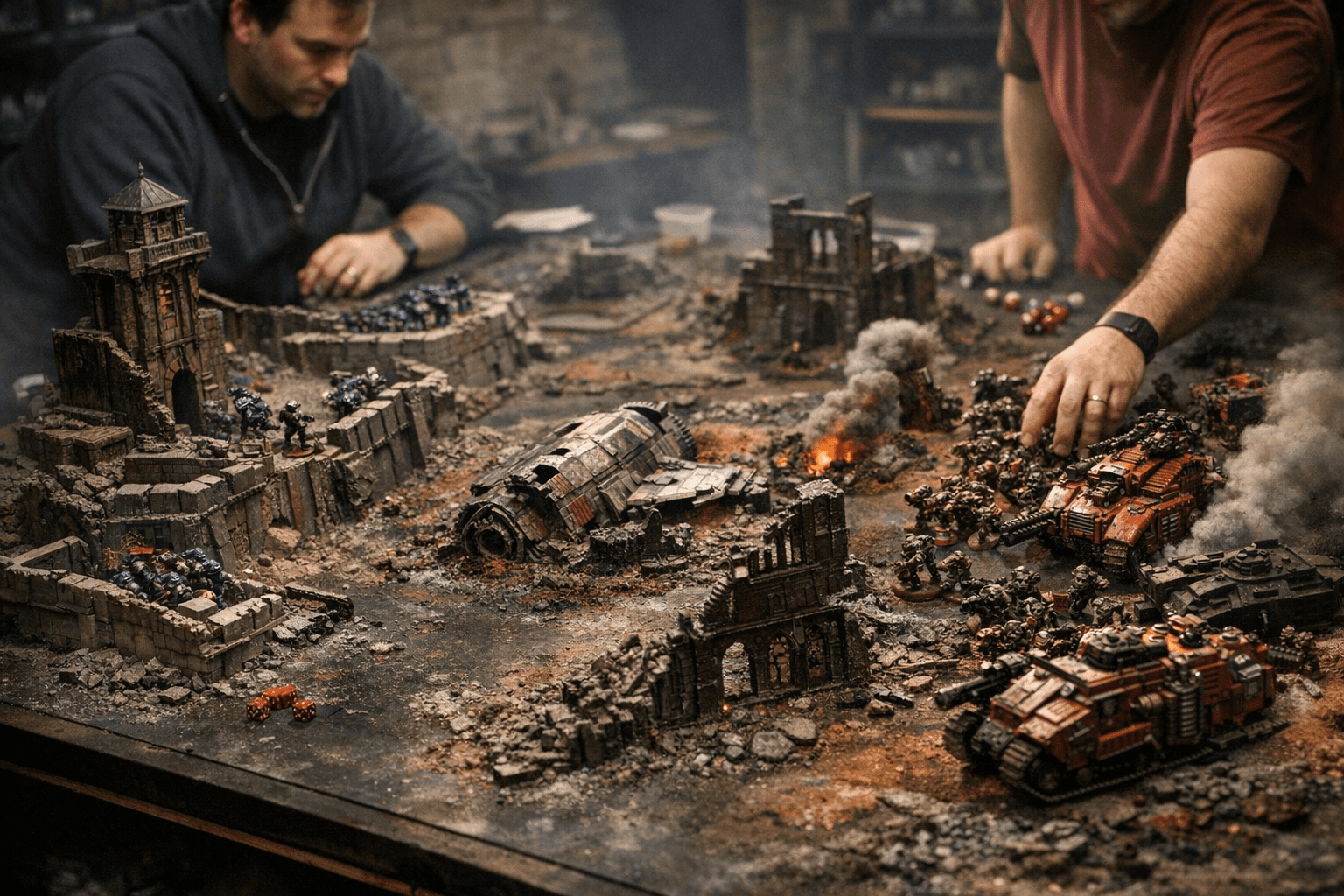
Robert "TheChirurgeon" Jones updated his short series on narrative table design on Feb 3, 2026 and turned the spotlight on asymmetric layouts that force meaningful attacker-defender play. In this seventh entry he focuses on building maps that reward movement and decision-making rather than passive scoring, and he ties those ideas to mission structure and matched-play heuristics from the community.
Jones frames the piece by linking narrative needs back to prior lessons: "Last time around, I looked at building more vertical layouts and using raised platforms in your games." He then sets the aim plainly: "In this seventh entry, I’m going to be looking at building for asymmetric layouts, and how we can apply the lessons we’ve learned toward building better layouts for Asymmetric missions with a clear attacker and defender." Those missions often use separate deployment maps, and Jones notes that "Lots of narrative missions have deployment maps that are different for the attacker and defender, changing play patterns and forcing players to adopt different strategies."
On the table, Jones recommends concrete terrain goals: provide "places to hide in deployment," create "staging areas," and carve out "vehicle movement lanes." His sample intent is surgical: "I want to put walls between each objective, making it difficult to sit on one and see the others." The payoff is tactical friction; "The Defender should have to move up and take a risk and engage with the Attacker in order to prevent this action." For attacker deployment he counsels restraint, writing "I want spots for the Attacker to hide early, but note that on this mission the Attacker can choose to go first, so it’s not thatbig a deal if they have lots of hiding places; one or two for slower units is fine."
Jones balances narrative design with matched-play pragmatism by folding in community rules of thumb. The Reddit-style guidance he cites begins with three simple mantras: "Design a table for a specific mission - since objectives can't be on terrain, it's easier to make a map around a single mission's objective locations"; "Pre-defined table layout - meaning players don't take turns placing terrain, it's already set up by someone striving for balance"; and the practical "Russ rule - spaces between terrain or terrain and edges of the board are big enough to accommodate a Leman Russ (just fair to armies with vehicles that want to manueuver, should maybe be beefed up to 'Dorn rule' now)."
Those matched-play ideas lead naturally to balance conversations the community already has. One user frames a common problem: "With an asymmetric map this is bound to happen, but is there a way to balance it? Getting more complex with the table design, is there a way to give the right side some kind of benefit, even if the Tyranids on the left can ignore the move penalty? Maybe there's some more light cover on the right side? Or dense? (That in turn creates a new challenge, if Emperor's Children play on the map and ignore dense)." Jones and the forum posts both stress realism about variance: "I do think there is a lot of RNG in dice rolls and differences in army compositions that could make this kind of approach to table design seem unnecessary. In most cases, I don't think players blame the table for a loss, unless it obviously doesn't have enough obscuring (one of the big traits to have on a table)."
For narrative and matched play alike the takeaway is practical. Design around mission objectives, pre-set your terrain, think about vehicle lanes from the start, and use walls or sight-blocks to force the defender into risky choices. Use limited hidey spots for slow units when the Attacker can seize first turn advantage, and consider compensatory cover when faction rules create a one-sided benefit. Jones also signals he will work layout examples into the piece - "With those in mind, let’s look at a few examples from the Nachmund Gauntlet Crusade book and design layouts around them" - beginning with "Example 1: Saboteurs."
What this means for your local table is simple: move from one-size-fits-all boards to mission-focused terrain that produces tense, asymmetric decisions. Expect to test layouts and iterate - a few games will reveal whether gaps favor vehicles, whether obscuring is sufficient, and whether defenders are being forced to earn each point of ground.
Know something we missed? Have a correction or additional information?
Submit a Tip