Australia business conditions stabilise, but confidence stays deeply negative
Business conditions held at plus 3 in May, but confidence stayed at minus 14 as capacity use slipped and costs remained heavy.

Australia’s business sector found a rare patch of stability in May, but the mood inside boardrooms and on shop floors remained bleak. National Australia Bank’s monthly survey showed business conditions unchanged at plus 3, ending four straight months of declines, yet confidence was still deeply negative at minus 14, even after a 10-point lift from April.
The split between the headline activity reading and sentiment was the clearest sign of the economy’s current strain. NAB said conditions had tracked a little below their long-run average for most of 2026, while employment, trading conditions and profitability have all softened since February. Profitability was the weakest component, and Michael Hayes of NAB said confidence was very weak across industries, with profit margins still under pressure. The survey also showed confidence remained negative in every industry. Mining, wholesale, and transport and utilities drove the monthly improvement, but manufacturing remained the weakest sector, and Victoria was the only state with business conditions in negative territory in trend terms.

Capacity use also pointed to a slower pace of activity rather than an economy running hot. Capacity utilisation fell to 81.9 percent, the first time it has dropped below 82 percent since early 2025, though it was still above the long-run average of 81.4 percent. Forward orders rose 5 points and capital expenditure rose 6 points, moving both back above their long-run averages, which suggests businesses are still planning for activity, even if they are doing so cautiously.
The May survey was taken from 23 to 30 May, catching firms as they weighed developments in the Middle East and the federal budget. It also came against a tougher monetary backdrop after the Reserve Bank of Australia lifted the cash rate target by 25 basis points to 4.35 percent in May and said inflation was likely to remain above the 2 to 3 percent target range for some time. The central bank said higher fuel prices linked to the Middle East conflict were adding to inflation pressure.
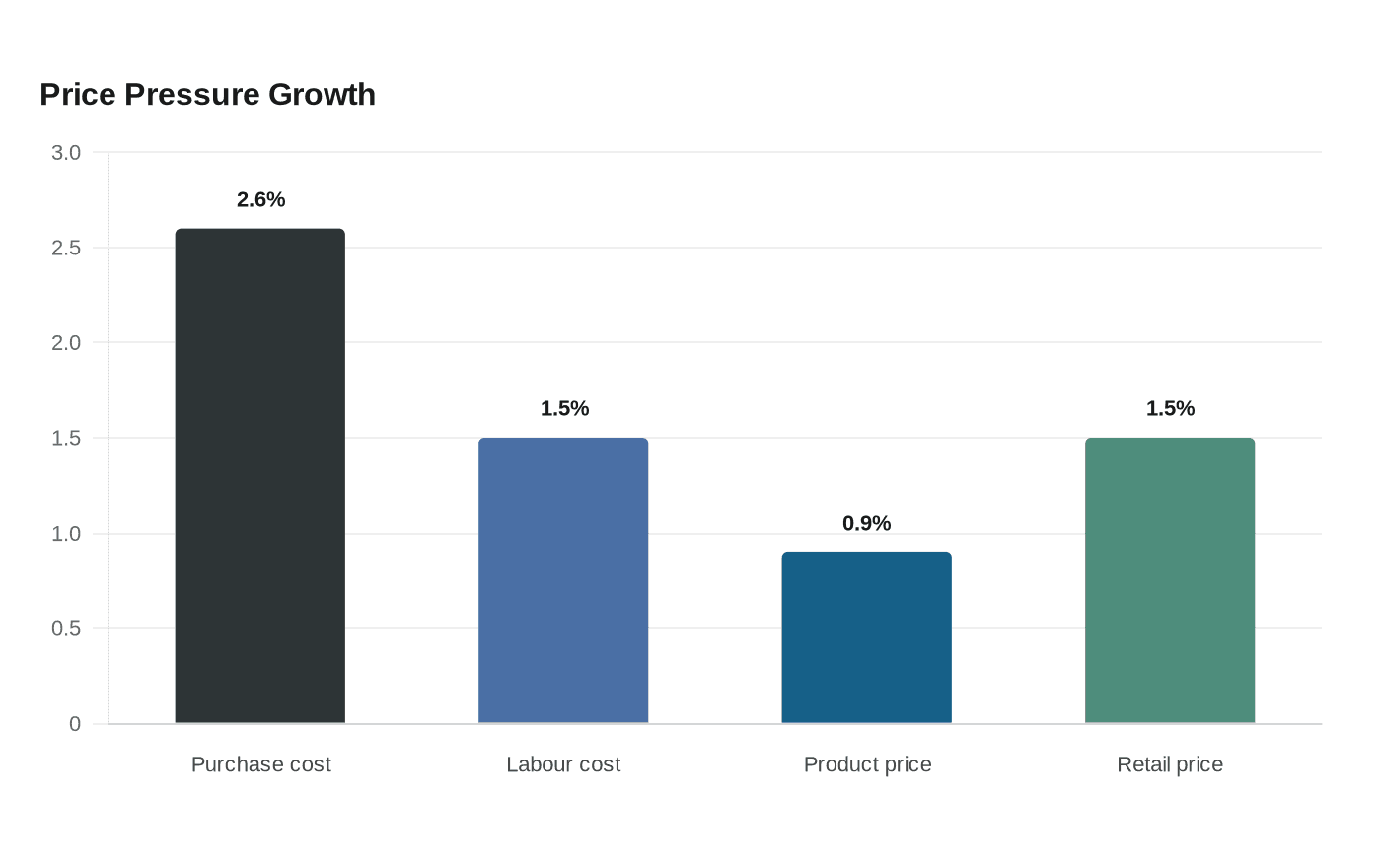
Price pressures did ease in the survey itself. Purchase cost growth slowed to 2.6 percent in quarterly equivalent terms, labour cost growth edged down to 1.5 percent, product price growth slipped to 0.9 percent and retail price growth eased to 1.5 percent. Westpac IQ said purchase cost growth recorded the sharpest monthly fall on record, but it also said business confidence was still 18 points below its long-run average. The message from May was one of restraint rather than recovery: firms were no longer deteriorating as fast, but they were still not ready to shift decisively into hiring, investing or expanding.
This article was produced by Prism’s automated news system from verified source data, official records, and press releases, then run through automated quality and moderation checks before publishing. The system is built and supervised by the people who set the standards it runs under. Read our full AI policy.
Know something we missed? Have a correction or additional information?
Submit a Tip