Australia intelligence chief links unchecked antisemitism to Jewish violence
Australia's spy chief said antisemitism was left to fester after the Gaza war, a climate that helped drive violence and pushed the terror threat to probable.

Australia's top intelligence chief told a royal commission that antisemitism was allowed to go unchecked after the October 2023 outbreak of the Israel-Gaza war, helping create the climate that fueled violence against Jewish Australians. Mike Burgess, the director-general of security at the Australian Security Intelligence Organisation, linked that breakdown to a widening security problem that moved from hate speech into threats, attacks and lethal force.
His testimony came before the Royal Commission on Antisemitism and Social Cohesion, which was set up on 9 January 2026 after the Bondi terrorist attack on 14 December 2025, when a gunman killed 15 people at a Hanukkah celebration. The commission is chaired by Virginia Bell AC SC, has already tabled an interim report on 30 April 2026, and is due to deliver its final report by 14 December 2026. Its first hearings have centered on the scale of antisemitism in Australia and on what governments, police and other institutions did, or failed to do, before Bondi.
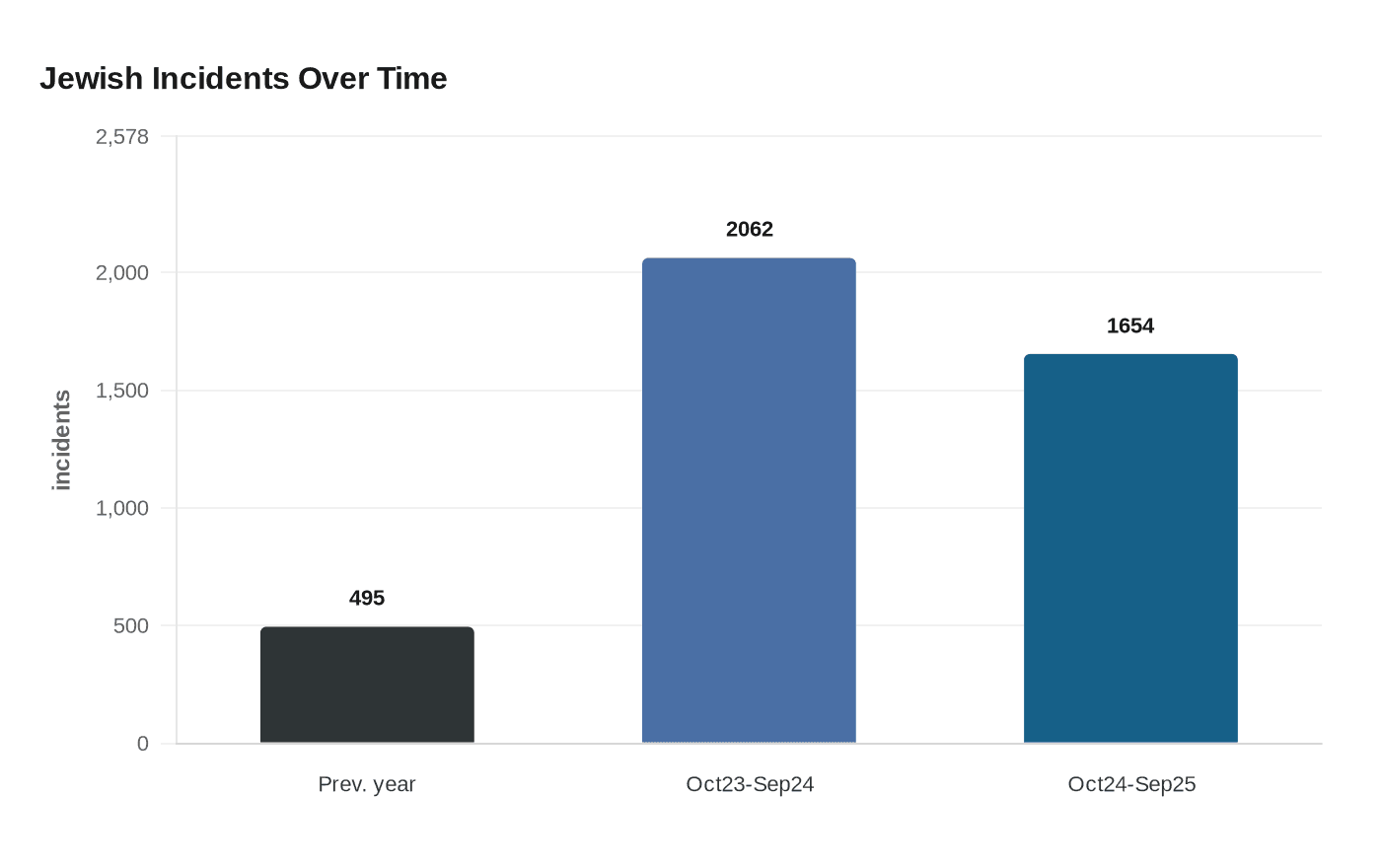
Burgess said the spike in antisemitic incidents was serious enough to push Australia’s national terrorism threat level from possible to probable on 5 August 2024. That rating meant authorities assessed there was a greater than 50 percent chance of an onshore attack or attack planning within 12 months. Community data show why the warning mattered. The Executive Council of Australian Jewry recorded 2,062 anti-Jewish incidents between October 2023 and September 2024, up from 495 in the previous year, and later logged 1,654 incidents nationally between October 2024 and September 2025. NSW Police figures cited publicly showed hate crime reports against Jewish people rising from 40 in 2020 to 841 in 2025.

The inquiry has also exposed gaps in frontline protection. NSW Police did not prepare a threat assessment for the Bondi event and had turned down a request for a static police presence, even though four officers were at the scene when the attack began. Eleven people were shot in about 30 seconds, a timeline that underscored how quickly hate can become mass violence when warning signs are missed. Burgess said ASIO assessed that Iran’s Islamic Revolutionary Guard Corps was behind two antisemitic attacks, including one on a kosher restaurant in Sydney and another on Melbourne’s Adass Israel Synagogue, prompting Australia to expel Iran’s ambassador in August. He also said ASIO believed Iran was probably involved in more attacks, but could not identify every case because the IRGC used proxy networks and agents.
This article was produced by Prism’s automated news system from verified source data, official records, and press releases, then run through automated quality and moderation checks before publishing. The system is built and supervised by the people who set the standards it runs under. Read our full AI policy.
Did this article answer your question?

