Australia to build government-owned fuel reserve in A$10 billion plan
Australia will spend A$10 billion to build a state fuel reserve, enough diesel and jet fuel for about 50 days as leaders warn of shipping shocks and regional conflict.
Australia moved to create a permanent government-owned fuel reserve and expand national stockpiles with an A$10 billion package aimed at shielding the country from international supply shocks.
Prime Minister Anthony Albanese said the reserve would hold about 1 billion liters of diesel and aviation fuel, enough to keep Australia at or above a 50-day onshore buffer if global logistics faltered or regional conflict cut shipments. The plan comes as officials say Australia imports about 80 percent of its fuel and has already faced localized shortages since fighting in the Middle East began to unsettle energy markets.
The government said the fuel-security package would become a centerpiece of next week’s federal budget. Albanese cast the move as a bid to protect Australia’s energy sovereignty and reduce the risk that another crisis would flow through transport networks, farming and essential services. In a country stretched across long supply lines and heavily dependent on imported fuel, the decision treats stockpiles as a national safeguard rather than a private market choice.
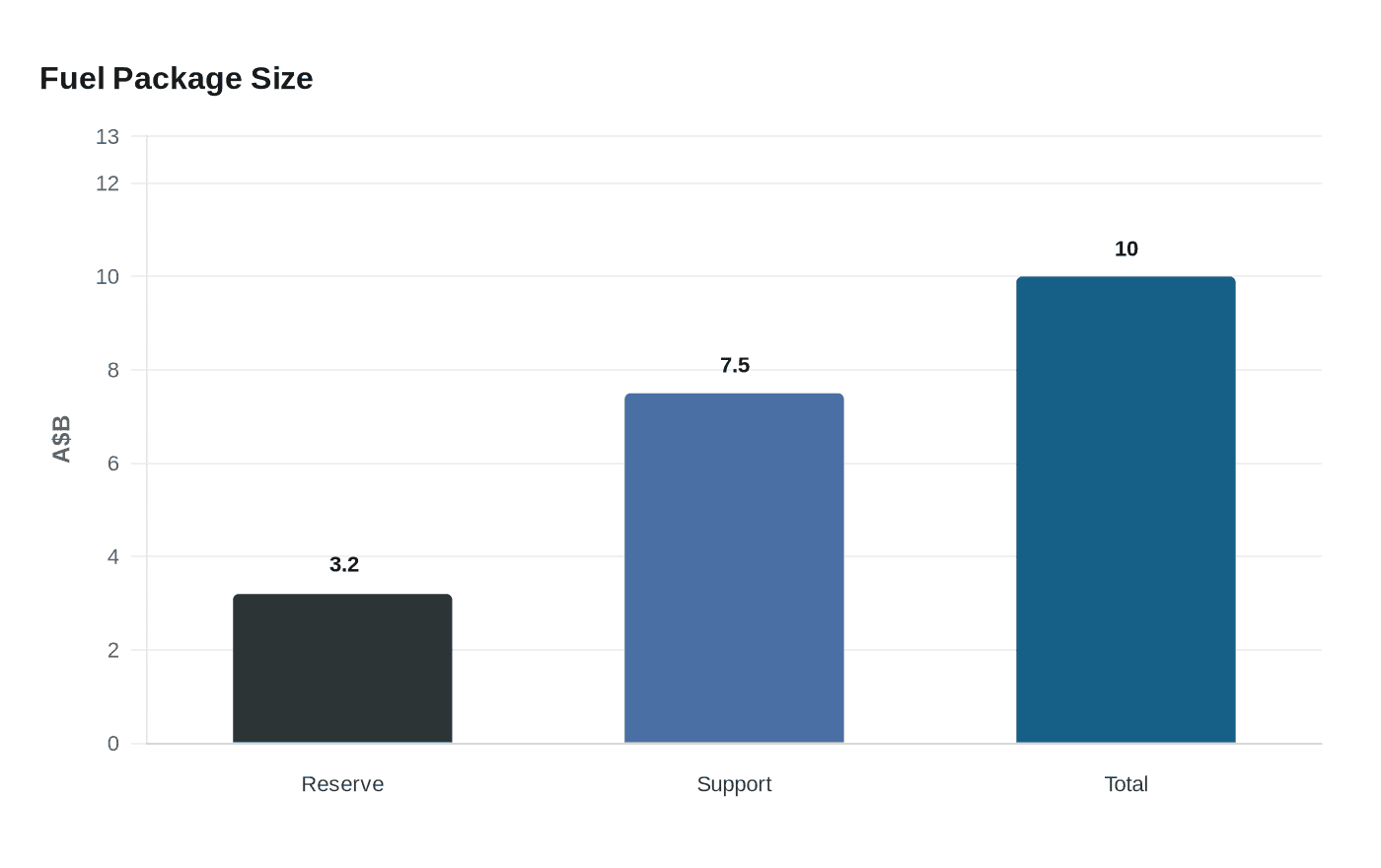
Energy Minister Chris Bowen said Australia was unusual among International Energy Agency members because it did not have a government-owned fuel reserve, making the shift a major change in national energy planning. The package includes A$3.2 billion for the reserve itself, plus a 10-day increase in the minimum stockholding obligation for importers and refiners. Another A$7.5 billion will go toward loans, equity, guarantees, insurance and price support intended to lift inventories of fuel and fertiliser.
Officials said the aim was not only to prevent regional stockouts but also to protect essential users if another supply crisis deepened. That framing places fuel security alongside other forms of strategic resilience, with Canberra signaling that access to diesel and jet fuel can no longer be left to just-in-time commerce in a more volatile region.
The scale of the spending also raises a broader question about how allies prepare for disruption. Australia is choosing to build hard reserves at home, rather than rely on the assumption that global markets will absorb every shock. In practice, the move buys time, leverage and breathing room. It also signals something less comfortable: the government believes the next disruption may be severe enough to justify billions in public backing before the crisis arrives.
This article was produced by Prism’s automated news system from verified source data, official records, and press releases, then run through automated quality and moderation checks before publishing. The system is built and supervised by the people who set the standards it runs under. Read our full AI policy.
Did this article answer your question?