Australian Open heat forces roofs closed and suspended outdoor play
Extreme heat at Melbourne Park forces roofs closed and outdoor play suspended, testing player safety and tournament operations.
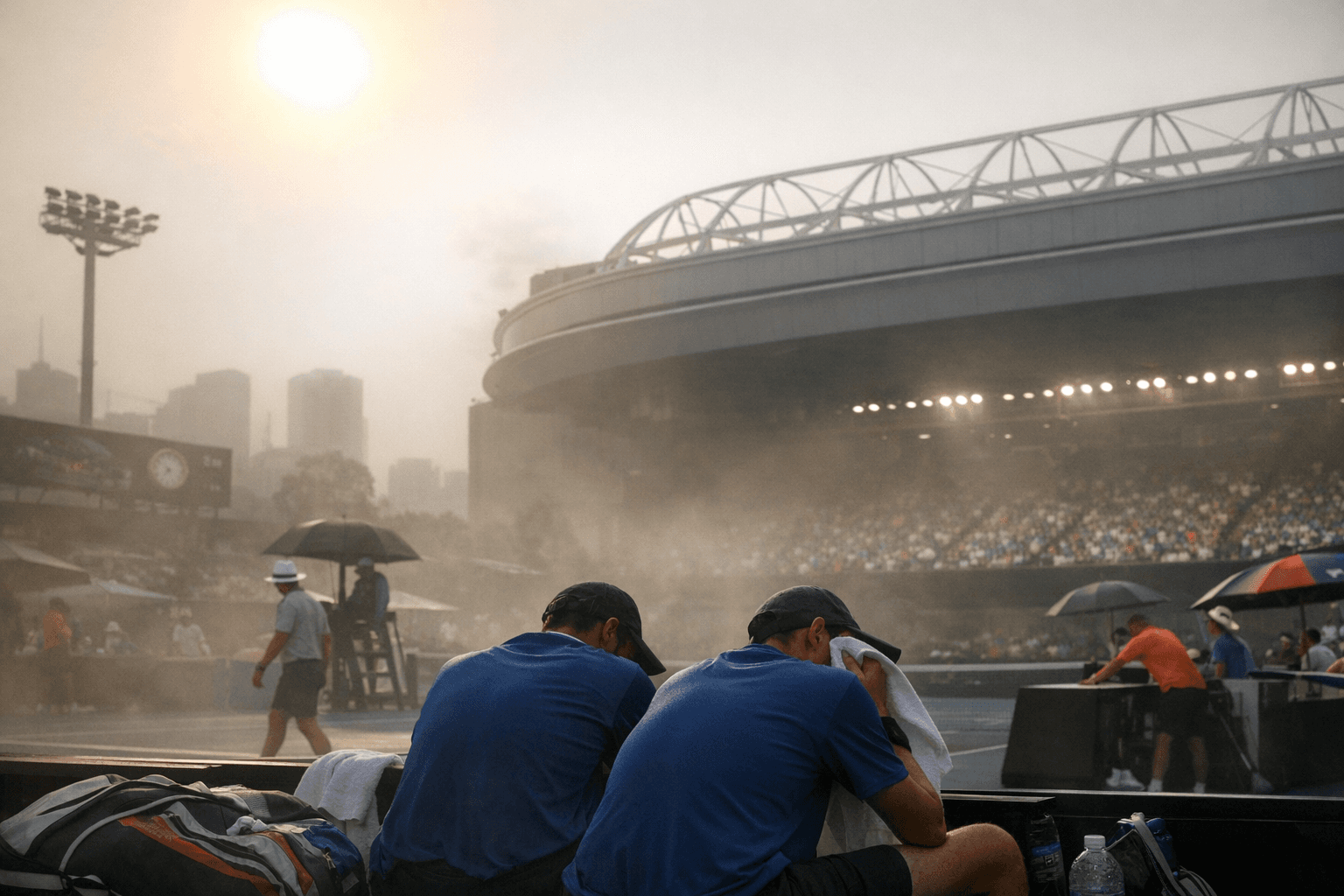
Extreme heat at Melbourne Park has forced organisers to close the roofs on the tournament's main showcourts and suspend play on outdoor courts under the Australian Open's extreme heat policy as temperatures approach 36-40°C (96-104°F). Matches are starting earlier in an attempt to beat the worst conditions, but the disruption is reshaping competition, operations and the fan experience across the grounds.
The closures and suspensions reflect a growing reality for elite tennis that extreme weather can alter not only where matches are played but how the entire event functions. Roofed courts provide shelter from direct sun and high air temperatures, but they also change playing conditions. Players who moved from exposed courts into enclosed arenas must adapt to slower air movement, different ball trajectories and altered humidity levels. Those adjustments affect tactics, recovery and momentum, particularly in a tournament scheduled during the Australian summer.
From a performance perspective, high heat imposes clear physiological stresses. Heat accelerates fatigue, increases risk of cramping and dehydration, and can blunt sharpness on serve and footwork. Tournament decisions to start matches earlier seek to reduce exposure, but compressed scheduling can compound recovery issues for players involved in long matches or back-to-back sessions. The need to switch court environments mid-tournament favors adaptable competitors and can advantage those with deeper support teams capable of rapid rehydration and acclimatization strategies.
Organisers face a multifaceted operational test. Closing roofs on main courts protects players and spectators but disrupts planned session timing and broadcast windows. Earlier kickoff times are intended to maintain match flow while protecting health, yet they also shift prime viewing hours for global television partners and advertisers. For a Grand Slam that depends on broadcast revenue and sponsor commitments, heat-driven schedule changes create commercial friction and force contingency planning that may carry financial consequences if disruptions persist.
The episode at Melbourne Park also sits within a broader industry trend: sport confronting climate volatility. Tournaments worldwide are re-evaluating scheduling, facility design and extreme weather policies. Investments in retractable roofs, shading, misting zones and medical staffing are increasingly framed as essential infrastructure rather than optional comforts. The Australian Open's decisions this week will likely feed into next season's planning for other events and spur debate about how to balance tradition, player welfare and commercial imperatives.
There are social implications beyond the professional tour. Fans, event staff and local service workers bear the brunt of heat on site. Prolonged high temperatures raise questions about accessibility for vulnerable attendees and the protections afforded to hourly workers who keep the tournament running. Public health messaging, hydration stations and shaded rest areas are immediate mitigations, but sustained climate trends will demand longer-term responses from sports organisers and municipal authorities.
As the tournament adapts in real time, the practical lesson is evident: major sporting events can no longer treat extreme heat as an occasional nuisance. It is a material factor that shapes competition outcomes, broadcast economics and community participation. How tennis responds in Melbourne this week will inform broader conversations about resilience and responsibility in the era of rising temperatures.
This article was produced by Prism’s automated news system from verified source data, official records, and press releases, then run through automated quality and moderation checks before publishing. The system is built and supervised by the people who set the standards it runs under. Read our full AI policy.
Did this article answer your question?
.jpg&w=1920&q=75)