Autauga County unveils school book vending machine to boost literacy
Autauga County Children's Policy Council held a ribbon-cutting Jan. 11 for a school book-vending machine. The device aims to boost student reading with token rewards tied to reading programs.
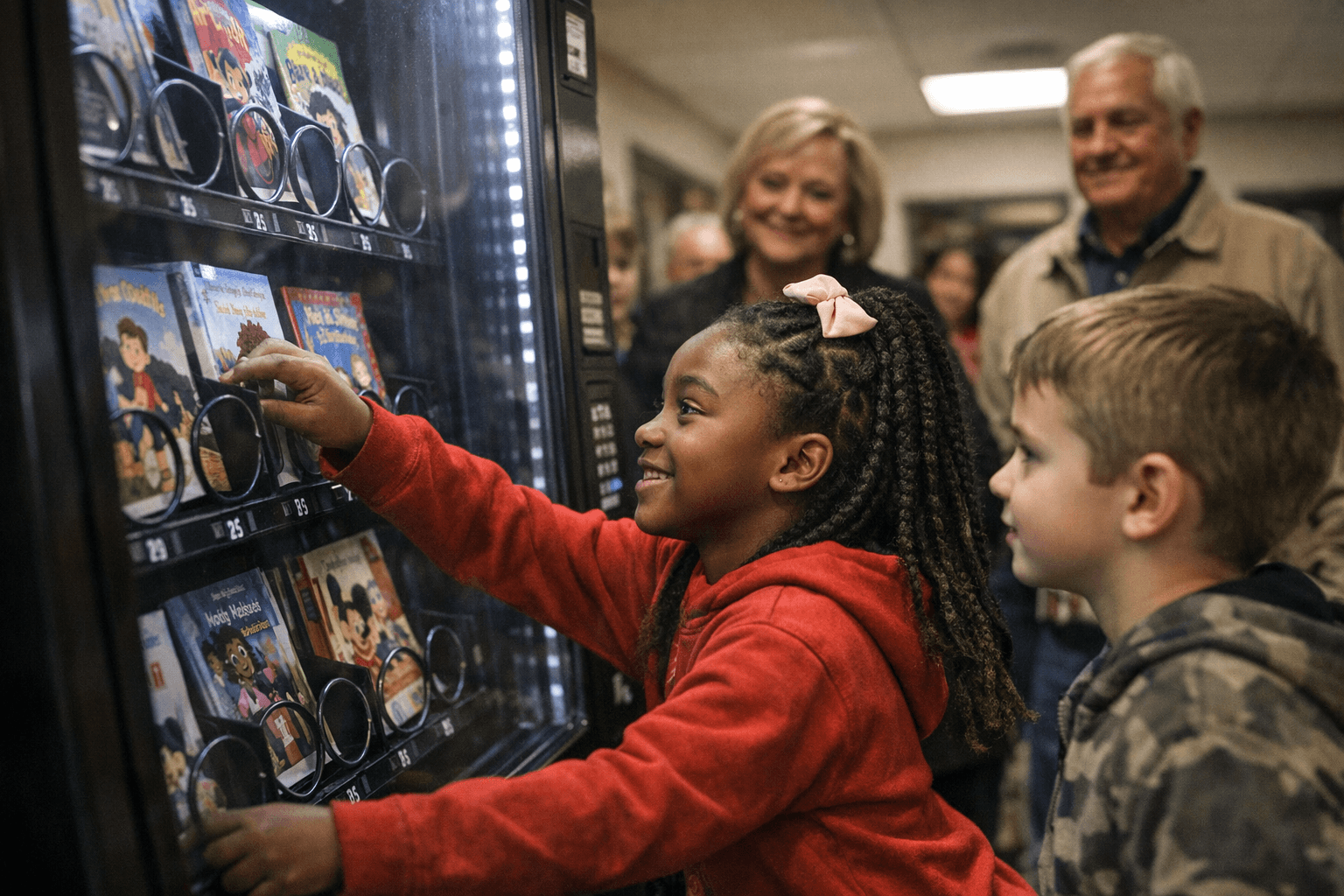
The Autauga County Children’s Policy Council marked Jan. 11 with a ribbon-cutting for a new school book-vending machine intended to encourage reading among local students. The device, installed through a council-led initiative, was presented as a hands-on incentive to get children into books and support classroom reading programs.
Organizers invited community members, partners and families to attend the ceremony and pointed residents to local school and district contacts for further information on how the machine will operate and which campuses will receive access. The county listing for the event noted the machine functions as a token-reward system, a model used locally before that typically ties student rewards to performance in reading programs such as Accelerated Reader.
The immediate promise is straightforward: students who meet reading goals earn tokens that can be exchanged for books from the vending unit, creating a low-cost reward loop that places books directly into students' hands. For teachers and librarians, the device offers a visible way to celebrate reading milestones and to supplement classroom libraries without large one-time purchases.
But the rollout raises policy and governance questions local officials and voters should track. Incentive-based programs often measure success by participation rates and points within specific reading platforms. That can improve measurable engagement, but it risks narrowing attention to the metrics those platforms capture and overlooking broader literacy outcomes such as comprehension, library access, and home reading environments. Officials responsible for child services and the school board will need to clarify how the council will evaluate long-term benefits, who will fund replenishment and maintenance, and whether smaller or rural schools in Autauga County will receive equitable access.
The council’s role in convening partners is typical for county-level children’s policy bodies, but citizens should ask about procurement, transparency and sustainability. Are local tax dollars, private donations or grants covering the machine and ongoing book supply? Will data from reading programs be shared with families in clear terms, and how will the county guard student privacy while measuring outcomes? These practical governance issues determine whether the vending machine is a durable boost to literacy or a short-term novelty.
Beyond program mechanics, the initiative offers a civic touchpoint. Voters and parents can press elected school board members and county officials for reporting on results, attend future council meetings, and request that outcomes be published in plain language. The takeaway? Celebrate the new book access, but demand a plan: track who benefits, how success is defined, and how equity will be ensured so every Autauga County child gets a fair shot at being a reader. Our two cents? Show up, ask the hard questions, and make sure the token everyone talks about translates into lasting reading gains.
Sources:
Know something we missed? Have a correction or additional information?
Submit a Tip