Baby sleep advice market faces calls for clearer safety standards
Parents are being sold baby sleep advice in a market where safety claims, training and accountability can be hard to verify, even as official guidance keeps changing.
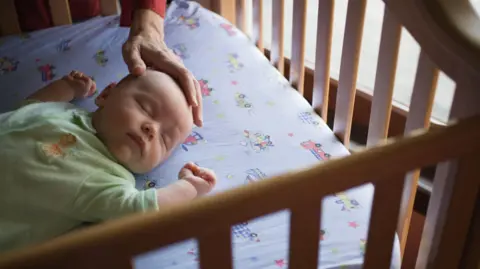
Families looking for help with infant sleep are entering a market that can look reassuring on the surface and opaque underneath. Official guidance on safer sleep is clear, but the people selling advice and products are not always held to the same standard of proof, training or oversight.
A public health issue, not just a parenting trend
The stakes are not abstract. The NHS says safer-sleep advice should be followed whenever a baby is sleeping, because sudden infant death syndrome remains rare but can still happen. It also says that if a baby was born prematurely, safer-sleep advice should be followed for a year from the due date, not the birth date. That makes sleep advice part of routine infant safety, not a niche lifestyle choice.
The scale of the risk is also visible in the numbers. In 2023, there were 188 unexplained infant deaths across the UK, including 164 in England and Wales, described as roughly three a week in England and Wales. Those deaths sit in the background of every conversation about infant sleep, and they help explain why public agencies keep revisiting the guidance.
What official guidance actually requires
The core message from government and health agencies is consistent: sleep spaces should be safe, checked and boring in the best possible way. The Early Years Foundation Stage guidance says sleeping children must be frequently checked to make sure they are safe, and that infants should be placed down to sleep safely in line with the latest government safety guidance.
That matters beyond nurseries and childminders. The Department for Education’s safer-sleep guidance for early years providers was written in collaboration with The Lullaby Trust, and it says it supports planned updates to the EYFS statutory framework due in September 2026. In other words, this is not a settled policy area. Safety practice is still being updated, and providers are being told to keep pace.
Why the private advice market raises concern
Against that official backdrop sits a fast-growing world of consultants, coaches and influencers offering custom sleep solutions. The consumer problem is simple: parents may not be able to tell who has medical or childcare expertise, who is relying on personal experience, and who is packaging unsafe shortcuts as expert advice.
That is why the BBC investigation’s concern about unregulated baby sleep consultants resonates beyond one story. The issue is not only whether a consultant is effective, but whether the claims being sold line up with public health guidance, whether the person is properly trained, and whether there is any meaningful accountability if the advice goes wrong. Families deserve clarity about the qualifications and training of those caring for their children, especially when sleep advice can affect infant safety.
The product-safety gap is part of the same problem
The market is not only about services. It also includes products marketed for sleep, and official warnings show how easily safety claims can outpace evidence. The UK government’s Office for Product Safety and Standards launched a fresh campaign on 18 March 2025 to raise awareness of hazards linked to baby sleep products. Separate product-safety guidance has warned that not everything sold as a baby sleep product is safe.
One explicit warning from government is especially direct: do not place a “Baby Sleep Pillow” in a cot or crib. That kind of alert shows why parents should be wary of anything that promises better sleep while blurring the line between comfort and safety. In a crowded marketplace, a product that sounds soothing can still be hazardous.
What standards should parents look for?
Parents do not need to become safety inspectors, but they do need a basic filter. The best standard is whether advice matches current NHS, Department for Education and product-safety guidance rather than a consultant’s sales pitch.
- The provider can explain their training clearly and specifically, not with vague claims of being “qualified” or “experienced.”
- Their advice matches official safer-sleep guidance, including frequent checks for sleeping children and safe placement of infants.
- They are willing to say what they will not recommend, especially if a product or method conflicts with government safety advice.
- They do not promise guaranteed outcomes, overnight fixes or miracle results.
- They can point to current guidance for premature babies, including the rule that safer-sleep advice should be followed for a year from the due date.
Look for these signals:
- Advice that encourages a baby to sleep in a product that has not been clearly shown to be safe.
- Claims that official guidance is outdated, “too cautious” or optional.
- Consultants who sell a one-size-fits-all plan while dismissing medical history, prematurity or other risk factors.
- Marketing that trades on anxiety, urgency or shame rather than evidence.
Red flags are just as important:
Why staffing and oversight matter in childcare settings
The public-sector rules point to a higher bar than the private market often signals. Care Quality Commission guidance says providers should deploy enough suitably qualified, competent and experienced staff. That language matters because it makes competence a staffing requirement, not a branding exercise.
Taken together, the rules for childcare settings and the warnings about baby products show a wider public policy reality: infant sleep safety is supposed to be built on evidence, trained supervision and frequent checking. When private consultants operate without clear standards, they can create a gap between what parents think they are buying and what the safety system actually requires.
The policy question now
The coming EYFS updates in September 2026 will test whether safer-sleep guidance can keep up with how families actually seek help. The broader challenge is bigger than one sector or one investigation: parents are spending money in a market where the boundaries between advice, coaching, product promotion and regulated care are often blurred.
Clearer standards would not solve every risk, but they would make the market easier to navigate. Until then, the safest rule is the simplest one: trust advice that aligns with official safer-sleep guidance, and be skeptical of anything that cannot clearly prove its training, evidence and accountability.
This article was produced by Prism’s automated news system from verified source data, official records, and press releases, then run through automated quality and moderation checks before publishing. The system is built and supervised by the people who set the standards it runs under. Read our full AI policy.
Know something we missed? Have a correction or additional information?
Submit a Tip