Back River Plant Halts Pelletization as Pollution Lights Flicker, Biosolids Back Up
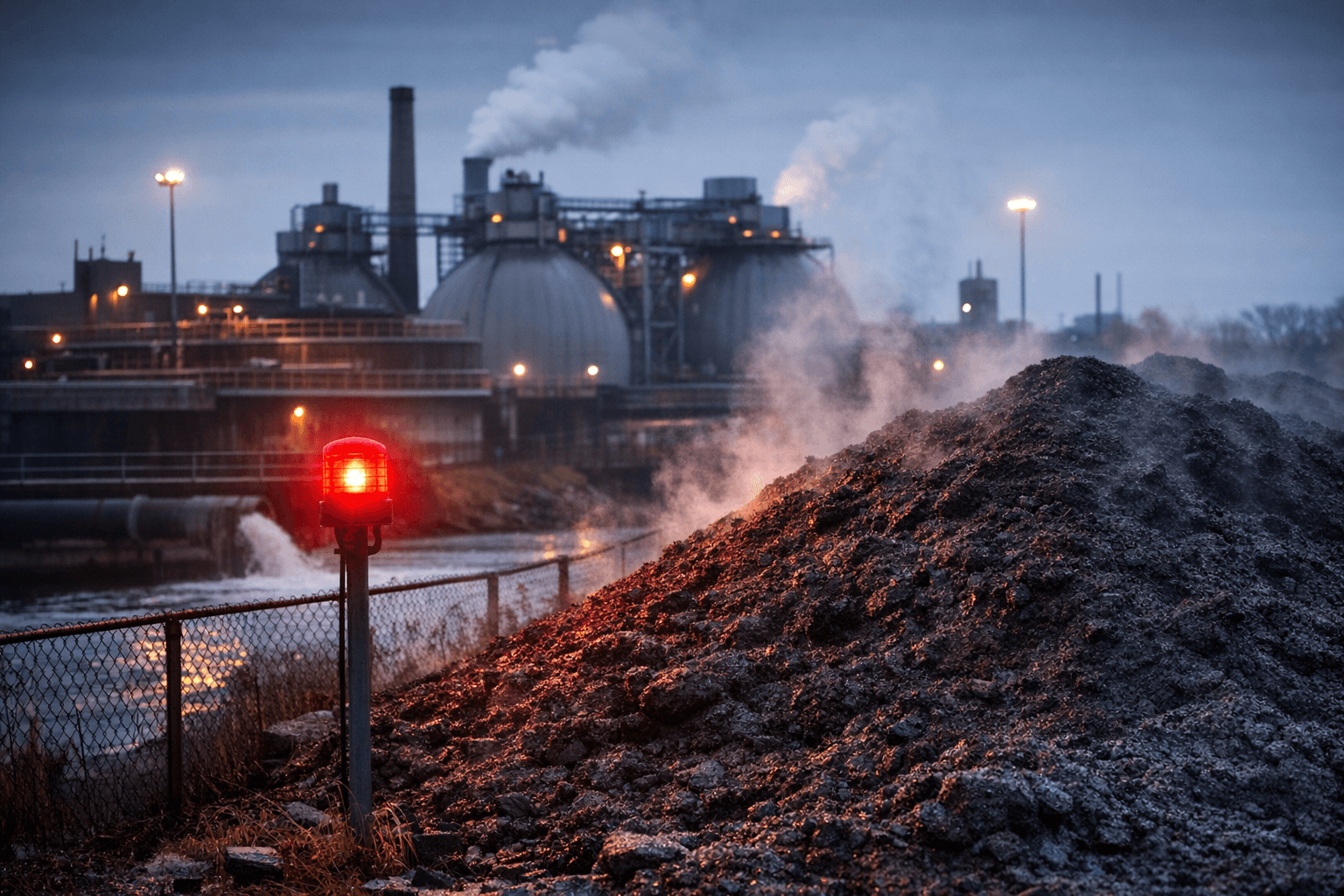
Outfall warning lights at the Back River plant have been flashing red for weeks while Synagro has suspended pelletization and biosolids pile up near the plant.

Outfall warning lights at the Back River Wastewater Treatment Plant have been turning on and off in recent weeks even as Synagro, the private operator of the Pelletech facility, has halted pelletization and stopped processing sewage sludge. A November TYLin report noted that “The Synagro team has raised concerns about the quality of biosolids entering the dryer, citing a potential presence of hydrocarbons,” and concluded that “Both Synagro and the City are conducting testing to evaluate this issue and have suspended the pelletization process while this testing is ongoing.”
Residents in North Point and Dundalk say the suspension has coincided with renewed and worsening odors and visible backups of biosolids near the plant. The Back River Community Action Group posted on Facebook in December that “The stench is overwhelming.” At a community meeting in Dundalk, a resident told a Baltimore Department of Public Works representative, “It goes from [rotten] eggs to poop to methane.” Smell MyCity reports show odor complaints concentrated in North Point and Dundalk at higher levels than in Essex and Middle River.
Operational records and technical excerpts contributed to the municipal review detail multiple maintenance and process-control failures at the plant. MES/Lakeroland found that “For the odor control system to work and run properly, the flushing water must remain at or below 10 ppm TSS. The flushing water does not meet the 10 ppm or less target, therefore the odor control system for the grit removal portion of the treatment plant is inoperable.” The same assessment reported that “DPW is running the fans for the odor control system ... with the intent of expelling the H2S that accumulates in the buildings outside into the environment,” and that “There are H2S sensors and alarms located near the grit removal rotating screens, however employees have covered up the controls and sensors.” MES/Lakeroland also said “The plant’s automation does not work, and most equipment must be run in manual mode. Most of the facility’s valves, pumps, blowers, mixers, and controls are not functional.”
The plant’s outfall pollution-warning lights were installed under a 2023 legal settlement with environmental groups and are designed to flash red when inadequately treated waste is released into the Back River. Neighbors reported the lights have been “on and off for the last several weeks,” a pattern that has sharpened demands for discharge logs and outfall monitoring records from the Baltimore Department of Public Works and the Maryland Department of the Environment. MDE has posted a Back River webpage with tabs for operations, air monitoring, sludge, a regional waste/wastewater system work group, documents, and a link for submitting complaints.
Synagro markets its Pelletech dryer as capable of processing up to “110 dry tons of biosolids per day” and points to past efforts to manage Baltimore’s surplus biosolids after an assessment required removal of more than “200,000 tons of biosolids within five months.” Those engineering claims now clash with the current suspension: Baltimore reporting indicates that “as of the February report, Synagro still was not processing the sewage sludge.” Fire incidents at the facility — a March 2023 fire and a September 15 dryer fire referenced in engineering notes — factor into the timeline of the pelletization halt and testing regime.
Key questions remain unanswered: results of hydrocarbon testing, the dates and authorship of the TYLin and February reports, outfall sensor logs tied to the pollution-warning lights, and inspection records documenting any on-the-ground biosolids storage or runoff into the Back River. Until testing, repairs, and transparent release of monitoring data are complete, the suspension of pelletization and intermittent outfall warnings suggest ongoing operational risk and continuing odor and spill concerns for Dundalk and North Point neighborhoods.
Know something we missed? Have a correction or additional information?
Submit a Tip