BAFTA apologizes after Tourette’s outburst includes racial slur
BAFTA apologized after a guest with Tourette syndrome shouted the N-word during the awards; the BBC said it failed to edit the slur from its delayed broadcast.
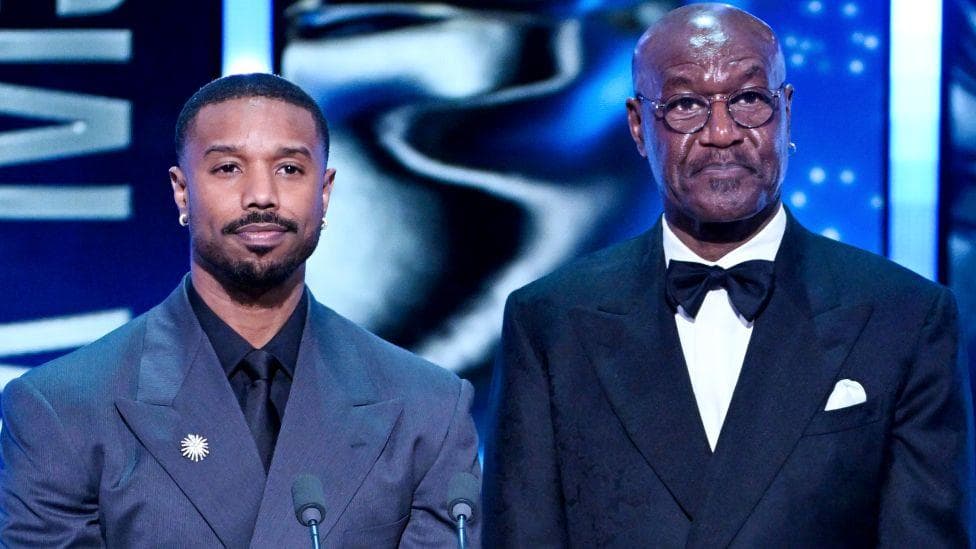
BAFTA apologized Monday after an involuntary outburst by John Davidson at the BAFTA Film Awards included the N-word during the ceremony, whose broadcast runs on a roughly two-hour delay. The academy said the incident caused harm and vowed to address what happened after the slur was audible on BBC1 and in the U.S. E! telecast before being removed from BBC iPlayer.
The outburst occurred at London’s Royal Festival Hall while Michael B. Jordan and Delroy Lindo were presenting the award for Best Visual Effects. John Davidson, a Scottish campaigner with Tourette syndrome, MBE, and an executive producer and inspiration for the film I Swear, made involuntary vocalizations during the ceremony; one loud tic took the form of a profoundly offensive term. Host Alan Cumming told the audience that Davidson was in attendance and later spoke directly from the stage to explain and apologize.
“Our guests heard very offensive language that carries incomparable trauma and pain for so many,” BAFTA said in a statement. “We want to acknowledge the harm this has caused, address what happened and apologise to all.” The academy said Davidson has “devoted his life to educating and campaigning for better understanding of this condition,” and added, “Tourette Syndrome causes involuntary verbal tics, that the individual has no control over. Such tics are in no way a reflection of an individual’s beliefs and are not intentional.”
BAFTA also outlined steps it said were taken before and during the ceremony. “We take the duty of care to all our guests very seriously and start from a position of inclusion. We took measures to make those in attendance aware of the tics, announcing to the audience before the ceremony began, and throughout, that John was in the room and that they may hear strong language, involuntary noises or movements during the ceremony,” the statement said. The academy apologized “unreservedly” to Michael B. Jordan and Delroy Lindo and thanked them for their “incredible dignity and professionalism.”
The BBC apologized for broadcasting the audible slur and said it would remove the language from its streaming archive. “Some viewers may have heard strong and offensive language during the BAFTA Film Awards,” the broadcaster said. “This arose from involuntary verbal tics associated with Tourette syndrome, and as explained during the ceremony it was not intentional. We apologise that this was not edited out prior to broadcast and it will now be removed from the version on BBC iPlayer.”

On stage, Cumming explained the medical context and offered a brief apology: “Tourette syndrome is a disability and the tics you have heard tonight are involuntary, which means the person who has Tourette syndrome has no control over their language. We apologize if you were offended.” Davidson, who left the auditorium early, said he was “deeply mortified” and that “I chose to leave the auditorium early into the ceremony as I was aware of the distress my tics were causing.” He also said the outburst was “not a reflection of my personal beliefs,” according to reporting.
Public health and disability advocates say the episode highlights two tensions: the need to protect audiences from traumatic language and the obligation to treat disability with nuance and dignity. ABC7 described Tourette syndrome as “a neurological disorder characterized by involuntary, repetitive movements and vocalizations, including the uttering of inappropriate words,” a reality that complicates event planning and broadcast editing.
Beyond individual distress, the incident raises policy questions for institutions and broadcasters about inclusion protocols, pre-event communication, and real-time editorial control. BAFTA’s statement framed the episode as harm the academy must address; the broadcaster’s apology acknowledged an editorial failure. For communities harmed by the slur, the moment underscored how involuntary medical symptoms can intersect with long histories of racial trauma, and how organizations must balance care for people with disabilities with protections for audiences.
This article was produced by Prism’s automated news system from verified source data, official records, and press releases, then run through automated quality and moderation checks before publishing. The system is built and supervised by the people who set the standards it runs under. Read our full AI policy.
Did this article answer your question?

