Baker City's Unseasonably Warm February Draws Early Season Golfers to Quail Ridge
Unseasonably warm, sunny conditions have drawn golfers to Quail Ridge early, prompting city-managed rules to protect dormant turf and local businesses to see an early boost.

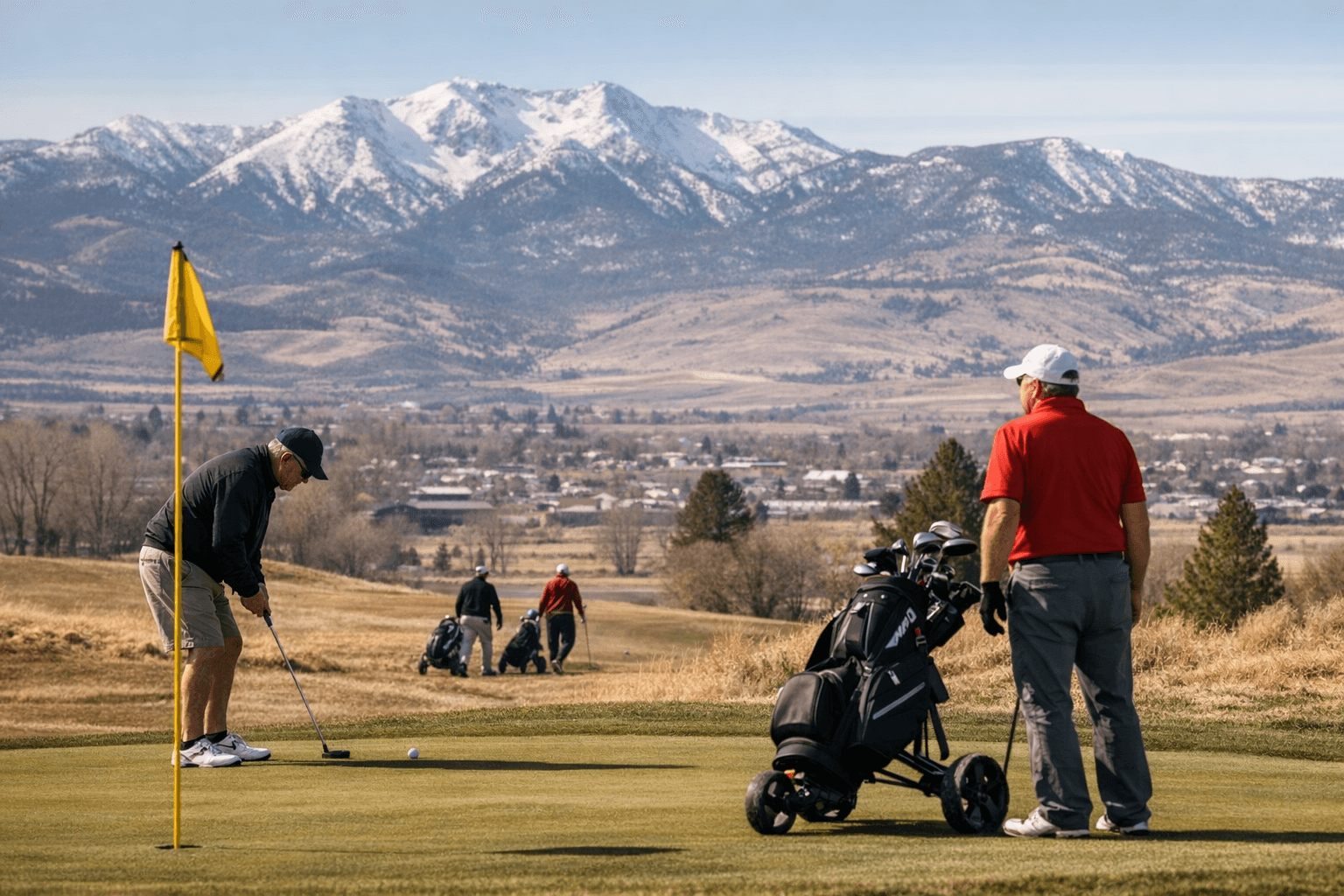
Bright sun and mid-50s temperatures coaxed golfers onto Quail Ridge Golf Course south of Indiana Avenue, turning a site that normally sees cross-country skiers in early February into an unseasonable practice range. The city-owned course, typically closed until March when snow is still common, has opened informally to players willing to take precautions to protect the grass.
Although Quail Ridge isn’t officially open, golfers are "more than welcome" to play for no cost if they take a couple simple precautions to protect the course. Nic Carman, course manager with the Anthony Lakes Outdoor Recreation Association, urged care on soft turf and outlined practical limits. Carman asks that golfers stay off the course until the temperature rises above 40 degrees; at lower temperatures, golfers, and in particular carts, can damage the turf, he said. He encourages golfers to walk rather than drive a cart, and said golfers can use one of the pull carts, which are available outside the clubhouse. On the greens, players should be especially vigilant to repair any ball marks, since the grass is still dormant and more susceptible to damage, Carman said. So long as golfers are careful, they won’t have any effect on the course, and Carman said he’s glad players have a chance to get out so much earlier than usual.
The early turnout reflects an unusually dry start to 2026. Records at Baker Municipal Airport show the last measurable precipitation was 0.01 inch on Jan. 6, and recent observations at the airport logged 52.0°F with clear skies, a 33.1°F dew point and 48% relative humidity on Feb. 6 at about 12:53 p.m. The airport METAR for the period reads "KBKE 062053Z AUTO 30005KT 10SM CLR 11/01 A3011 RMK AO2 SLP213 T01110006 58015," underlining the clear, mild conditions that made early rounds possible.
Climatological normals place January average maximums near 31.3°F and February near 35.9°F, and typical January sunshine runs roughly 4 to 6 hours a day, according to En Climate-data. Those normals help explain why managers worry about dormant turf when conditions fluctuate. Long-range guidance from the Old Farmer’s Almanac for the Intermountain region flags a mixed February: a warm, sunny window for the south around Feb. 6–12 followed by intermittent rain and snow later in the month; the almanac lists February’s monthly temperature near 38°F, about 3°F above average.
For Baker City, the early golf season is a small signal with wider implications. Free, limited play reduces barriers to outdoor recreation and can nudge modest spending at cafes and gear shops, while repeated early-season use risks added maintenance costs for a course the city owns and a nonprofit manages. The Anthony Lakes Outdoor Recreation Association’s hands-on guidance aims to balance public access with turf preservation and municipal stewardship.
If you plan to take advantage of the mild spell, follow Carman’s guidance: avoid carts on cold turf, use pull carts outside the clubhouse and repair ball marks. The forecast shows more mild windows through mid-February but a return of rain and snow later in the month, so those looking to play should monitor temperatures and course conditions before heading out.
Know something we missed? Have a correction or additional information?
Submit a Tip