Baker County posts second-lowest average gas price as statewide average rises
Baker County posted the second-lowest average retail gasoline price on Feb. 25, 2026, keeping local pumps cheaper even as Oregon's statewide average climbed.
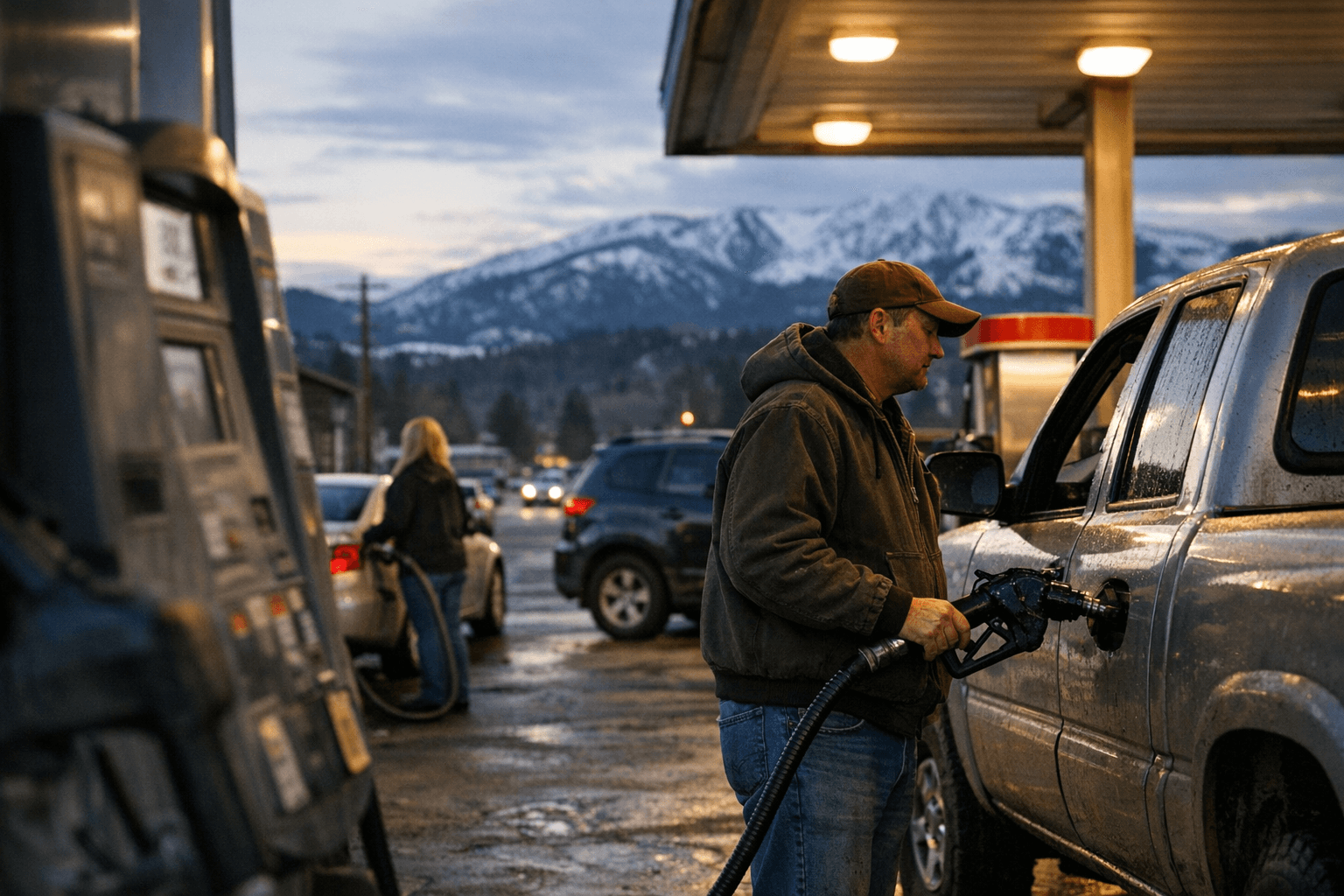
Baker County recorded the second-lowest average retail gasoline price among Oregon counties on Feb. 25, 2026, leaving drivers in Baker City and across the county paying less at the pump while the statewide average rose. Local fuel-price data released Feb. 25 showed Baker County remaining near the lower end of county-by-county comparisons even as broader Oregon figures moved higher.
The county ranking was conspicuous because the statewide average increased at the same time that Baker County’s prices held relatively steady. That divergence means motorists filling up in Baker County faced lower outlays per trip than drivers in most other Oregon counties as of Feb. 25. The pattern affects routine expenses for commuters who drive to jobs in Baker City and for local businesses that rely on vehicle travel.
Lower retail gasoline prices in Baker County have immediate budgetary implications for households and small businesses. When a county’s average sits near the bottom of statewide rankings, consumer spending on fuel drops relative to other places; those savings can flow into groceries, utility bills, or county economic activity. For commercial operators in Baker County, a persistent spread below the statewide average reduces operating costs for delivery routes and farm equipment that run on gasoline.
Market-watch implications include potential demand shifts if neighboring counties continue to see higher prices. If Oregon’s statewide average keeps rising while Baker County remains relatively cheap, some drivers from adjacent counties may make deliberate stops in Baker City to refuel. That behavior could boost retail traffic at local service stations and marginally increase sales tax receipts tied to fuel purchases in Baker County.
Looking ahead, the Feb. 25 snapshot leaves local policymakers and business owners watching two indicators: whether Oregon’s statewide average keeps rising and whether Baker County’s relative price position holds. Sustained divergence would shape short-term household budgets and the county’s competitive position for motorists, while convergence toward the statewide level would remove the current localized price advantage.
Sources:
Know something we missed? Have a correction or additional information?
Submit a Tip