Baloch activist Mahrang Baloch gets life sentence over Gwadar protest deaths
A Quetta court gave Mahrang Baloch life in prison, deepening fears that Pakistan is treating Baloch protest politics as a terrorism case.
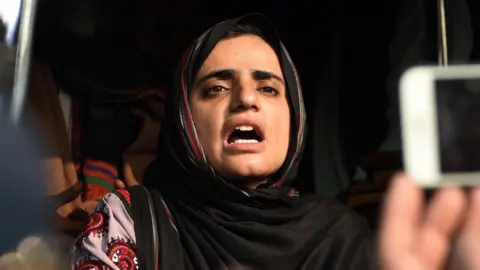
An Anti-Terrorism Court in Quetta sentenced Mahrang Baloch, the head of the Baloch Yakjehti Committee, and activist Sibghatullah Shah to life imprisonment over a 2024 Gwadar protest that turned deadly. The court also reportedly ordered Rs200,000 in compensation for the family of Frontier Corps Sepoy Shabir Ahmed, a ruling that rights advocates say signals a shrinking space for dissent in Balochistan.
The case centers on a July 2024 demonstration in Gwadar organized by the Baloch Yakjehti Committee that drew thousands of people demanding answers about enforced disappearances, alleged extrajudicial killings and the exploitation of Balochistan’s natural resources. Clashes during the protest left three people dead, including Shabir Ahmed. Prosecutors argued that Baloch’s speech and the pair’s participation in an unlawful assembly helped incite the mob, while Baloch has denied inciting protesters before the soldier’s death.

Baloch had been placed under administrative detention on March 22, 2025, and had already spent about 15 months in custody by the time the verdict was announced. Front Line Defenders said she has been held at Hudda District Prison since her arrest and later raised concerns about her health and access to medical treatment. The ruling now turns a prominent protest organizer into one of the most consequential political prisoners in Pakistan’s Baloch rights movement.
The judgment lands in a province where politics and security are already tightly intertwined. Balochistan is Pakistan’s largest and poorest province, with a long history of rebellion and state crackdowns, and Gwadar sits at the center of that tension as a strategic port tied to the China-Pakistan Economic Corridor. For activists, that makes the verdict more than a courtroom outcome: it reinforces the sense that demands over disappearances, killings and resource control can be treated as threats to the state.
That concern was echoed months earlier by United Nations experts, who urged Pakistan to release detained Baloch human rights defenders and end its crackdown on peaceful protest. They said police raided a peaceful Baloch Yakjehti Committee protest in Quetta on March 21, 2025, where three people were reportedly shot and killed and dozens were arrested. With Baloch now convicted and sentenced to life, the case is likely to reverberate far beyond Gwadar, shaping how protest movements assess the risks of organizing in Balochistan and across Pakistan.
This article was produced by Prism’s automated news system from verified source data, official records, and press releases, then run through automated quality and moderation checks before publishing. The system is built and supervised by the people who set the standards it runs under. Read our full AI policy.
Did this article answer your question?